

Schwetzingen Palace, Germany
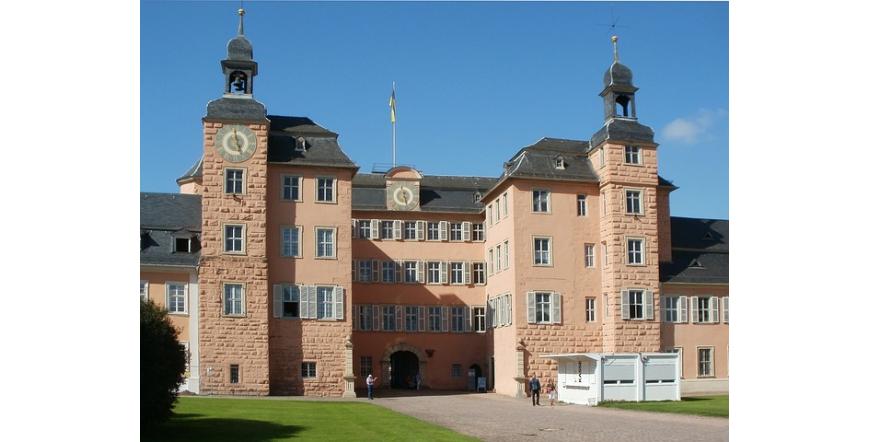
Schwetzingen Palace is the former summer residence of the princes of Kurpfalz, a beautiful palace in the German province of Baden-Württemberg. Schwetzingen Palace is the most popular with its spacious and richly decorated gardens. In addition to these extremely well preserved gardens in the castle is one of the few surviving Rococo-style theaters. This is the main place for the annual festivals in Schwetzingen.
The main building of Schwetzingen Palace was built on an old hunting hut building, which was built in the seventeenth century hunting hut. Some of the foundations and stehi are preserved when the Schwetzingen Palace is erected, which is why the palace has a slightly irregular shape.
Schwetzingen Palace was built in several stages in the time interval between 1700 and 1750, with some of its architectural plans belonging to Heidelberg architect Johan Adam Bruing. The construction of Schwetzingen Palace began during the reign of Johan Wilhelm von der Pfalz, who originally accepted the castle not as an official summer residence, but simply as a hunting home.
Schwetzingen Palace is richly decorated, with a relatively modest garden, due to its beauty to Carl Philip's ideas. It was exhibited at the same time, which were inscribed and decorated by Carl Philip.
The news at the Schwetzingen Palace introduced Charles Theodore in 1750- 1760. The plans were ordered by architect Nicolas de Pigag. The grandeur of a new palace is read in the design of Charles, and this new palace must fully meet the level of its surroundings. Unfortunately, because of the drained funds to improve infrastructure and reconstruction of schools, these plans do not become a reality.
Since the only innovation of Schwetzingen Palace is only the gardens, after the failure of the plans, the palace is absorbed entirely by them and their splendor. Although the palace leaves in their shade and there is no life inspired, much of the original interior and furnishings have survived.
Thanks to a lot of efforts for restoration and reconstruction, made at the end of the 20th century, several of the royal apartments have been restored to the species in which their inhabitants would know them. These rooms may not suffer from the supreme luxury that can be seen in other princely palaces, but they can still convey a particularly vivid image of the daily life of the vessel.
Vote:
Rating 5 from 1 voted
More sights in Germany


