

Berlin, Germany
The capital of Germany, Berlin is also the capital of the Berlin-Brandenburg region one of the 16 provinces.
With its population and area, Berlin is the largest city in the country and the second most populous in the European Union after London. Berlin is an influential political, cultural and scientific center in Europe, home to some of the most renowned universities, sporting events, orchestras and museums.
First documented in the 13th century, Berlin appears on the European map as a modest shopping center. Marked as a city of special importance, Berlin strictly follows its destiny. He grew up to a unique place and power.
Berlin became the capital of Prussia in 1701, the German Empire in 1871-1918, the Weimar Republic in 1919-1932, and the Third Reich in 1933-1945. After reunification on October 3, 1990, Berlin was proclaimed the capital of all of Germany. This gives Berlin an even greater boost in development and Berlin unfolds in a dynamic, sexy and creative city, where surprising carefreeness lurks beneath the stern appearance.
Germany's heart beats in Berlin, the pulse of life in it echoes through majestic public buildings, museums and theaters, city restaurants, lively pubs and noisy nightclubs. Berlin's colorfulness is enhanced by the fact that it is home to more than 150 nations, and its liberal lifestyle, bustling urban life and freedom of speech and artistic expression give it an irresistible appeal.
Berlin is officially recognized as one of the cities with the most museums in the world. Today, 173 museums can be counted in the city, and the large number of preserved and restored buildings has a great contribution to this. The area in what is now central Berlin, called the "Island of Museums", has been declared an "area dedicated to art and antiquities" and is part of UNESCO's international cultural heritage.
In Berlin, everything is up to standard and nothing is missing. Today the city has 4 universities, 4 art colleges, 7 other universities and 12 private universities.
Berlin is one of the most amazing cities in Europe. The variety of culture and attractions is amazing. If anything makes a city unique, it is the fact that it is not subject to classification.
1. The Egyptian Museum in Berlin houses the 3,300-year-old Nefertiti sculpture, known worldwide. It is central to the remarkable collection of Egyptian antiquities, which include some of the best-preserved mummies outside Cairo.
2. Berlin's greatest landmark, the Brandenburg Gate, was built in 1788 in honor of the triumphant Prussian armies. Today, it is at the center of the celebrations marking the reunification of Berlin and all of Germany.
3. The house at the Charlie Pass or Berlin Wall Museum reflects the events that led to the rise of the wall and presents real tools and equipment, records and photographs documenting the methods used by the East Germans to move west. 4. Kulturforum in Berlin is a unique ensemble of museums, galleries and libraries: Museum of Decorative Arts, Art Gallery, New National Gallery, Philharmonic Hall.
5. Potsdamer Platz in Berlin was the busiest in Europe before World War II. Today, the headquarters of Sony, Mercedes-Benz and a small museum of the movie star Marlene Dietrich are located here.
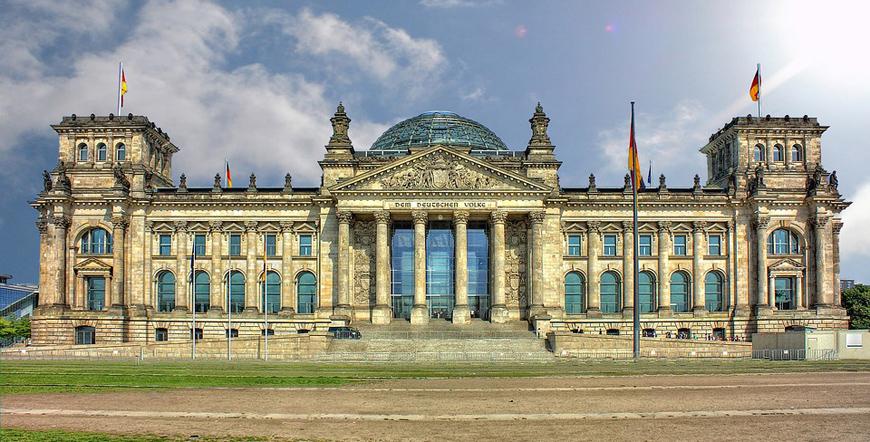
6. The monumental and very gloomy Parliament building in Berlin was the seat of the German parliament from 1894 to 1933, when it was destroyed by fire in dubious circumstances. Restored, it once again houses the German federal parliament. A wonderful view of Berlin can be seen from the glass dome.
7. The Charlottenburg Palace (Schloss Charlottenburg) in Berlin was built in the late seventeenth century by King Frederick I for his wife. The magical gardens of the magnificent palace arouse admiration among visitors.
8. The Berlin Zoo has the world's largest diversity of unique animal species, along with a magnificent aquarium.
9. The impressive 19th-century Berlin Cathedral, with its huge green copper dome, is one of the largest temples in Germany.
10. The reconstructed Hamburg Railway Station in Berlin, which dates back to the 19th century, and its new wing, which impresses with its wonderful interaction between glass, steel, color and sunlight, is a superb collection of contemporary art.
11. The Museum Island in Berlin consists of four museums of international importance. The Pergamonmuseum is one of the most important museums in Europe and is named after its most important exhibit - the Parchment Altar. This is a monumental work of Greek art from 180 BC, which occupies a huge area.
12. The St. Nicholas district is the oldest historical district in Berlin. Here is the oldest building in Berlin - the Church of St. Nicholas, dating from 1230. 13. The Church of the Blessed Virgin Mary is a medieval church, one of the most beautiful in Berlin. Interesting here is the late Gothic mural "Dance of Death". Hidden for many years, it was restored in 1950, revealing the original in all its eerie splendor.
Vote:
Rating 5 from 1 voted
More sights in Germany


Weather in Berlin, Germany

20.4 °C
Wind: 2.57 m/s
Humidity: 95 %
Pressure: 1006 hpa
Clouds: 20 %
Wind: 2.57 m/s
Humidity: 95 %
Pressure: 1006 hpa
Clouds: 20 %