

Brandenburg Gate, Berlin
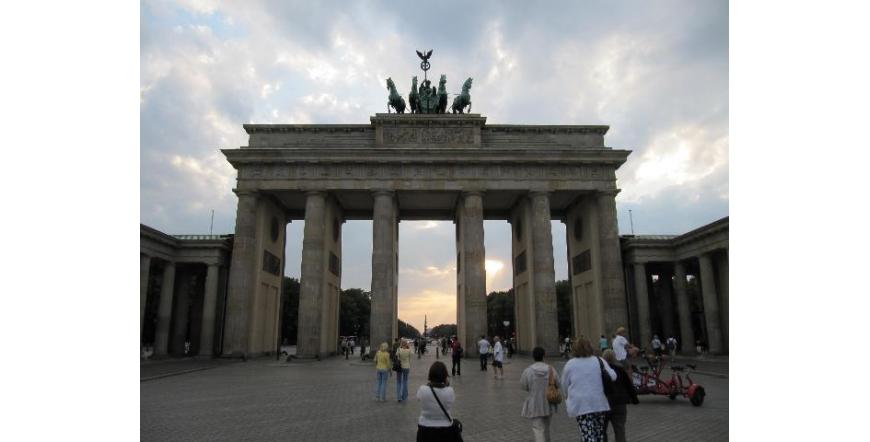
The Brandenburg Gate is an architectural monument, a type of triumphal arch, a symbol of Berlin and Germany. The Brandenburg Gate reaches a height of 26 meters and a width of 65.5 meters, and its depth is measured at 11 feet. The Brandenburg Gate is the only one preserved from the so-called city gates of the German capital, with its original name being the Gate of the World.
The Brandenburg Gate is located on Pariser Platz, in the center of Berlin. It is a magnificent example of German classicism. The first stone of the city's emblem was placed in 1789, and two years later the wall was completely completed. Friedrich Wilhelm II was the father of the idea of the Brandenburg Gate, and Carl Gotthard Langans was the architect-father of the architectural jewel project, which was subordinated to the classicist style. The propylaea of the Athenian Acropolis were used as a model for the Brandenburg Gate.
As a result of the mastery, the door was built. It consists of 12 Greek Doric columns, six on each side. Initially, the facade of the Brandenburg Gate was white, and its decoration and arrangement came from the masterful hands of Johan Shadov. His work and the statue at the top of the door - a 6-meter quadriga, ruled by the Roman goddess of victory Victoria in the form of a triumphal crown. In fact, the statue originally represented the goddess of peace Irena, but the desire of certain people changed that.
This element of the Brandenburg Gate - the triumphal crown, has an interesting destiny. After Napoleon Bonaparte's victory over Prussia, the French emperor ordered the triumphal crown to be dismantled and moved to Paris. After the Battle of Leipzig and the forced dethronement with exile on Napoleon's Elbe, the triumphal crown was returned to Berlin in 1814. But that's not all - the crown was acquired by the Iron Cross under the Roman eagle by Karl Schinkel instead of the olive branch in Victoria's hand.
On August 13, 1961, the passage through the Brandenburg Gate from east to west and back was blocked by the Berlin Wall. On November 9, 1989, the Berlin Wall, symbolizing the Iron Curtain, fell, marking the end of the Cold War. After this moment the passage through the Brandenburg Gate is free. One thing is indisputable in the history of the Brandenburg Gate - throughout the 20th century, as in the last 20 years, it has become an arena of many socially significant events.
Vote:
Rating 5 from 1 voted
More sights in Germany


