

Turin, Italy
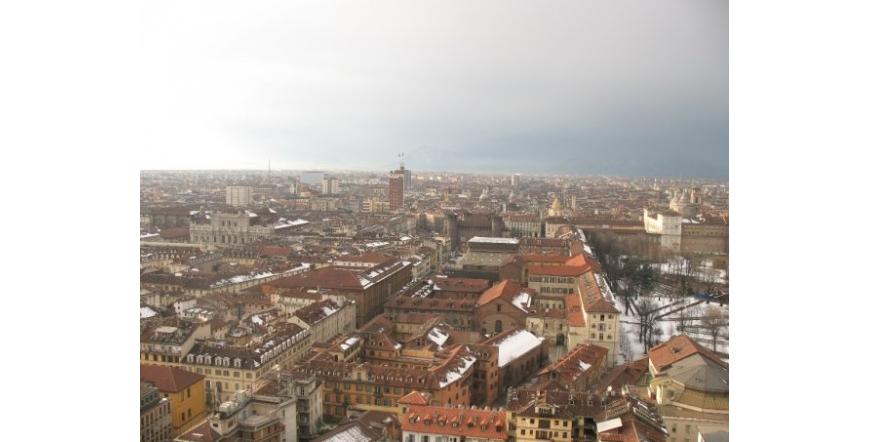
This beautiful, charming Turin - an important industrial center, the capital of the Piedmont region, a major commercial and cultural center. Turin is the fourth largest city in Italy, with Rome, Milan and Naples at the forefront. Turin is the third most economically powerful city, displacing Naples in this respect. The city is positioned in northwestern Italy, occupying part of the left bank of the river Po and picturesquely surrounded by the mountain range Apli. In addition to the Po River, three other rivers pass through Turin - Dora Riparia, Sangone and Stura di Lanzo.
Turin owes part of its popularity to two very important features - it is the headquarters of FIAT, and its football clubs Juventus and Turin are popular names in the world of football. Mole Antonelliana, a building named after the architect who built it, Alessandro Antonelli, has been declared a symbol of Turin. Mole Antoneliana was built in 1863 to serve as a Jewish synagogue. Today it houses the National Museum of Cinema. It has been established that with its 167 meters it is the tallest museum building in the world.
Although in the twentieth century it had the fame of a rather industrial and gloomy city, Turin is extremely refined, elegant, impressive, impressive. Before locating the headquarters of Fiat and Lancia, Turin was a favorite territory of the Savoy dynasty, which invested a lot of ambition, strength and resources in making Turin the main rival of Vienna and Paris. Thanks to this, today the city has a rich Baroque architectural heritage, which it is proud of.
Today, the city easily enchants with its wide boulevards, colorful squares with beautiful buildings perched on them, greenery, landmarks, parks, palaces, arcades, beautiful cafes, beautiful Baroque architecture, shops and restaurants. In general, the grayness of the industry has not overshadowed the charm of Turin and it is a famous and preferred tourist destination.
Turin dates back to Roman times, and the first evidence that this area was inhabited dates back to 218 BC. One of the preserved symbols from the time of Emperor Augustus - an impressive gate, today is a tourist attraction with a magnetic force for tourists and visitors. Surviving the French occupation under Napoleon, Turin has emerged as a place of intense action to organize and carry out the movement for the national liberation and unification of Italy. The city became the capital of the Kingdom of Savoy, the Kingdom of Sardinia, and the first capital of a united Italy. The first Italian parliament began its work and created laws in Turin - it is housed in the building of the Palazzo Carignano. Turin is rapidly growing into a cultural, administrative, industrial and military center. Even at the end of the 19th century, the heart of Italian industry was beating.
Looking more closely at Turin, we will not only find an industrial and industrial city. This Italian pearl is a very sophisticated city, rich in a variety of landmarks and cultural monuments that have been preserved to this day to tell us about each period in which this region has passed.
Undoubtedly one of the distinctive landmarks is the palace of the Savoy dynasty - Royal Palace, so large that it occupies almost an entire country in Piazza Castello. It was built in the 17th century and at first glance is a building that looks relatively ordinary. Misconception, it's just outside. Behind its simple facade are several richly decorated halls and 26 richly, lavishly and tastefully decorated state apartments. The palace is surrounded by the Reale Gardens. Right in them is the Archaeological Museum, which has an exhibition of finds dating back to prehistoric times.
Near to the Royal Palace in Turin, in the center of Piazza Castello, is another palace - the Palazzo Madama. In the beginning it was a castle, built on the remains of the Roman eastern gate, went through expansion and decoration in the XV century, to become today one of the most beautiful and memorable examples of Piedmontese Baroque architecture and atmosphere.
Cathedral of Saint John the Baptist is the main church of the city and is dedicated to St. John the Baptist (San Giovanni Battista), who is considered the spiritual guardian of Turin. It was built in the period 1491 - 1498, and its architecture is subordinated to the Renaissance style. Other popular religious homes are the Real Church of San Lorenzo and the Catholic Church of San Domenico.
The Basilica of the Superga is also a sightseeing which is a must-see. It houses the tombs of many of the kings of Sardinia and the dukes of Savoy.
In general, the center of Turin is small in area, so it is both easy and pleasant to explore on foot. The fashionable Piazza San Carlo adorns the western end of the city center. The square boasts the most impressive architecture in Turin and this is thanks to the buildings located on it such as the Palace of the Academy of Sciences of the XVII century, the work of Guarini, and the churches of Santa Cristina and San Carlo, the amazing facade of which is the work of Juvar. The Palace of the Academy of Sciences houses the largest museums in the city - the Egyptian Museum and the Savoy Gallery. Roma is the picturesque main street of Turin, full of tempting shops and cobbled squares. It leads to the other main square in Turin - Castillo.
Surprising to many, but in Turin you can visit one of the largest museums dedicated to ancient Egyptian art - the Egyptian Museum. It preserves the largest collection of Egyptian antiquities outside Egypt. The Museum of Oriental Arts has the most important collection of its kind in all of Italy. It is believed that only Cairo and London can compete with the Egyptian Museum with their collections. Other interesting places to visit are the National Automobile Museum, the Regional Museum of Natural Science and the Photographic Museum.
Vote:
Rating 5 from 1 voted
More sights in Italy


_31420.jpg)


Weather in Turin, Italy

19.92 °C
Wind: 1.03 m/s
Humidity: 91 %
Pressure: 1008 hpa
Clouds: 75 %
Wind: 1.03 m/s
Humidity: 91 %
Pressure: 1008 hpa
Clouds: 75 %