

Genoa, Italy
Genoa was the main center of the Ligurians until its conquest by the Romans around 220 BC. In 205 BC the Greek colony was destroyed by the Carthaginians. It was rebuilt by the Romans, who used the port as a base for their navy during the many wars they waged.
At the beginning of the 12th century, Genoa flourished and the city became a major trading center. Control of the Ligurian coast was taken over by a group of merchants and bankers who maintained trade contacts with the dukes, kings and popes. His possessions extend as far as Syria, North Africa and the Crimean peninsula. For 10 years they maintained their hegemony over the cities of Venice.
Ultimately, conflicts of interest lead to the destruction of the unity of the trade guild. The city-state finally lost its power in 1381, when its fleet was defeated by the Venetians near the city of Chioggia. The Genoese possessions outside the city gradually fell under the rule of Venice and the Ottoman Empire. Only the island of Corsica remained a Genoese possession until 1768, when it was conquered by the French.
Genoa is the most important seaport in Italy (it serves 20% of the volume of Italian foreign trade). Genoa is an important educational and scientific center. Industry: mechanical engineering (shipbuilding, measuring instruments), metallurgical industry, chemical industry, food industry, printing industry.
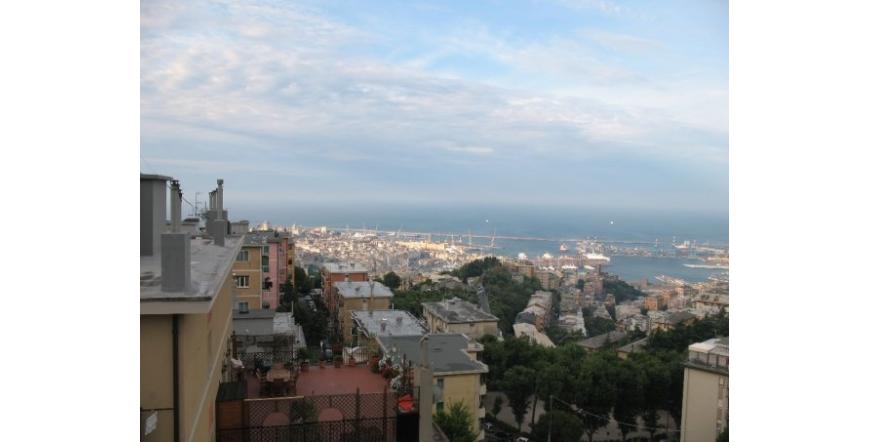
The port of Genoa is the oldest part of the city. The remarkable Cathedral of San Lorenzo in Genoa was built in the 12th century from white and black marble. Next to it is the Palazzo Ducale. The palaces of the famous Genoese family Doria are interesting.
Vote:
Rating 4.5 from 2 voted
More sights in Italy


Weather in Genoa, Italy

26.48 °C
Wind: 8.75 m/s
Humidity: 66 %
Pressure: 1009 hpa
Clouds: 75 %