

Schwarzwald, Germany
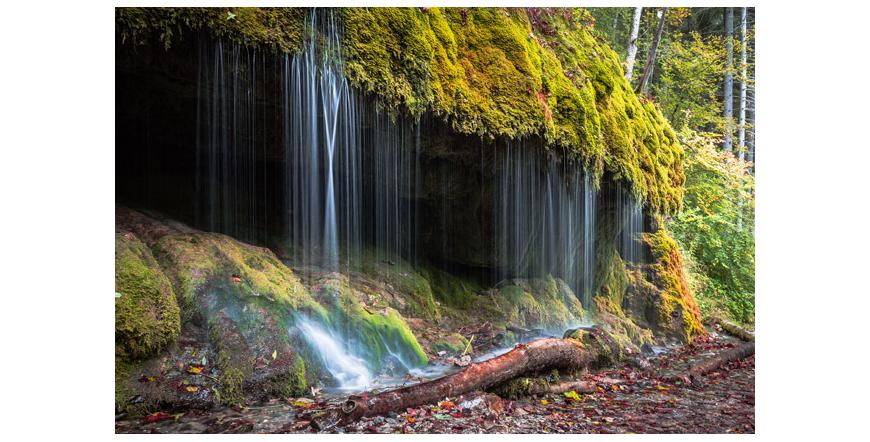
The Schwarzwald is the largest medium-high mountain range in Germany, located in the western part of the state of Baden-Württemberg. The Schwarzwald stretches along the border between Germany, Switzerland and France. To the southeast, the Schwarzwald passes into the Baar Valley, and to the north it borders the Kirschgau hills. The highest point of the Schwarzwald is Feldberg, followed by Seebuk, Herzogenhorn and Belchen.
The relief of the Schwarzwald in the east is characterized by rounded peaks and wide plateaus, and in the west there are many valleys and sharp changes in altitude. The eastern territories are covered with extensive coniferous forests, and in the west the bare metamorphic and granite rocks are interrupted by numerous valleys.
The Schwarzwald is a mountain range with extremely high water resources. Numerous rivers, lakes and dams cool the mountains on hot summer days, as well as ensure the water dependence of the population. From the Schwarzwald, for example, springs the Danube, as well as its spring waters Brigach and Breg. The larger lakes that are nestled in the Schwarzwald are the Titisee, the Mumelsee and the Feldsee, which are of glacial origin.
The Schwarzwald hides great natural resources in its bowels. The Romans also mined silver and lead ore in the middle and southern parts of the Schwarzwald. The Celts discovered iron ore in the V-VI centuries BC in the northern Schwarzwald. During the Middle Ages, monasteries were built and the higher parts were cultivated.
Mining continues to grow at a very good pace, but around the 14th century things developed poorly. This period of decline was caused by strong factors such as the plague epidemic in 1516, the war of 1524-1526 and the 30-year war of 1618-1648. But nothing has ended in this area - the rise comes around the 18th century, but then most mines were abandoned.
The industrialization of the Schwarzwald is a rather late phenomenon, as these lands are difficult to access. The birth of watchmaking in these lands has an interesting history. From cuckoo wood watches that people made in the winter, watchmaking was born, aided in the 19th century by the construction of a railway line and direct access to metal raw materials. This provoked even the opening in 1850 in Furtwangen of the first German watchmaking school.
Another positive result from the development of watchmaking is not late - the demand for mechanical devices is rising and larger companies are opening. At the beginning of the 21st century, metalworking and the processing of precious metals and precious stones began to develop, with many high-tech companies choosing their headquarters to be located in the Schwarzwald.
A large part of the population living in the Schwarzwald works in the tourism industry. Tourism is highly developed because from whichever side you look there are prerequisites for satisfying almost the tastes of tourists. Skiing, hang gliding, walking tours, historical sites, natural wonders and beauties. And many other pearls in the Schwarzwald crown work for his worldwide fame.
However, the lakes Titisee and Schluchsee attract the most tourists. In recent years, the Schwarzwald has been divided into 2 nature parks with the idea of preserving the natural wealth of the mountains, the culture and tradition of the mountaineers. The Middle and Northern Schwarzwald Nature Park is the largest nature park in Germany.
One of the most famous cities in the Schwarzwald is the resort of Baden-Baden, where there are mineral springs and numerous monasteries.
There are many municipalities in the Schwarzwald and few large cities where traditions and customs have been preserved. There, people still wear folk costumes for the holidays.
The famous architecture of the village houses, the Schwarzwald cake, the cuckoo clocks and the Schwarzwald ham also take care of the Schwarzwald's fame.
Vote:
Rating 5 from 1 voted
More sights in Germany


