

Banks and Currency in India
Banks
The cooperative sector forms a major part of India's banking system. There are 26 state, 25 private, 43 foreign, 56 regional rural, 1,589 urban cooperative and 93,550 rural cooperative banks operating in the country. The cooperative sector in the banking sector is undergoing the most dynamic development.
If it is not imperative and urgent for you, it is better not to exchange currency at the airport. It is not profitable at all, and in not a few cases it is associated with great formalities. It is best through a Forex card. There are several offices in Delhi that deal with Forex. ATMs are working normally, at least in the bigger cities.
The most reliable banks where you can exchange currency are SBI (State Bank of India), PNB (Punjab National Bank), IOB (Indian Overseas bank), HDFC and ICICI. You can also exchange currency at post offices. There are Western Union offices there. In larger hotel chains - there is also WU. In most resort centers you will see dedicated currency exchange offices. Some of them are part of the relevant travel agency, but the rate is usually quite inflated and the commission is high.
Currency
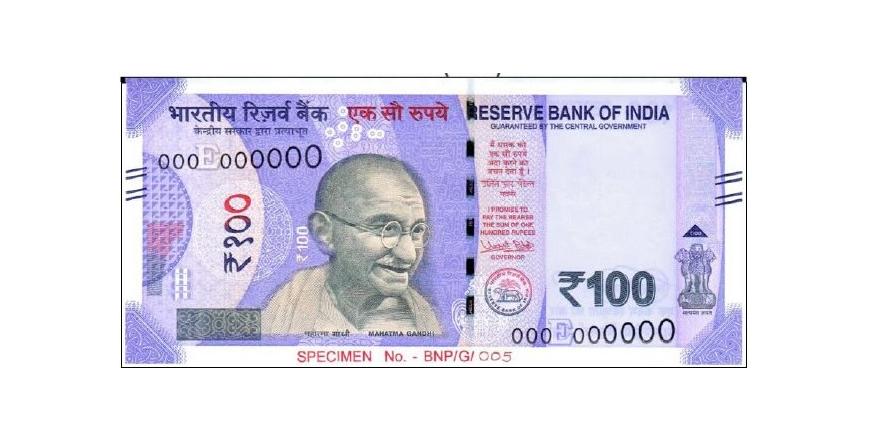
The Indian Rupee (ISO: INR) is the currency of the second most populous country in the world. It is issued by the Reserve Bank of India, which is the local central bank. 1/100 of an Indian rupee is called a paisa. The banknotes are in the following denominations: 5, 10, 20, 50, 100, 500 and 2000. Their distinguishing features are the glowing hairs and a serial number under a UV lamp. All banknotes have the same face - Mahatma Gandhi, called the "father of the nation". He was an Indian politician, lawyer, spiritual leader and human freedom fighter of the Indian national independence movement that led to the end of British rule in the country in 1947. It is important to know that banknotes without a date on the back are not in circulation and are therefore not bought and offered. The old 500 and 1000 minted before 2005 are not in circulation.
Issues in circulation are:
5 Indian Rupee Banknote - Issued 2002 and Issued 2009
10 Indian Rupee Banknote - Issued 2006
20 Indian Rupee Banknote - Issued 2001 and Issued 2006
50 Indian Rupee Banknote - Issued 2005 and Issued 2017
100 Indian Rupee Banknote - Issued 2005
200 Indian Rupee Banknote - Issued 2017
500 Indian Rupee Banknote - Issued 2016
2000 Indian Rupee Banknote - Issued 2016
When traveling, it is good to have at least a small part under 2000 denomination to cover some daily needs. For the rest of the amount, even if it is only 2000, you will have no difficulty in spoiling. As a replacement currency in India, you can use the US dollar if you have not been able to get the local currency before departure or you just decided to take a risk and pay in the alternative. However, it is still a good idea to secure you with the local currency.
Overall, the Indian rupee has been one of the worst performing currencies in Asia for 2018, with its current exchange rate hovering around 69-70 rupees to 1 US dollar.
Here are some of the average prices that every tourist should know before traveling to India:
Eating in a cheap restaurant - 150 INR
Food for 2 people, mid-range restaurant - 700 INR
McMeal at McDonald's - 250 INR
Local beer in a pub (0.5 liter draft) - 120 INR
Imported beer in an establishment (0.33 liter bottle) - 200 INR
Coke/Pepsi in an establishment (0.33 liter bottle) - 29 INR
Water in a restaurant (0.33 liter bottle) - INR 14
Espresso coffee in a restaurant - 73 INR
Store milk (1 liter) - INR 46
Shop Bread (500g) - 29 INR
Bottle of wine in store (Mid-range) - INR 600
Pack of cigarettes (Marlboro) - 250 INR
Apples (1 kg)- 128 INR
Oranges (1 kg) - INR 65
Cucumbers (1 kg) - 16 INR
Sausages (1 kg) - INR 491
Public transport ticket - 20 INR
Petrol (1 liter) - 77 INR
Vote:
Rating 5 from 1 voted
More sights in India


