

Gateway of India, India
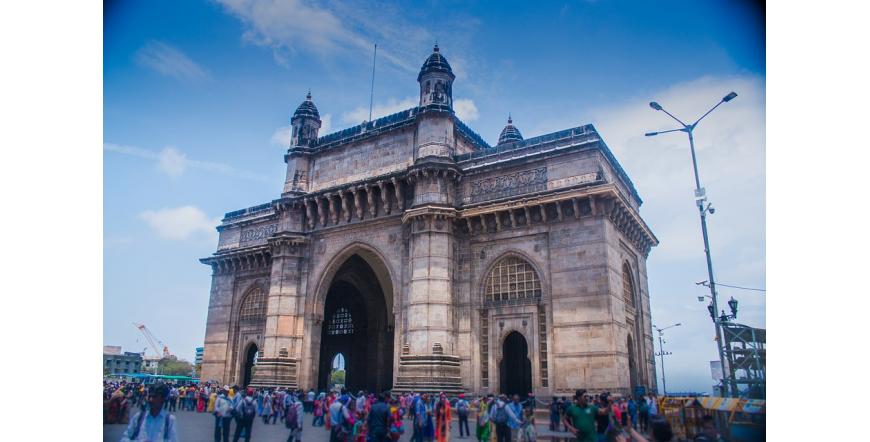
The Gateway of India is undoubtedly the most famous monument of Mumbai, India. Located on the Apollo Bunder overlooking the Arabian Sea, India Gate was designed to commemorate the 1911 visit of King George V and Queen Mary, who passed through the site on their way to celebrate their coronation as King and Queen of India in Delhi. The Gateway of India is also popular for being the place from which the last British troops withdrew from India on February 28, 1947. This event made the Gateway of India an epitaph of empire. Today, the Gateway of India ranks among the largest and most famous landmarks of India.
The massive arch, very similar to the Arc de Triomphe, stands where travelers and visitors once disembarked. The design for this graceful arch was entrusted to George Wittet. The Gateway of India was built in 1911 and was officially opened in 1924. As already said, the Gateway of India was built to celebrate the visit of King George V and Queen Mary to Mumbai before they went to Delhi. However, they only saw a model of the monument, as construction did not begin until 1915.
Copper colored basalt was used for the construction of India Gate. The design of the arch is a combination of Hindu and Muslim architectural styles. While the arch is built entirely in the Muslim style, the decorations are subordinate to the Hindu style. The entire arch is built of yellow basalt and reinforced concrete mixture. The stone used to make the monument is Indian, and the perforated slabs were brought from Gwalior. The Gateway of India is 26 meters high, its central dome measures 15 meters in diameter and is 26 meters high at its highest point.
The arch is decorated with elements that are borrowed from the Muslim architecture of Gujarat from the sixteenth century. The monument was built to look out over the sea. Reflecting the rays of the rising and setting sun, the Gateway of India changes color from gold to orange to pink.
The foundation stone of the Gateway of India was laid on 31 March 1913 by the Governor of Bombay (now Mumbai) Sir George Sydenham Clarke. Plans for the arch, assigned to George Wittet, were approved in August 1914. Between 1915 and 1919, a strip of land along the harbor was reclaimed and allocated for the construction of the Gateway of India. The land on which the Gateway of India was built was a wharf used by the fishing community, which was later renovated and used as a landing place for British governors and other notables. The construction of this unique symbol was completed in 1924. The Gateway of India was officially opened to the public on 4 December 1924 by the Viceroy of India, Isaac Rufus, Marquess of Reading.
The absorption of Mughal influences was deliberately sought as it was intended to instil a connection with earlier rulers and the legitimacy of British colonial rule.
The walls and four towers of the Gateway of India architecture, which surround the majestic dome, are decorated with intricate latticework.
The Gateway of India is a major tourist destination in Mumbai and a popular gathering place for locals, street vendors and photographers.
The Gateway of India is a monument that marks the major ports of India and is a major tourist attraction for visitors arriving in India for the first time.
In 2012, the Tourism Development Corporation moved the Elephanta Music and Dance Festival from its original venue at the Elephanta Caves (where it had been held for 23 years) to Gateway of India due to the large capacity offered by the venue. The portal can host nearly 2,500 people, while the Elephanta caves can accommodate only about 800 people.
There are several events closely associated with Gateway of India. The monument witnessed a terrorist attack on August 25, 2003, when a bomb blast bloodied the site in front of Gateway of India. The taxi carrying the bomb was parked outside the Taj Mahal Hotel, one of the city's oldest luxury hotels. The force of the explosion is believed to have thrown several people into the sea. A mentally disturbed man stabs two Manipur girls outside Gateway of India on August 13, 2005.
People can visit Gateway of India at any time of the day. The best time to visit India is during the period from November to March as the climate is very pleasant then and there are very less chances of rains.
Vote:
Rating 1 from 1 voted
More sights in India


