

Jal Mahal Palace, India
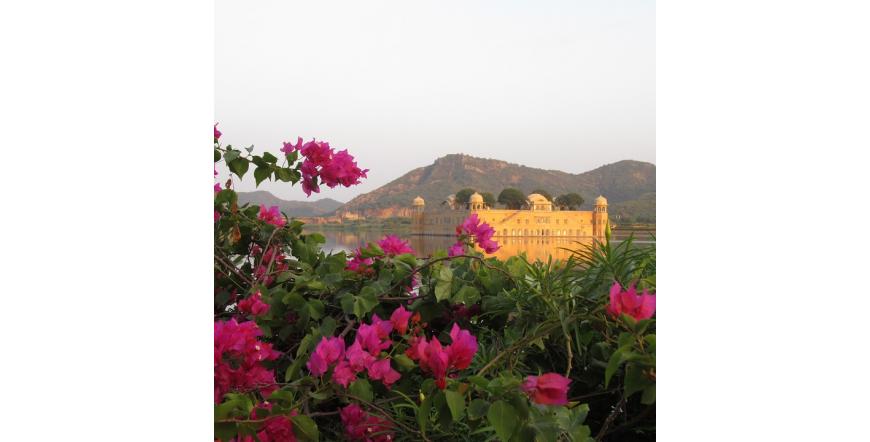
The Jal Mahal Palace, also known as the "Water Palace" is a palace located in the middle of the Man Sagar Lake in the city of Jaipur, the capital of the state of Rajasthan, India. The palace and the lake around it were renovated and expanded in the 18th century by Maharaja Jai Singh II of Amber. The Jal Mahal Palace was built by Madho Singh I, who gave it the status of a summer residence. One of the ruler's hobbies was duck hunting. This actually determined the place where the palace would be built – and today Man Sagar Lake is home to many and varied birds.
Perhaps the most peaceful sight amidst the chaos of dynamic Jaipur is the beautiful Jal Mahal Palace. This symmetrical palace, which was once a hunting residence for a maharaja, is colored in light sand that contrasts sharply with the deep blue color of the lake's waters. The incredible island palace is very real and has an equally colorful and mysterious history.
Looking at the Jal Mahal Palace, one gets the feeling that this magnificent building barely touches the surface of the water. In fact, during most of the year, three floors of the marvelous building are submerged below the surface, so that only the top, fourth floor is visible.
The Jal Mahal Palace belongs to the list of the largest and most popular attractions in the area. The entire palace seems to be enveloped in magic - during the rainy season it "floats" in the lake, and when the dry days come it floats to the surface, as the water in the lake dries up.
The Jal Mahal Palace is considered an architectural beauty built in the Rajapt architectural style. The palace offers a picturesque view of the lake as well as the surrounding hills of Nahargarh (translated as "inhabited by tigers"). The palace was built with red sandstone material. A garden with curved passages was built on the terrace of the palace. Semi-octagonal towers with an elegant dome are built at each corner of this palace. Every arch, every balcony and entrance door is decorated with marble carvings that denote the kingdom along with the 20 pillars that are the cenotaph of the royal family of Raja Jai Singh. In the courtyards, visitors can enjoy the tranquil garden overlooking the lake, scented with hyacinths and jasmine.
The restoration work done in the palace turned out to be unsatisfactory and an expert in the field of such palace architectural restoration work in Rajasthan scrutinized the designs which show the original appearance of the palace before the recent construction works. Based on this finding, restoration works are undertaken using traditional plastering materials. Unfortunately, the original garden that existed on the terrace has been lost. Therefore, a new terrace was created, the idea of which was borrowed from a similar roof garden that existed in the Amer Palace.
The Jaipur government is making huge efforts to improve the palace and the lake around it. Less than 10 years ago, the Jal Mahal was an abandoned ruin and the lake was a polluting source of sewage. Thanks to intensive activities, today wildlife roams the waters of the lake and the place is returning to its former glory.
The Jal Mahal Palace understandably attracts many tourists, not only because of its unusual location, but also because of its intricate and beautiful architecture, which is a stunning example of the Indo-Mughal architectural style. Tourists who view the Water Palace from the shores of Sagar Lake are often unaware of the technological and design achievements of the ancient palace. A specially built road leads to the Jal Mahal Palace. Visitors have the unique opportunity to admire the view of the lake and the surrounding hills called Nahargarh from the beautifully carved balconies on the floor that sits above the water all year round. The Jal Mahal Palace, seen from afar, is particularly impressive at night when it is all bathed in lights reflected off the calm surface of Man Sagar.
Jal Mahal is located 4 km north of Jaipur on the main Amer-Jaipur road. Most visitors to Jal Mahal combine a visit with Amer Fort as both tourist attractions are on the same side of Jaipur. A typical visit to the Jal Mahal takes no less than 30 minutes, enough time to take a few photos. There used to be gondolas that took romantic walks on the lake, but unfortunately this is not available today.
A rickshaw can be hired from Jaipur to Jal Mahal and the day rickshaw tour includes Amer Fort, Jal Mahal and the Monkey Temple. There is a bus service between Jal Mahal Palace and Jaipur.
Vote:
Rating 5 from 1 voted
More sights in India


Weather in Jal Mahal Palace, India

30.62 °C
Wind: 2.06 m/s
Humidity: 74 %
Pressure: 1003 hpa
Clouds: 75 %
Wind: 2.06 m/s
Humidity: 74 %
Pressure: 1003 hpa
Clouds: 75 %