

Konark Sun Temple, India
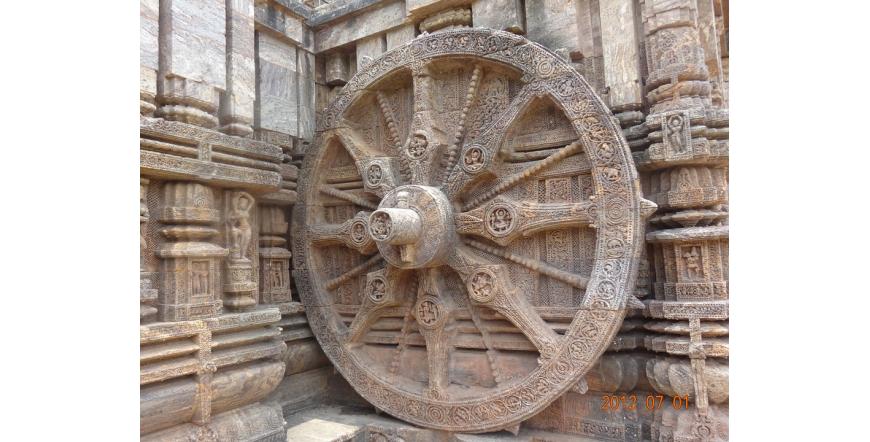
The Sun Temple, also known as Konark, is a 13th century Hindu temple dedicated to the Sun God Surya. Even in ruins, the Sun Temple is a magnificent representation of the Sun God's chariot. The Earl of Ronaldshay describes the Sun Temple as "one of the most astonishing buildings...a pile, astonishing in magnificence even in its sunset". The Sun Temple is considered the pinnacle of Orissan Hindu architecture. The Sun Temple is defined as unique from the point of view of the sculptural novelties and the quality of the engraving.
The name Konark is derived from the combination of Sanskrit words – kona (angle or corner) and arka (sun). The Sun Temple is believed to have been built by King Narasimha I in 1255 AD. He reigned in the period between 1238 and 1264. Evidence that this king ordered the construction of the Sun Temple is the reliefs, which also depict secular scenes.
The Sun Temple complex is a shrine that was built to commemorate Narasimha's military victory over the Muslims, which legitimized his right to rule as God's chosen one.
The Sun Temple was originally built at the mouth of the Chandrabhaga River, but the waterline has since receded. Konark was built in the form of a gigantic and richly ornamented chariot of the Sun God Surya with exquisitely carved stone wheels, pillars and walls. The Sun Temple follows the traditional style of Kalinga architecture. It is carefully oriented to the east so that the first rays of sunrise bathe the main entrance in light. Much of the structure is now in ruins. The Sun Temple has been declared a UNESCO World Heritage Site and is also included in the list of the Seven Wonders of India.
Viewed from an architectural point of view, the Sun Temple consists of three consecutive parts - a main sanctuary, which is connected to an entrance and prayer hall, in front of which there is a dance hall with columns. The Sun Temple features twelve pairs of intricately carved stone wheels that are 3 meters wide and pulled by seven horses (4 on the right and 3 on the left). These wheels decorate the exterior and the entrance hall. Of the seven horses, only one is preserved today. The lower moldings between the wheels decorate the temple with loving couples, dancing girls and nymphs. The role of erotic scenes in the decoration has not yet been established, but there are those that their purpose is to ward off evil and herald good. The roof and the part above the foundations of the main sanctuary, which reached a height of 69 meters, no longer exist today, as they collapsed in the 19th century. The vestibule of the Sun Temple retains its pyramidal structure, but cannot be entered as the entire building was filled with sand and stones in the 19th century to prevent it from collapsing. Like most temples, the Sun Temple is raised from the ground on a plinth. This emphasizes its sacred character.
Vote:
Rating 5 from 1 voted
More sights in India


