

Dresden, Germany
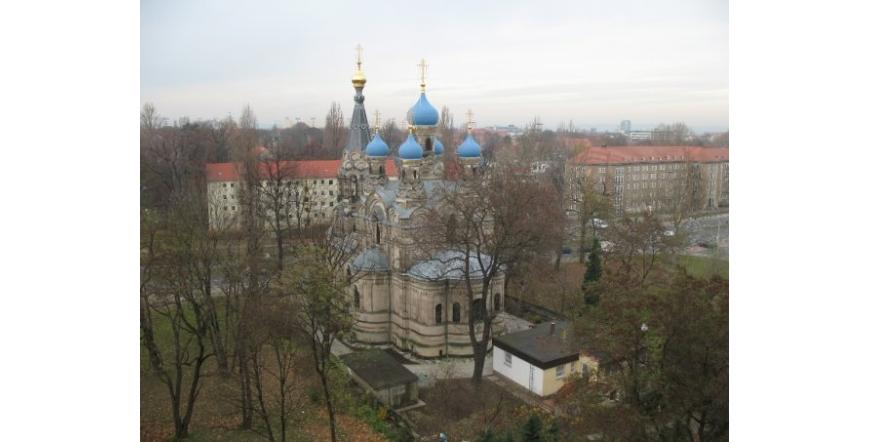
Dresden is a city in eastern Germany, the center of the state of Saxony and an important transport hub. Located on both sides of the river Elbe, Dresden is one of the most beautiful cities in Germany.
With a walk along the river, one witnesses a beautiful view of Baroque architecture. Because of this panorama, Dresden was called "Elbflorenz" or Florence on the Elbe. From Dresden, the German capital Berlin is 124 kilometers to the north, Leipzig is about 62 kilometers, and Prague is only 150 kilometers to the south. Dresden is the fourth largest city in the country after Berlin, Hamburg and Cologne. The city has developed electrical, electronic, optical, chemical, pharmaceutical and others industry.
The history of Dresden records that the city is included in the German brand Meissen, from 1485 it was the residence of the Saxon dukes, and from 1806 to 1918, was the capital of Saxony. Dresden was destroyed during World War II. The city was subjected to heavy night bombings by Allied planes, killing between 25,000 and 40,000 civilians and destroying many cultural values. After the end of the war, Dresden was completely rebuilt and reconstructed.
For centuries, Dresden has been a city that holds on to its historical heritage. The city is very proud of the famous baroque Zwinger Palace from the XVIII century, the churches "Hofkirche" also from the XVIII century and "Frauenkirche", the Dresden Art Gallery, as well as many museums and bridges.
Zwinger Palace is a remarkable architectural baroque complex, which houses the art gallery "Old Masters", which exhibits works by Raphael, Titian, Rubens, Rembrandt, Caspar David Friedrich, Max Lieberman, Jacob van Roysdale and many others. One of the most famous paintings in the museum is Raphael's Sistine Madonna. Zwinger was commissioned by the Saxon ruler Augustus. The foundations of the museum were laid in 1710, and the chief architect was Daniel Popelman, who worked with the sculptor Balthasar Permoser, and the two created a total of six pavilions connected by large galleries.
The beautiful Moritzburg Castle is located in an incredibly beautiful natural area with lakes and dense forests. The castle was built on the site of an older Revival building as a beautiful summer residence and hunting lodge of the Duke of Saxony Moritz of Vetin between 1542 and 1546.
Another architectural jewel of Dresden is the beautiful Wackerbarth Castle, built in the early 18th century as a private residence by the Earl of Wackerbarth - August Christoph, and the castle was finally completed in 1729. The author of the project is the architect Knofel. After its construction, the palace became known as the Knights' Academy.
Wackerbarth Castle is one of the few baroque palaces in Dresden that were completely destroyed as a result of World War II bombing. Located at the foot of the historic Radebeul vineyard, Wackerbarth offers a refined atmosphere to its visitors by welcoming them to a unique palace surrounded by beautiful baroque gardens.
After its construction, Wackerbarth became synonymous with elegant wines, sparkling wines and enjoyment of life. Many lavish celebrations of the Saxon aristocrats were held in the beautiful gardens of the manor and in its beautiful halls. An interesting fact about today's Wackerbarth is that it is a first-class factory for ordinary and sparkling wines, which continues the 800-year tradition in winemaking in the Saxon lands. Wackerbarth has the title of the second oldest wine region in Germany. An originally preserved part of Wackerbarth Castle is the medallion with the image of the Saxon King Augustus the Strong, the work of the famous Baroque sculptor Benjamin Tomai.
Pillnitz Castle is one of the most beautiful historical sites that can be seen in the German city of Dresden. Pillnitz lies on the banks of the river Elbe. Pillnitz is strongly influenced by Asian architectural design, which is why the chateau is often defined in the Eastern style. The whole complex is an amazing combination of interesting architecture and picturesque and maintained gardens.
A few years ago, the magnificent Frauenkirche Cathedral in Dresden was ranked third among Germany's tourist symbols. It is one of the most impressive Protestant churches in all of Europe. The cathedral was built in the 18th century by Georg Behr, when the community was Protestant and the courtyard was Catholic. Only twelve years ago, the Italian architect Gaetano Chiaveri received an order to build the Hofkirche church, which many experts describe as a monument to the most magnificent and crowded baroque. The Frauenkirche was finally completed in 1743, being in an architecturally perfect ensemble with Zwinger and the Dresden Opera.
Dresden suffers an interesting case after becoming the second city in the world to lose its UNESCO status. This is the Elbe river basin, included in the UNESCO World Heritage List. As this beautiful natural area of Dresden managed to survive for only 5 years, in 2006 the Elbe Valley was included in the list of potentially outstanding landmarks, and in June 2009 the Elbe River was officially removed from the UNESCO list. The reason for this was the construction of a highway bridge, which covers 2 kilometers from the historic center of the city, which in its nature is unacceptable for the sites of the organization.
Vote:
Rating 5 from 2 voted
More sights in Germany


Weather in Dresden, Germany

23.01 °C
Wind: 4.63 m/s
Humidity: 60 %
Pressure: 1006 hpa
Clouds: 0 %
Wind: 4.63 m/s
Humidity: 60 %
Pressure: 1006 hpa
Clouds: 0 %