

Wiesbaden, Germany
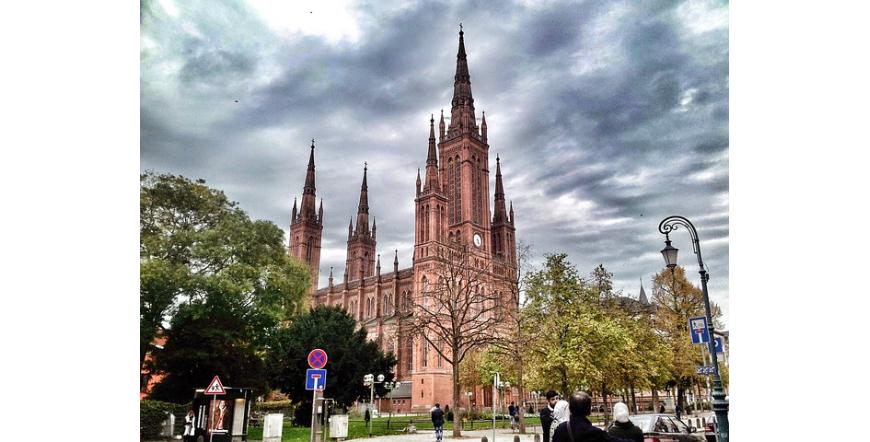
30 km from Frankfurt am Main, there is a town where the spirit of old aristocratic Europe still lingers. This place is the city of Wiesbaden - the capital of the state of Hesse. It is located on the eastern bank of the Rhine River, which is also the western border of the city and the province, separating them from the Rhineland-Palatinate province. Wiesbaden is a famous German resort since Roman times, which today is famous for its 26 hot springs, which attract with their healing power. Because of a high-ranking person like Emperor Wilhelm, who liked to stay in the city in the past, it was nicknamed the "imperial city".
Wiesbaden's history may date back to the Neolithic, but the Romans were the first to build a fortress on these lands in the period between 6-15 AD. The mineral springs, famous for their healing properties, were mentioned in written records in 77 AD. Thanks to them, in 121 AD, a settlement under the name Aqua Matiakorum began to form around the thermal springs.
Since the Alemanni inflicted heavy destruction on the settlement, a water channel has been preserved from the Roman buildings to this day, which supplied water from Mount Taunus. The Alemanni were later driven out by the Franks. In later years, when Charlemagne ruled over these lands, the city existed under the name of Visibadia. Today's Wiesbaden is a territory that in the past was an appetite and the cause of many local wars for supremacy over the city. In the 12th century, the power over Wiesbaden was in the hands of the counts of Nassau.
In 1329, Kaiser Ludwig of Bavaria issued permission to mint coins in Wiesbaden, and in 1366 the most famous mineral spring, Kohbrunn, was built. The history of the city goes back to the 19th century, when it developed as a resort with mineral baths, which were a favorite place of many great and rich and famous people. Kaiser Wilhelm II, aristocrats, artists, rich entrepreneurs - such were the admirers of this city.
In the further development of Wiesbaden there are highs and lows. With the development of Wiesbaden, many representative buildings were built, the population grew, new neighborhoods arose, and at the beginning of the 20th century, Wiesbaden was the city with the most millionaires in Germany. The end of the First World War was also the end of the city's popularity. Occupations over Wiesbaden by France and Great Britain followed. After 1933, the city housed offices of the Nazi regime, and during World War II, around 1,200 Jews were deported and killed, and the city's two synagogues were destroyed.
After the establishment of the Federal Republic of Germany in 1949, Wiesbaden was declared the center of the new state of Hesse. The city's central location in the countryside and the idea of Frankfurt being the new capital of Germany dictated the choice.
In Wiesbaden, dynamism, noise and technical progress stand in awe of history and culture. The architectural historical monuments as the pride of the city - its cathedrals, the magnificent theater, the Roman bath, the beautiful historical casino, the green parks - all this forms the unforgettable vision of the city. Scattered between geysers of burning water, and steeped in the steam issuing from shafts and spouts, they form a majestic combination, which gives Wiesbaden a magnetism before which everyone kneels.
The air in the city is charged with energy, health and romance. The narrow streets are lined with cozy little restaurants that belong to different world cuisines - Turkish, Chinese, Italian, French, etc.
Wiesbaden is hospitable and tolerant to all ethnicities and religions, to anyone who wants to join its world.
Part of the wonderful world of Wiesbaden is the historic cafe of the two 150-year-old grandmothers - aristocrats, whose dolls greet visitors at the entrance and infect them with a cheerful mood.
Vote:
Rating 5 from 1 voted
More sights in Germany


