

Cuéllar Castle, Spain
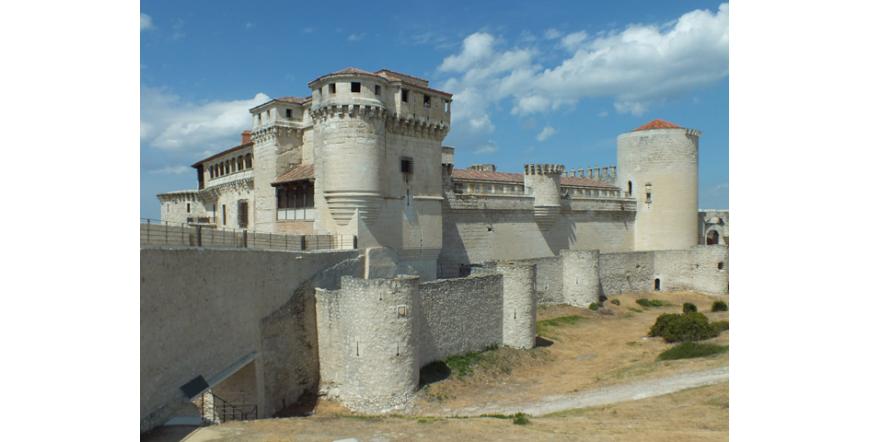
Cuellar Castle is also known as the Castle of the Albuquerque Princes. It is an incredible historical monument and emblem of the Spanish town of Cuellar, located in the province of Segovia.
The fiercely disputed Cuellar Castle is located high on the citadel and built into the fortress walls. It was originally owned by Juan II, who later bequeathed the estate to his daughter Isabel, but the inheritance was eventually seized by her brother Enrique IV to be given to his favorite, Beltran de la Cueva.
Cuéllar Castle is located in the highest part of the town of the same name, and is closed by the fence walls of the village. Its architecture is an incredible mix of styles that have left their mark on the façade and interior between the 13th century and the 18th century. The history of Cuéllar Castle began as a military fortress, and in the 16th century it was transformed into an incredible palace. The castle was completed completely in the Revival style in the 16th century.
During these centuries, the Cuéllar Castle was famous for its rich interior, lavish furnishings and valuable relics. The rooms of the palace were distinguished by luxury, as they were decorated with valuable paintings and works of art by famous masters. Many tapestries hung on the walls of the individual rooms in the Cuéllar Castle, and only gold and silver vessels were used in the palace. It is believed that at that time the castle had the largest and most diverse collection of weapons. Unfortunately, all this was looted during the wars of independence.
Cuéllar Castle has a rectangular shape and is surrounded by three cylindrical towers. In the castle you can see a well-preserved and beautiful square. Today the historical monument has been completely restored and is used for tourist purposes. Cuéllar Castle is still owned by the Albuquerque family, who, however, have ceded the right to manage the Spanish Ministry of Education, Culture and Sports. Due to its invaluable historical significance, the Cuéllar Castle has been declared by the Spanish government as one of the cultural landmarks in the country.
Vote:
Rating 5 from 1 voted
More sights in Spain


