

Vancouver, Canada
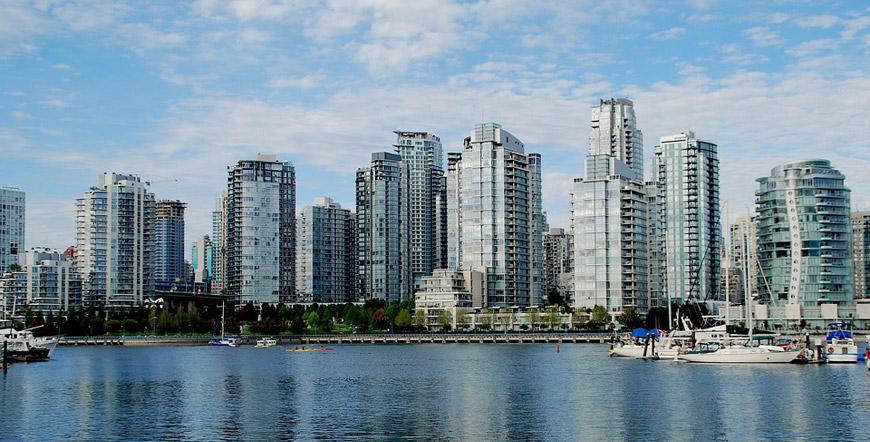
Vancouver is a coastal port city in western Canada. It is located in the lower mainland of the province of British Columbia. A mistake is often made to claim that the city is located on nearby Vancouver Island. The only commonality between Vancouver Island and the city of Vancouver is the British-born sea captain George Vancouver - an explorer of the area, in whose honor the two geographical objects are named.
As Vancouver falls in the remote part of southwestern Canada, its geographical location gives it a sense of detachment from the rest of the country. Vancouver is a coastal Pacific city, a cosmopolitan city, ethnically diverse with a population from all corners of the world, mostly from Asia. 40 percent of Vancouver's residents were not born here. Its Chinatown is the third largest in North America, serving with its colorfulness as a stark contrast to the administrative center, nicknamed the City of Glass.
Vancouver is consistently ranked as one of the top five cities in the world for livability and quality of life. Vancouver has been recognized as the first city to be ranked among the world's top ten most developed cities for 10 consecutive years.
For many years now, Vancouver is often referred to as one of the best places to live, to put it more literally - just a dream city. Vancouver is so attractive that it is often chosen to host delegations from around the world who visit it and try to understand the reasons for its success.
Vancouver is a relatively young city. The 150-year-old city was originally home to the Squamish, Musqueam and other Native American tribes, who were famous for their totem poles, still preserved today and scattered throughout the city.
However, because they were made of cedar and traditionally displayed outdoors, unfortunately few have survived. Their story is now superbly told in the wonderful Museum of Anthropology at the University of British Columbia. By 1860, there was only a farm, a sawmill, a church, a bar and a few wooden houses along the coast. Back then, the place was called Gastown, named after Yorkshire-born barman Gassy ("Chattery") Jack Deighton.
In 1870, the settlement was earmarked for improvement and renamed Granville, in honor of the then British Minister for the Colonies. It was not until 1886 that it became Vancouver, perpetuating the name of explorer and English naval officer George Vancouver, who first mapped the coast. The city was renamed Vancouver in 1886 after a deal with the Canadian Pacific Railway. The Canadian Pacific Transcontinental Railway was extended to the city in 1887. The great natural seaport of the Pacific Ocean became a vital link in trade between Asia-Pacific, East Asia, Europe and Eastern Canada.
As of 2016, Port Metro Vancouver is the fourth largest port by tonnage in the Americas, the busiest and largest in Canada, and the most diversified port in North America. The lumber and processing industry remains the largest industry in the city. But Vancouver is developing as a famous urban center surrounded by amazing nature, making tourism the second largest industry. Major film production studios in Vancouver and nearby Burnaby make Greater Vancouver and the surrounding areas one of the largest film production centers in North America, earning the city the nickname "Hollywood North".
As the largest city in the province of British Columbia, Vancouver is a haven for nature lovers and cosmopolitan adventurers alike. Amazing scenery, locked between the crystal waters of the Pacific Ocean and the coastal mountains. Vancouver's trails offer a unique experience of touring and exploring the city itself. Nearly 30 kilometers of continuous coastal path surround Vancouver's favorite neighborhoods, including the seawall around Stanley Park.
Besides its natural beauty, Vancouver is also popular for its cultural diversity. History and cultural traditions, deep respect for nature and spirituality – this is the colorful fabric of Vancouver's cultural fabric.
There are so many things to see and places to visit in Vancouver. The modern, skyscraper-studded landscape is at the same time closely connected to nature.
A tour of the city cannot be complete without Stanley Park, where the heart of the city beats. Cedar forests, through which incredible views of the ocean and beaches are revealed. Stanley Park is one of the largest public parks in North America. It is located on a peninsula in Burrard Bay. To unwind from the hustle and bustle of everyday life and stress, Vancouver offers city beaches, numerous walking and biking trails, marinas and winter sports facilities.
Granville Island is extremely interesting. This windy harbor area has become home to numerous galleries, restaurants and souvenir shops. Gastown is today a district of renovated industrial warehouses. It is popular for its symbol - a steam-powered street clock.
The Harbor Center skyscraper cannot go unnoticed. It stands out with its exceptional architectural solution - an external glass elevator that takes the guests of the building to the observation deck 130 meters above the ground and from it offers them a stunning panoramic view of Vancouver itself and the surrounding islands and blue water areas. The atmosphere of Vancouver on land can be felt in a rather intriguing way - every corner can be "explored" by getting on rollerblades and going down the extensive network of boardwalks covering the coastline.
The Burrard Street Bridge is an architectural and historical gem. It was built in 1932 and provides vehicular, bicycle and pedestrian access across Falls Creek. The cloud-shrouded scenic North Shore Mountains are visible in the distance.
One of the monuments of Vancouver's cultural heritage is its Chinatown - the second largest in North America, after that of San Francisco. Here, life boils 24 hours a day. The neighborhood is full of phone booths with red roofs like pagodas, and the air in it is saturated with exotic aromas of various spices.
In contrast to this noisy urban area, is the quiet and peaceful park named after Dr. Sun Yat-sen. It is "laid out" like a classical Chinese garden from the time of the Ming Dynasty and the only example of this art that can be seen outside of China itself.
Other Vancouver attractions include Punjabi Market, Little Italy, Greektown, and several Korean neighborhoods. The good thing here is that there are bilingual street signs in each of them.
Vancouver's Dr. Sun Yat-Sen Classical Chinese Garden is located on the edge of Chinatown. It is the first and most authentic full-scale classical Chinese garden ever built outside of China. Its foundations were laid in 1885 and its construction involved over fifty skilled traditional gardeners and craftsmen who came all the way from Suzhou, China's famous Garden City.
The Vancouver Museum of Anthropology has a stellar collection of Indigenous art that makes it worth the thirty-minute drive west from Granville Island to the University of British Columbia campus. The museum is housed in an award-nominated building that was designed by Arthur Erickson. The museum's collection of totem poles is remarkable to say the least.
For those who decide to immerse themselves in the magic of Vancouver, this information would be very useful: July and August are extremely busy months for the city, so an excursion would be most promising in May-June or September-October. Also, it's good to know that it rains 170 days a year in Vancouver.
Vote:
Rating 4.66667 from 3 voted
More sights in Canada


Weather in Vancouver, Canada

20.38 °C
Wind: 3.58 m/s
Humidity: 76 %
Pressure: 1015 hpa
Clouds: 97 %
Wind: 3.58 m/s
Humidity: 76 %
Pressure: 1015 hpa
Clouds: 97 %