

Novodevichy Convent, Moscow
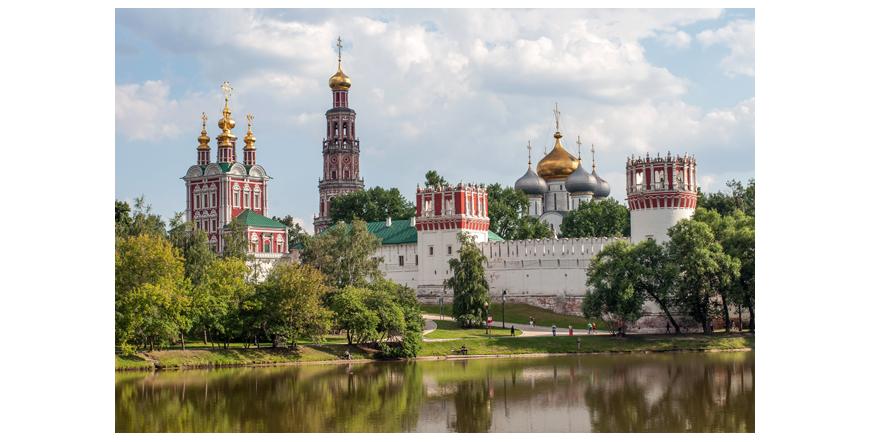
The Novodevichy Convent is surrounded by a jagged fortress wall with 12 battle towers. It was founded in 1524 by Tsar Basil III on the occasion of the conquest of Smolensk by Lithuania and served not only as a religious center but also as a defensive fortification. The monastery suffered severe defeats during the "troubled times" (around 1598-1613) - a period that ended with the takeover of power by the first representative of the Romanov dynasty. It received its present appearance in the 17th century, when it was rebuilt and further strengthened.
One of the first noble ladies who were exiled here was Irina - the wife of the weak-minded Tsar Fyodor and the sister of Boris Godunov.
In the next century, the Novodevichy Convent was inhabited by another nobleman - Sofia, the sister of Peter the Great, who ruled the country as regent from 1682 to 1689. Fighting in nature, although closed, she organized the revolt of the Russian court guards. It was immediately extinguished and by order of Peter the Great, the bodies of the slain archers were hung on the walls of the monastery, in front of the window of Sofia, where they hung for more than a year. Another notable person here was Eudocia, the first wife of Peter the Great.
Interesting here is the iconostasis with 84 wooden columns and icons dating from the 16th - 17th century. The symbol of the Novodevichy Convent is the richly decorated bell tower, which rises above its eastern wall. It is 72 m high and consists of six lavishly decorated levels. Its gilded dome can be seen from miles away.
The cemetery at the Novodevichy Convent is a kind of collection of works of memorial art. Considering the constellation of national luminaries who found peace here after their death, we can compare it with the Parisian cemetery "Per la Shes".
Vote:
Rating 5 from 1 voted
More sights in Russia


