

Marble Palace, Russia
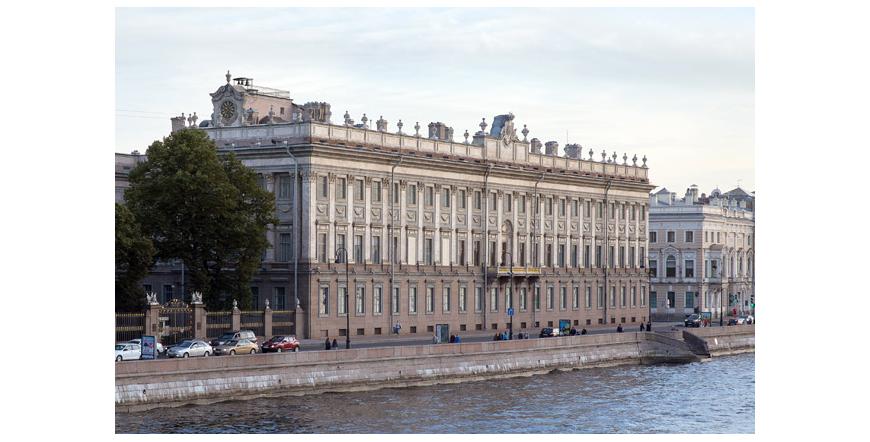
The Marble Palace in St. Petersburg is a unique architectural monument, astonishing with the luxury and splendor of the interior and the beauty of the sculptures and artistic images. It is located in the historic center of St. Petersburg on the banks of the Neva River and Admiralty Square.
The construction of the Marble Palace began in 1768 by order of Catherine II and was intended for her favorite Grigory Orlov. Participated in the greatest conflict of the 18th century - the Seven Years' War, the Battle of Zorndorf, Gregory earned a reputation as a brave and courageous soldier . Coming to St. Petersburg, the handsome young man became famous for his love affairs and noisy merriment. The future empress noticed him and the result of the affair between the two was not only the illegitimate son Alexei, but also the coup in 1762, thanks to which Catherine ascended the throne.
In addition, when a plague broke out in Moscow in 1771, Grigory Orlov made every effort to overcome it. Loving to make great gifts for her pets and for the people who were devoted to her, Catherine the Great built this impressive area and decoration palace for Count Grigory Orlov. The site of the Marble Palace is where there was a port built by Peter the Great, but destroyed by fire. The design and construction was entrusted to the Italian palace architect Antonio Rinaldi, who used 30 types of marble in the realization of this impressive whim of the Empress. The marble palace became the first building in St. Petersburg, whose facade is lined with natural stone.
The construction of the palace lasted 17 years and about 400 workers worked on the construction. The Empress personally monitors the implementation of the project. Marble was also used for the interior decoration of the palace. One of its most beautiful halls is the Marble Hall, the walls of which are lined with Ural, Karelian, Greek, Italian marble and Baikal lazuli. The parquet was made of 15 types of wood, and the painting on the walls is excellent in execution. At the top of the walls of the Marble Hall there are bas-relief images of important events from battles and military operations. Crystal chandeliers are beauty itself. The main staircase of the Marble Palace, Rinaldi designed to be made of marble in gray-silver shades. The sculptural decoration of the staircase is the work of F. Shubin. The marble sculptures have a certain theme and are called "Night", "Morning", "Day", "Autumn and Spring Equinox".
The two floors of the Marble Palace are executed in pink shades of marble. At the entrance of the palace there is a bas-relief image of the architect Antonio Rinaldi. But unfortunately Grigory Orlov died in 1783 before the final completion of the Marble Palace. In the following years, the palace changed owners and during the Soviet rule it housed the Lenin Museum. Most of the valuable paintings and marble walls have been painted, the parquet has been destroyed. A new stage in the history of the Marble Palace came after 1992, when the building was handed over to the Russian Museum and long-term restoration work began. In 2010, the Marble Palace shone with its former splendor.
The monument to Alexander III, the founder of the Trans-Siberian Railway, is located at the entrance to the Marble Palace. And the monument to the Russian military leader Alexander Suvorov is located between the Marble Palace and the house of Count Saltikov.
Vote:
Rating 5 from 1 voted
More sights in Russia


_31444.jpg)


