

Krasnoyarsk, Russia
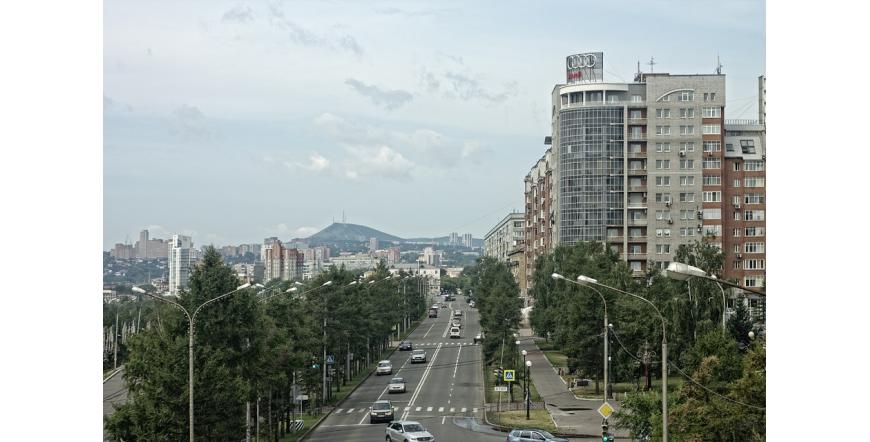
Krasnoyarsk is one of the largest cities in Russia, the center of Central and Eastern Siberia. The city is part of the vast Siberian region of the vast Russian country, characterized by impassable and untouched by human hands forests of fantastic nature. The famous Russian writer Anton Chekhov, impressed by the nature of Krasnoyarsk, wrote in his travelogues "About Siberia": "On this coast Krasnoyarsk is the best and most beautiful of all Siberian cities, and on this coast the mountains that reminded me of the Caucasus are just as wonderful and dreamy. ” Located on both banks of the Yenisey River, Krasnoyarsk divides Siberia into East and West.
With a population of about 1 million, the city is the largest cultural and economic center in this region of Asian Russia. Originating as a fortress built by the Cossacks for protection from local tribes, in 1628, the city got its name from the red ore, according to one legend. Krasnoyarsk received the status of a city in 1690 as its first emblem and seal are of Ivan IV the Terrible.
The heyday of the city is associated with the construction of the Siberian Road in 1735, connecting Krasnoyarsk with Achinsk, Kansk and others parts of Russia. In the 1930s, gold mining flourished in Siberia and the population increased. In 1895, the Trans-Siberian Railway was built, passing through the city, which helped the settlement of Krasnoyarsk from other parts of Russia. Gradually, the city acquired all the world's innovations - when in 1891, in Krasnoyarsk stopped the heir to the Russian throne Nicholas II, in the shop of the merchant Gadalov for the first time lit a light bulb; in 1928 the first airport appeared, a little later - the electric tram.
On the main street of the city, called "Voskresenska" (Prospect "Mira"), gold diggers and traders began to build large and beautiful houses. In 1829 there were already 17 such buildings, and from the old center to the west, they became larger.
The Church of the Nativity of the Mother of God was built in 1845 on Voskresenska Street and is the most charming and largest in Siberia. This is the fifth stone temple in Krasnoyarsk, designed by architect Konstantin Ton. In 1936, this architectural marvel was blown up by the Soviet government, and it was not until 2013 that the temple building was restored to its full glory.
Walking along the most famous street, the tourist gets acquainted with the history of the city, looking at historic buildings such as the National Theater from 1901, the estate of Russian gold digger and gold mine owner P. I. Kuznetsov, a wooden residential building from the late 19th century, the oldest surviving residential building from 1807, Kakhanovsky's printing house from 1910, Gadalov's trading house from 1879 and many others.
In addition, there are a large number of sculptural compositions on Prospect Mira, such as that of the beloved Russian poet Al. Pushkin and Natalia Goncharova. Numerous fountains are the other landmark not only on the Main Historical Street, but in the whole city.
The museums in Krasnoyarsk are many in number and with different themes. The Museum of Local History was established in the late 19th century by the Matveev family. The building resembles an ancient Egyptian temple, and the exhibits tell the story of the city and the region.
The Literary Museum is dedicated to writers from the Siberian region. The building was created on the initiative of the writer VP Astafev, born in Krasnoyarsk. It is exceptional, built in the "Modern" style with Gothic motifs.
The Surikov Art Museum is the only one in the region, built of larch in 1830. Its halls store valuable collections of works of art, including Surikov himself. There is a monument to him in the yard of the museum.
The bridges over the Yenisey River are the pride of Krasnoyarsk. In 1900, the railway bridge over the Yenisei River received the largest award at the World's Fair in Paris for perfect architecture and excellent technical performance. But the newest bridge, the Nikolaev one, opened in 2015, modern, modern and functional, is worth seeing.
The bridge over the Yenisey River for cars and pedestrians connects the October and Sverdlovsk regions and is built on a historic site, which presents different eras of Russia's existence. Because there were three bridges here before that - from the time of Nicholas II, from the time of Stalin and from the end of the 20th century. The height of the new bridge is 170 m above the existing railway bridge over the Yenisei River, its width is 31.5 m, the length of the forks is about 6 km, there are six lanes, two sidewalks, eight overpasses and one hundred and thirty-five lantern for lighting. Near the Nikolaev Bridge there is a seven-meter two-word inscription - "Yenisey-Siberia".
One of the biggest attractions of Krasnoyarsk is the Organ Hall, which is located in the former building of the Catholic Church with impressive openwork architecture. The church was built by the architect Vladimir Sokolovski in 1911 on the street of the Decembrists, where there are preserved wooden buildings from the early 19th century. The newlyweds love to come here because of the magical atmosphere created by the magnificent building, the stained glass windows and most of all to enjoy the music of the organ, which is the only one in the vast Krasnoyarsk region.
The Paraskeva Pyatnitsa Chapel is a symbol of Krasnoyarsk and a monument of architecture and history, depicted on the ten-ruble banknote. In the summer of 1927, an expedition of the Museum of the Prienisei Region under the leadership of the Siberian archaeologist S.A. Teploukhov, discovered a rich tomb from the 13th-14th century on the hill, where the chapel "Paraskeva Friday" is located. This shows that there was life here even before the creation of Krasnoyarsk.
The Monument Governor Andrew Dubensky, considered the founder of the city of Krasnoyarsk, was unveiled in 1997. It is located on a rock where it was part of the fortress and its bronze figure itself is pointed as if to the site of his fortress. Around the granite pedestal there is a platform with a beautiful view of the city center and the confluence of the Kacha River and the Yenisey.
As a developing modern city, large buildings are being built in Krasnoyarsk, such as the Planeta Shopping Center, which is especially beautiful in the evening. Large and small restaurants and cafes, wide streets with lots of greenery - this is impressive in this Siberian city.
Near Krasnoyarsk is an area that amazes with the bizarre shapes of the rocks. It was declared a reserve in 1920 and is called "Pillars". The area of the reserve is about 47 thousand ha, and the picturesque rocks have different names: Lion's Gate, Rock Feathers, Winter Waterfalls, Chapel of "St. Innocent ”and many more. others.
Parks in Krasnoyarsk occupy an important place. The oldest Central Park was established in 1828. Roev Ruchey Park is the largest in Russia. It was established in 1947 on a huge area with over 4,000 inhabitants, most of which are rare species. After 2020, when the huge renovation is completed, the park will have the largest collection of northern animals. Interestingly, the park will use the natural environment of the reserve "Pillars".
Tags Krasnoyarsk is one of the largest cities in Russia | the center of Central and Eastern Siberia |
Vote:
Rating 5 from 1 voted
More sights in Russia


