

Binnenhof, Netherlands
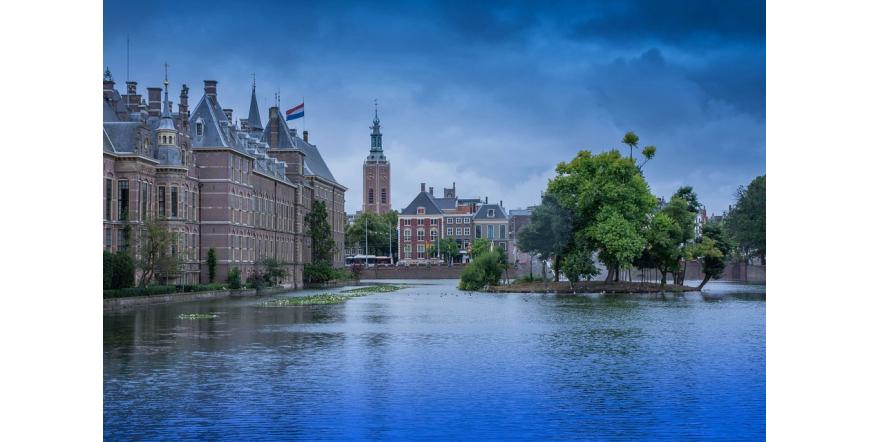
Despite the fact that Amsterdam is officially the capital of the Netherlands, all the important institutions of the country are located in The Hague - ministries located in impressive skyscrapers, royal palaces and embassies. In two words, the fate of the country is being decided in The Hague, and that is not from today, but from a long time ago.
Some of the institutions in The Hague are concentrated in the Binnenhof, a popular complex of buildings in the city center of The Hague, located near the Hofweiver lake. Bienenhof is a place designated for the oldest part of The Hague, as well as the place where The Hague's politics are made. Bienenhof is home to both houses of the Dutch Parliament, the Ministry of General Affairs, and the office of the Prime Minister of the Netherlands. Bienenhof is part of 100 Dutch buildings that are on the country's historical heritage list. Another interesting fact about Bienenhof is the fact that it is the oldest functioning parliament building in the world.
In general, too little is known about the origins of Bienenhof. History says that Bienenhof was built in the 13th century, in the Gothic style, and originally functioned as a residence for the counts of the Netherlands. The complex became the political center of the Dutch Republic in 1584. Historians suggest that the land around Lake Hofwiewer and a small homestead for purchased by Count Floris IV of the Netherlands from Meyland van Wassenaar in November 1229. From 1229 to 1234 this homestead it underwent changes and was repeatedly expanded until it became a small citadel. But Bienenhof's development does not stop there. After the coronation of Floris' son and successor Wilhelm II as Roman-German king in 1248, construction continued as in the period from 1248 to 1280 Wilhelm built the Ridderzaal. Walls with large gates were built on the left and right sides of the building, dividing the property into two. On the left side of the building, near the Hofweiver lake, a chapel and the Riederhuis - the Knight's House - are erected. Unfortunately, Wilhelm II died in battle in 1256. The Knights' Hall, as well as the castle itself, were not completed, but his work was continued by his son Floris V - he built the Knights' Hall, from where today the Queen makes her annual address.
Over the years, Bienenhof also functioned as the residence of the counts of the Netherlands, but for a short period. After the Netherlands became part of the County of Hainaut in 1299, the counts of Hainaut resided in Bienenhof at the beginning of the 14th century. Duke Albrecht I of Bavaria and his successor Wilhelm II lived in the Binnenhof almost permanently, and during their reign the Binnenhof underwent a significant expansion and gradually became a closed complex of buildings.
Today, a fountain with a statue of Wilhelm II from the 19th century stands in front of the Bienenhof. The small tower, also known as the Tower of Ministers, was built in the 15th century and in the past was used as a defense and observation facility, a warehouse and a prison. Since the middle of the 19th century, however, the Prime Minister's office has been housed here.
Vote:
Rating 5 from 1 voted


