

The Netherlands
The Netherlands is located between Germany and Belgium, it has a wide outlet on the North Sea and is one of the lowest countries in the world. Due to its extremely low terrain the climate of the country is temperate-oceanic in its entire territory. The Netherlands also got its name because of the fact that almost half of it is below the sea level. Reclaiming the territories from the sea was implemented by artificial dams and drainage canals as early as 13th c. Water was pumped out with the help of windmills. Until 19th c. the Netherlands disposed of 9,000 windmills. Today few of them are still operational.
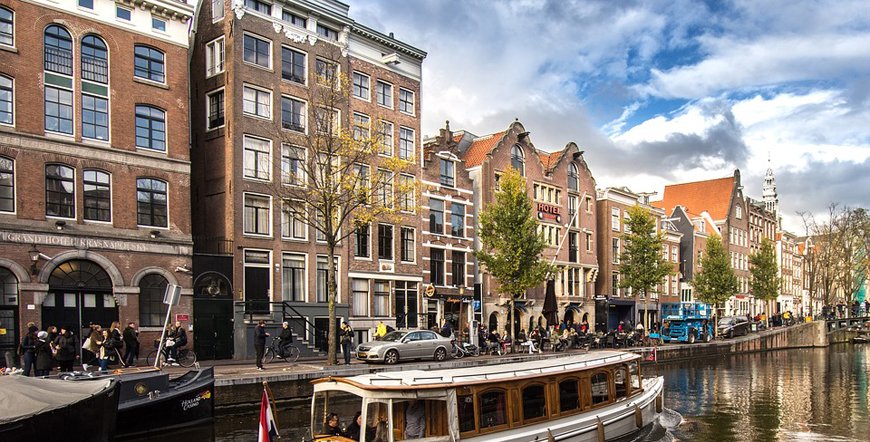
Amsterdam is a little below sea level. It is crossed by 160 canals, forming about 90 islands, connected via picturesque bridges. Amsterdam is world famous for the high quality polishing of diamonds.
In the greenhouses of the Netherlands, on an area of 10,150 ha, are grown fruits, vegetables and flowers. The Netherlands is a world-scale producer of dairy products and flowers. It is known as “the Land of the Tulips”.
The Erasmus Bridge, opened in 1996, provides a connection over the Rhein with the biggest European and world harbour Rotterdam. The bridge is 139 m high and 800 m long. It was built in 7 years and has 2 road lanes, two-way tramway rails, 2 pedestrian and 2 bicycle zones.
Destroyed during World War II, Rotterdam is restored entirely as a modern city, with uniform skyscrapers and several buildings with experimental, unconventional architecture.
More sights in The Netherlands


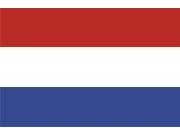
- The Netherlands
- Amsterdam
- 41 521 km²
- 16 000 000
- Euro
- Dutch
- Christianity