

Hague, Netherlands
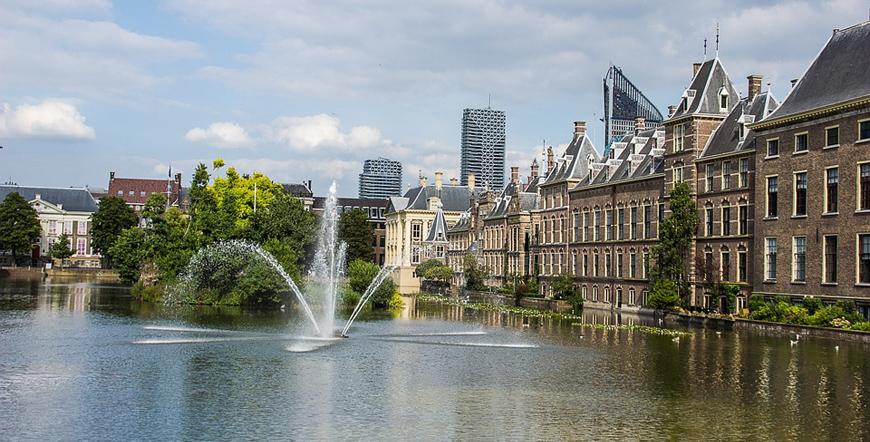
The Hague (Den Haag) is a city in the south of the Netherlands, the administrative capital of the country. The city is located in the western part of the country, in the province of South Holland, of which it is also the capital. The Hague is the third largest city in the Netherlands after Amsterdam and Rotterdam and together with them is part of the Randstad metropolis. The official name of the city translates as Count's Domain, because in the 13th century a count built a castle, the seat of the country's government and the residence of the royal family.
Among other things, The Hague is the seat of the First (Senate) and Second House of the States General - the Dutch Parliament. Queen Beatrix lives and works in The Hague. All ministries and all foreign embassies are located in The Hague. The Hague is also home to the Supreme Court and many lobbying organizations. Nevertheless, the official capital of the Netherlands is Amsterdam, which is also mentioned in the constitution.
And while we are talking about important organizations and institutions, we must say that The Hague is the seat of several institutions of the United Nations - the International Court of Justice, located in the Peace Palace, the International Tribunal for the Former Yugoslavia, the International Criminal Court, the Organization for the Prohibition of chemical weapons, as well as other important international organizations such as Europol and the Hague Academy of International Law.
The city of The Hague was first mentioned as Hage in a written document from the beginning of the 13th century. After that, in written documents, the city was mentioned with the name Graven Hage, but in the end, The Hague arose as a city in the distant year 1230. Count Floris IV of the Netherlands was proclaimed its founder, since it was he who decided to build his hunting residence in this place. After him, in 1248, William II decided to expand the building, but unfortunately this earl did not get to enjoy the sight of his idea realized - he died before the palace was completed. His expansion project was completed by his son, Floris Petty. The knight's hall, which is located in the building, is today used for holding political events.
However, since there were no fortress walls around the city, the eight-year war turned out to be disastrous for The Hague. The unfortified town proved easy prey for the Spanish troops and they captured the town. From 1588, The Hague became the center of the government of the Dutch Republic, and the stork was chosen as the symbol of the city. However, in order to keep control of The Hague in the hands of the administration, the city is not given official city status. It was not until 1806 that The Hague was allowed to call itself a city. After the end of the Napoleonic Wars, the United Kingdom of the Netherlands was born - the territory of present-day Belgium and the Netherlands was combined to be a buffer zone against France. In order not to offend, The Hague and Brussels alternated for two years in their status as the capital of the kingdom. In 1830, after the secession of Belgium, The Hague remained the seat of government, and Amsterdam became the capital of the Netherlands.
As a city with a colorful history, The Hague is rich in historical and architectural heritage. The historic center of the city is like a magnet for tourists and impresses with its very small streets built in the Middle Ages, as well as spacious streets lined with rich houses from the mid-eighteenth century. The heritage of The Hague also includes the large church from the 15th century in the center and several impressive palaces from the 17th century. Tourists also like to visit and see the Protestant church built in the 17th century.
The Hague is a city that offers outdoor exposure in its streets to a variety of architectural styles. Other sights in The Hague of interest are the Prison Gate Museum, the Lange Vorhout Museum, the Art Gallery, The Hague Square with the statue of Wilhelm of Orange.
A must when in The Hague is to visit the Madurodam Park, which houses mini models of the biggest landmarks in the Netherlands. The Royal Routes, Bienenhof, Chinatown, City Hall, Scheveningen - pearls in The Hague's crown - sights, resorts and buildings that make The Hague famous around the world.
The Hague is also known for the "North Sea" jazz festival, which has been held in the city for more than 25 years and is the largest annual jazz gathering in Europe. It plays music in a wide range of genres – blues, fusion, gospel and soul. Its advertising slogan is "The Crossroads of the World". Since 2006, the festival has been held on the second weekend of July in Rotterdam.
Vote:
Rating 5 from 1 voted


Weather in Hague, Netherlands

19 °C
Wind: 2.06 m/s
Humidity: 85 %
Pressure: 1003 hpa
Clouds: 20 %
Wind: 2.06 m/s
Humidity: 85 %
Pressure: 1003 hpa
Clouds: 20 %