

Abu Simbel, Egypt
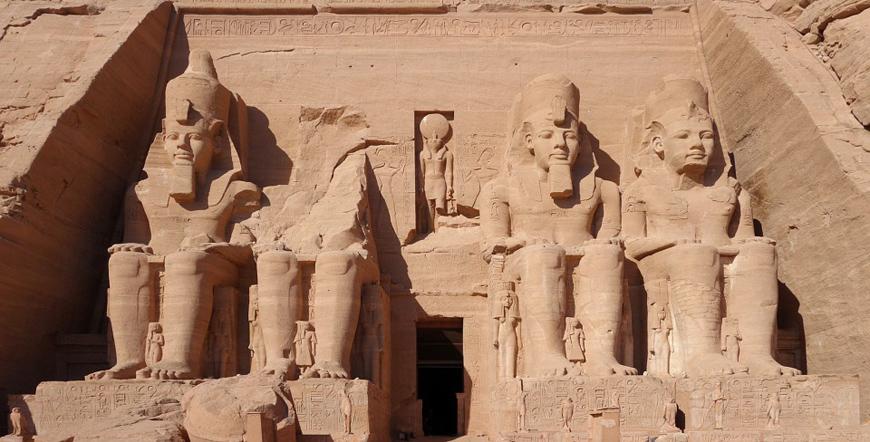
In the ranking of the most famous monuments after the Pyramids and the Sphinx, built by the most powerful Egyptian pharaoh Ramses II, Abu Simbel sets the boundary of the Egyptian kingdom and shows the power of the kings of everyone. Today, Abu Simbel has not lost part of his gift of awe.
Although symbolizing more praise for its creator, who built Abu Simbel to emphasize his divine status, the temple was built in honor of the gods Ra, Amon and Ptah.
Abu Simbel is part of the Nubian monuments, which are included in the UNESCO list. It was built in the 13th century BC and was built to intimidate Nubian neighbors.
The temples were relocated due to the creation of the artificial lake Nasser. Among the surviving parts of Abu Simbel are the 21-meter-high four statues of Ramses, which are also considered to be the largest surviving statues in all of Egypt.
At the feet of the statues were raised other captives - Asians and Africans, symbolizing the enemies of Egypt. On either side of the legs are small statues of Ramses Thuya's mother, his wife Nefertari and one of their children. Between these tall statues rises the figure of the sun god Ra with the head of a falcon.
Abu Simbel's impressive location is buried - it is buried 60 meters inside a rock and does not boast a stunning structure.
Overall, however, its interior is much more impressive - eight more statues of Ramses, a ceiling decorated with vultures with the image of Osiris, as well as beautiful bas-reliefs depicting the battles of the pharaoh. Friezes, such as those with baboon monkeys that worship the sun, are not easy to miss.
The story is repeated with the temple of Nefertari, who, although in honor of his beautiful wife, again popularized the egocentrism of Razmes. The Temple of Hathor was erected to glorify the deity most closely associated with the queen's rank in ancient Egypt.
Vote:
Rating 4.5 from 2 voted


