

Córdoba, Spain
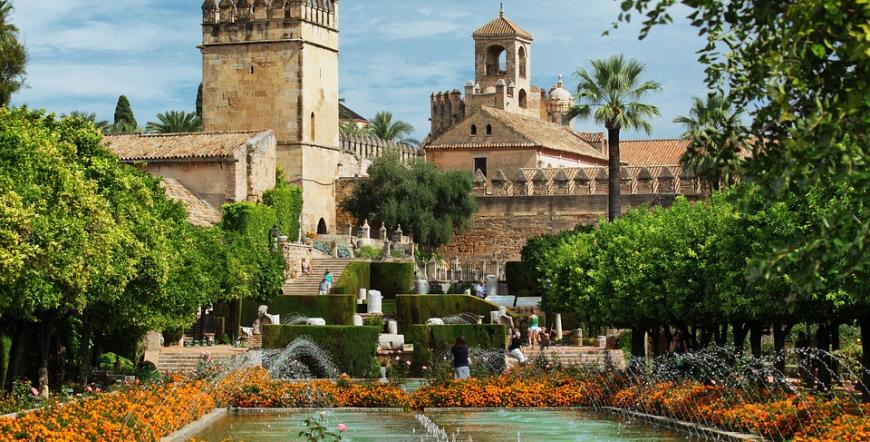
At the foot of the Sierra Morena, on the right bank of the Guadalquivir River, there is a place where, if you call Rafa, at least 10 people will turn, and where people are extremely friendly and even talk to strangers, just to be more fun. This place is the fourth unforgettable city of Andalusia - Córdoba (Córdoba), considered by the Arabs as the capital of the Western European world.
Cordoba was the capital of the Caliphate of Cordoba, which occupied almost the entire Iberian Peninsula. Today, the city is also a very important tourist center, famous for its architecture left over from this period, a place where Muslim, Jewish and Christian cultures coexist.
The walk through the history of Cordoba dates back to 756. Half a century after the conquest of Andalusia by the Moors Abd ar Rahman I - a young and educated Berber, son of the last Umayyad caliph of Damascus, arrived with his troops in Cordoba to convert without suspects the city in one of the richest metropolises of the old world.
Abd ar-Rahman governs his emirate tolerantly and generously, as evidenced by his permission to practice religions other than his own. It was the influence of various cultures such as Arabs, Berbers, Jews and Visigoths that led to a boom in the development of the city and Cordoba became a thriving center of trade.
After the death of the Berber, there was no decline of the city, as his successors managed to preserve and even develop Cordoba as the economic and spiritual center of the old world. The elite studied various scientific disciplines and discussed various Arab and Jewish philosophers, and hospitals became one of the most advanced of their time.
The city is populated by more and more residents, construction is also on the rise. Thus, in the tenth century, Cordoba had 600 mosques, 900 baths, 50 hospitals, 80 schools and over 113,000 houses, which ranks it above all other royal seats such as Constantinople, Baghdad and Damascus. The story goes that while epidemics devastated and plunged Paris and London into darkness, Cordoba shone on the map with its evolving cityscape and ever-improving conditions, such as water and sanitation, which it offers to its people.
With its rich heritage of architectural, historical and cultural monuments, skillfully intertwined with the cityscape, Cordoba is quite impressive and attractive. One of the proofs of the city's power in the past is the Grand Mosque or Mesquite / Mesquite de Córdoba / - the most spectacular Muslim building in the Western world, which has retained its Arabic name, which means exactly "mosque".
It was originally a Roman Catholic cathedral, but was later converted into a mosque. Today, it leaves everyone who touches it breathless because of its 24,000 square meters. area and the perfect harmony of the interior - giant arches with about 1000 columns of jasper, onyx, marble and granite. A huge door of the Puerta del Perdon opens and reveals the world of this great creation. The huge recurring arches in the old part create a sense of eternity and tell the world why Carlos V did not allow the demolition of the Mesquite despite the incredible pressure of the Church.
The most amazing craft in the mosque in Cordoba is the Mihrab prayer niche, where the prayer of the faithful is guided. The mosque is decorated with exclusive mosaics and domes of Byzantine masters. On the marble cornices with great precision for engraved texts from the Qur'an. In the middle of the mosque itself, lowered as if to destroy its unique harmony, is the Renaissance-Baroque cathedral.
A few meters from the mosque is another imprint of history - the Alcazar de los Reyes Cristianos or the Fortress of Christian Kings, built in 1328 after the conquest of Cordoba. From 1491 to 1492, it was designated by Isabel and Fernando as the site of preparations for the attack on Granada, the last Moorish presence in Andalusia.
There is no lack of museums in Cordoba. The Archaeological Museum is located on one of the most beautiful squares in the city. The museum collection contains the exclusive Roman statue of squatting Aphrodite, a mosaic panel on the Nile, the magnificent statue of Hermaphrodite, as well as glass and ceramic objects from the Medina Azahara.
Medina Azahara is a unique archeological site of the whole of Spain, located 11 km from Cordoba. The most impressive are the ruins of a huge palace built for Al-Zahra - the beloved wife of Caliph Abd ad-Rahman III. 11,000 workers, 1,500 mules and 400 camels were used to raise it.
As in a typical Spanish city, Cordoba has a museum of bullfighting Museo Taurino, housed in a traditional house from the XVI century. It contains paintings and posters, as well as an exquisite collection dedicated to four "caliphs" of Cordoba - the top matadors Lagartijo, Gerita, Machakito and Manolete.
Cordoba has other impressive monuments, including those of San Rafael - the patron saint of the city. Apart from being dotted with hundreds of monuments to San Rafael, the whole landscape is saturated with many fountains. It is believed that the tradition dates back to the time when the Arabs ruled these lands - they built them to find salvation from the unbearable heat. The narrow white streets are also amazing, giving a complete look to the labyrinth, in which the more you enter, the more you get lost. Among them there are several neat restaurants, where together with the ordered drink Tinto con limon, they must serve something to eat - tapas.
Today's Cordoba is a relatively small, sleepy and quiet city. The old part of the city is on the UNESCO list, which may have managed to preserve its unchanged appearance to present what Cordoba looked like then, how people lived, and even how they moved through the narrow streets.
Near the mosque is the preserved Jewish-Moorish district of Juderia, which is a real delight to the eye with its beautiful medieval houses and magnificent courtyards and well-preserved Arab hammams and the patrician Palacio de Viana. It houses one of the local wonders - the synagogue. One of the two existing in Spain, aged about 600 years.
Vote:
Rating 5 from 1 voted
More sights in Spain


Weather in Córdoba, Spain

21.89 °C
Wind: 3.6 m/s
Humidity: 53 %
Pressure: 1015 hpa
Clouds: 0 %
Wind: 3.6 m/s
Humidity: 53 %
Pressure: 1015 hpa
Clouds: 0 %