

Geneva (Genève), Switzerland
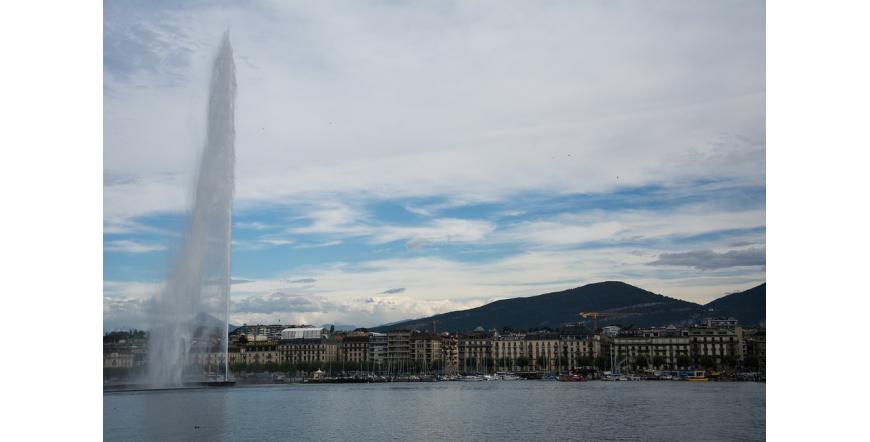
Very often, when Geneva (Genève) is mentioned, people think it is the capital of Switzerland. But it is not. Geographically, Geneva is a city in southwestern Switzerland, and it is also the main administrative center of the canton of Geneva of the same name. Geneva is the second largest city in the country after Zurich and is one of the most important cities in international diplomacy. The city was the seat of the first headquarters of the International Red Cross.
Geneva is a chic, glitzy, cosmopolitan city. It is picturesquely situated on the shores of the lake of the same name, Lake Geneva, or also called "Lake Lehmann", around the point where the Rhone River flows out of Lake Geneva, also called "Lake Lehmann". Geneva is surrounded by three mountains, the Alps and the Jura and Salve mountains.
The history of Geneva began to be written about 2,000 years ago, when the first settlements actually appeared on the site of the city. The Romans conquered in 120 BC the existing and developed city at the mouth of the Rhône, which bears the name Geneva. The actual name of Geneva first appears in the historical annals when Julius Caesar was describing the war in Gaul.
Geneva converted to Christianity in the 4th century, and in the Middle Ages the governance of the city passed into the hands of the local bishops, a situation that remained so until the Reformation. Geneva subsequently became a republic, and because of the character and style of government of reformers such as Jean Calvin there, Geneva has often been called the Protestant Rome. In the 16th century Geneva became the center of Calvinism. Its lands became home to many religious refugees, including from neighboring France. In 1798 the city was annexed by Napoleon to France, and from 1815 onwards. Geneva became a canton of Switzerland.
A very important day for Geneva is the day on which one of the most important events in its history is celebrated - L'Escalade or the climb of the walls. The people of Geneva celebrate this event every year and it has become a symbol of independence. It was then that the last attempt of Charles Emmanuel I, Duke of Savoy, to conquer the city and make it the capital north of the Alps failed. Every year in December, the victory is celebrated in the old town with demonstrations, equestrian parades and cannon firings.
If we are to look at Geneva as a tourist destination, there is a lot to be said for this. The city is extremely enticing to tourists and the reason for this are some outstanding sights: The English Garden, the Botanical Garden, Saint-Pierre Cathedral, the Town Hall, Calvin's College, the International Museum of the Reformation, the Red Cross Museum, Jean-Jacques Rousseau's Birthplace, the United Nations Headquarters, the Clarte Glass House, the Fountain in the Lake - the largest fountain in Europe, the Flower Clock - a symbol of the clockmaking industry for the city, whose 6,000 flowers are replaced every season, and quite a few others. Geneva is simply boiling with the charge of its own spirit and love of adventure.
Vote:
Rating 5 from 1 voted
More sights in Switzerland


Weather in Geneva (Genève), Switzerland

17.22 °C
Wind: 0.51 m/s
Humidity: 94 %
Pressure: 1011 hpa
Clouds: 75 %
Wind: 0.51 m/s
Humidity: 94 %
Pressure: 1011 hpa
Clouds: 75 %