

Hampton Court Palace, London
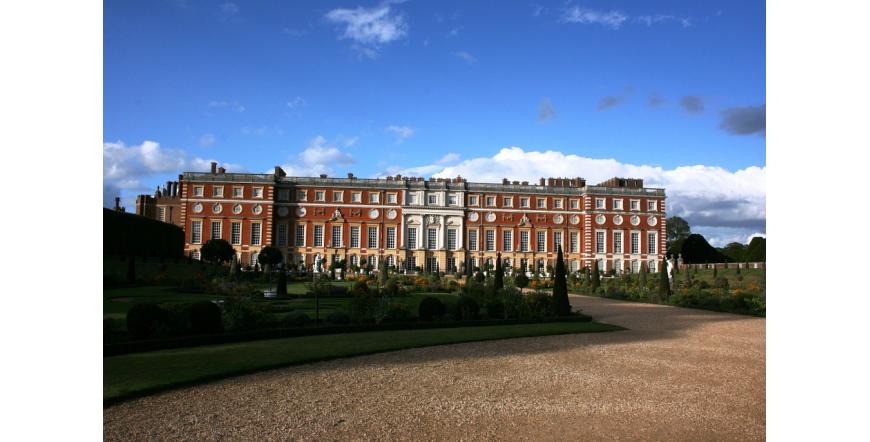
Hampton Court Palace is a royal palace in Great Britain with a 500-year history. The palace is located 20 km west of London. King Henry VIII and 5 of his 6 wives lived here. Hampton Court is famous not only for its status as the residence of the English rulers, but also for its magnificent gardens, covering an area of two thousand acres, as well as the famous maze of tall hedges. Hampton Court owes much of its current appearance to the architect Sir Christopher Wren. The magnificent palace, facing the Thames, was built in 1514 for the then influential Cardinal Thomas Woolsey, Archbishop of York. A few years later, the happy owner fell out of favor and was forced to cede his wonderful estate to the King of England, Henry VIII.
Hampton Court became the primary residence of the British monarchs. George II was the last king to live in the palace. By the early 19th century, Hampton Court was abandoned. In the Romantic era, Henry VIII's apartment was reconstructed and Queen Victoria opened it to visitors.
Among the many green wonders of Hampton Court, which have survived time, are unique parterres, majestic avenues flanked by huge lime trees, an intimate "private garden", a kilometer long "water" street, a fun maze enclosed by walls of bushes. The park, reconstructed several times over the centuries, is an example of the amalgamation of styles and fashions that were characteristic of the great English years of the 16th and 17th centuries.
In 1689, Hampton Court became the official residence of the two new rulers of England - Queen Mary and her husband Guglielmo III d'Orange. They chose this palace because the king suffered from severe asthma attacks and wanted to live as far away from London's polluted air as possible.
In order for the new owners to live in the castle with dignity, spectacular projects were conceived. For this reason, the renewal of the palace was entrusted to Christopher Wren, who was the most famous English architect of the era. The care of the green treasures of Hampton Court is entrusted to the capable hands of Daniel Marot, a student of the famous French landscape designer Andre le Nôtre.
Among the landmarks of Hampton Court, preserved to this day, is a century-old vine, originally planted in a greenhouse in 1768, which continues to produce a hundred bunches of "Black Hamburg" grapes every year.
Vote:
Rating 5 from 1 voted
More sights in Great Britain


