

The Hadrian's Wall
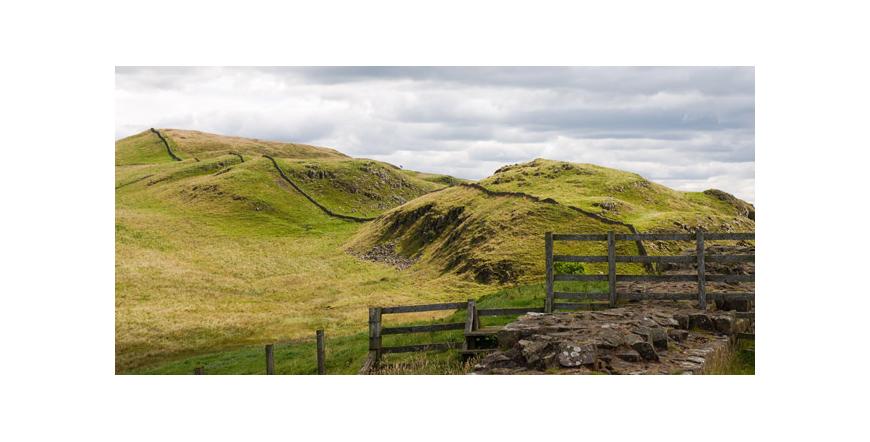
The Hadrian's Wall is the most significant Roman archaeological site on the Albion, named after Emperor Hadrian. He visited Great Britain in 122 AC and shortly after began the construction of one of the most colossal defensive fortifications in the ancient world. The Hadrian's Wall was built for 6-7 years, however the additional installations were completed after the emperor’s death.
The Hadrian's Wall is often called the small Chinese wall and it currently splits Great Britain in two. It was defending the Roman world from northern attacks for almost 300 years. The wall was running from South Shields fоrtification on River Tyne, south from where the city of Newcastle is today and ended at Bowness-on-Solway. The Hadrian's Wall was originally made of stone but for the later installations they used turf shaped as stones.
A defensive moat was dug in front most sectors of the wall. The moat was followed by the wall itself and behind the wall there was a road serving as main route along the military front as well as a connection to the inland of the Province of Britain. The stone wall had a ramp, crenels and stairs in the sections with different ground level.
The archeological works on The Hadrian's Wall reveal a lot about the daily lifestyle of the people who lived near it. Both the military and the civil population had access to baths. The common folk used the public baths; the rich and the higher ranked military officials had private baths. Latrines were built for sanitation. Numerous artefacts were found around the wall providing evidence of the clothing and the popular accessories back then.
The Hadrian's Wall is the most important Roman heritage in the United Kingdom and attracts a huge number of visitors every year.
Vote:
Rating 5 from 1 voted
More sights in Great Britain


