

Ankara
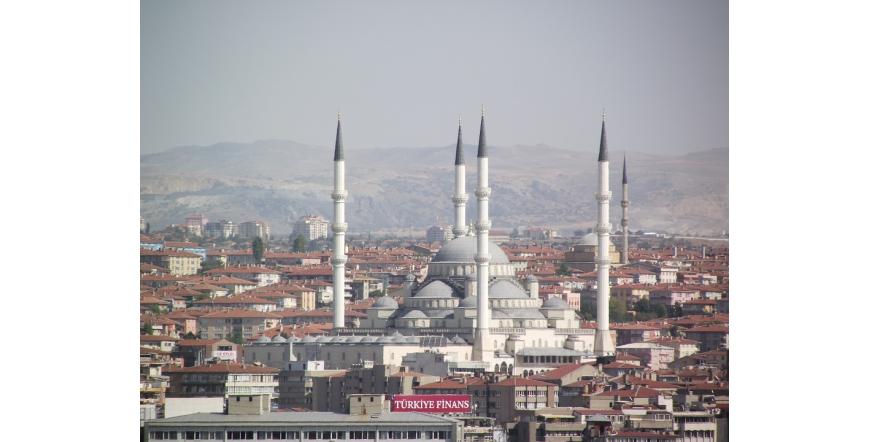
In the early twentieth century, Ankara (323786) was a dusty, provincial city, while Ataturk decided that city would become the capital of the new republic. The earliest remains from past epochs are at Hissar (the Citadel). Reinforced by the Romans, rebuilt by the Byzantines and maintained by the Seljuks and Ottomans, the fortress is inside the city. Of the 20 towers that once guarded the building, 15 still stand at different heights. The oldest mosque in the city, the small Alaadin Mosque is also here.
Ankara's magnificent Museum of Anatolian Civilizations is small, but the collection is classy. The masterpieces of the Neolithic and Bronze Ages, of Assyria, Phrygia, Urartu, Ancient Greece and Rome are carefully exhibited. Here you can see the graceful deer images that adorn postcards from all over Turkey, as well as a bronze statuette of a bull (around 2400 BC), a limestone Capodian idol with two heads (3000 BC), a vase in the shape of a ram's head (1900 BC).
Julian's Column was elevated in honor of the Roman Emperor Julian the Apostate (361-363). The column has 15 drums with vertical grooves. At the top is a Corinthian capital and reminds the visit of the emperor in 362, when he led the army in battle with the Persians.
The Temple of Augustus was built in 29-25 BC. Augustus demanded recognition for the achievements of his
government and therefore asked for an inscription on the "Sacred Things" carved in each temple. The inscription discovered here in 1555 by a Flemish diplomat is the longest Latin inscription ever found. Ataturk's mausoleum is perched at the entrance of the temple. The museum has a huge hall with brilliant gold mosaics and marble and seven tall windows overlooking Ankara, built by Ataturk.
Aladja Hyuyuk is a place inhabited since 3500 BC, but was discovered right in the nineteenth century by the Englishman John Hamilton. The excavations have revealed 15 levels. Gold tiaras, belts, necklaces and more were found in the 13 rectangular tombs. Jewels, silver combs, mirrors, drinking vessels, etc., which are in the Museum of Anatolian Civilizations in Ankara.
Tags In the early twentieth century | Ankara was a provincial city | while Ataturk decided that city would become the capital of the new republic |
Vote:
Rating 5 from 1 voted
More sights in Turkey
_23243.jpg)


_00543.jpg)


_51122.jpg)


Weather in Ankara

22.89 °C
Wind: 2.24 m/s
Humidity: 31 %
Pressure: 1012 hpa
Clouds: 0 %
Wind: 2.24 m/s
Humidity: 31 %
Pressure: 1012 hpa
Clouds: 0 %