

Istanbul
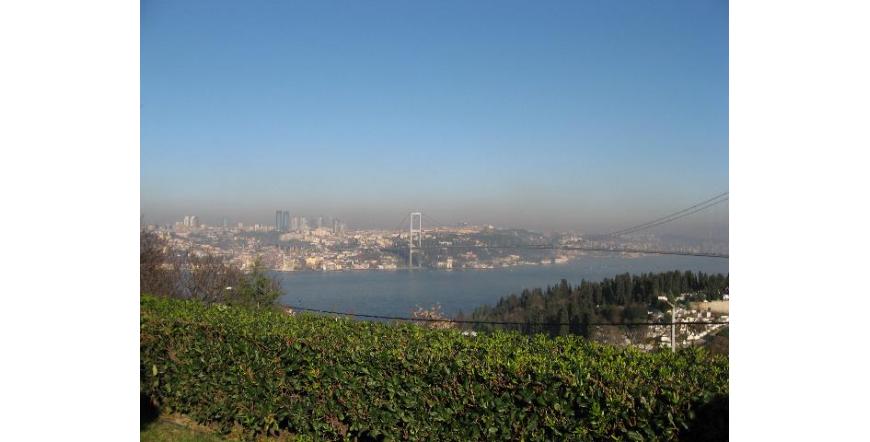
A bridge between East and West. A city with a hundred faces. City of dreams. Istanbul ... You will meet it described in a million ways. And nothing will ever be enough. Because words are never enough to describe this city. You have to see it. You have to visit it. You have to feel it. We need eyes and a heart. And everything is written. In the soul ... In the heart ... Istanbul. It is easy to get lost in the history of Istanbul. But modern Istanbul is a bustling metropolis. The trade is world-class and the nightlife around Taksim Square continues until dawn. And although Istanbul is not the capital, it is where all the new trends in many respects begin.
Istanbul is the most densely populated city in Turkey. Istanbul is the economic, cultural and historical center of the country. Istanbul is a transcontinental city in Eurasia, located on the Bosphorus, between the Sea of Marmara and the Black Sea. Its commercial and historical center is located on a European side. About a third of its population lives in the suburbs of the Asian side of the Bosphorus. Istanbul is ranked as the fourth largest city in the world and the largest European city.
The geographical location of Istanbul is the main reason for its growth and development as a world metropolis. Istanbul is the only city in the world that is located on two continents. Istanbul is divided into 3 main parts - the Historic Peninsula, located south of the Golden Horn Bay, Galata - north of the Golden Horn, and the New City. The first two parts are in the European country, and the third - in the Asian. In the European part, commercial and industrial enterprises predominate, and in the Asian part - residential complexes.
Founded under the name Byzantium on cape Sarayburnu around 660 BC, the city became larger and more influential, becoming one of the most important cities in history. After its recovery as Constantinople in 330, it served as the imperial capital for almost sixteen centuries - during the Roman (330-1204), Latin (1204-1261), Byzantine ( 1261-1453) and the Ottoman (1453-1922) empires. The city became an "instrument" for the development of christianity during Roman and Byzantine times, before the Ottomans conquered the city in 1453 and turned it into an Islamic fortress and seat of the Ottoman Caliphate. Constantinople was the Ottoman capital until 1923. After that, the capital was moved to Ankara and the city is now called Istanbul.
Istanbul occupies a strategic position between the Black Sea and the Mediterranean. The city was located on the historic Silk Road. It controls the rail networks for Europe and the Middle East and is the only sea route between the Black Sea and the Mediterranean. In 1923, Ankara was chosen as the new Turkish capital after the Turkish War of Independence, and the city's name was changed to Istanbul. However, the city retains its popularity in geopolitical and cultural matters.
The biggest attraction in Istanbul is its historic center, part of which is included in the UNESCO World Heritage List. Istanbul's cultural and entertainment center is located in the city's natural harbor, the Golden Horn in the Beyoglu district. Considered a global city, Istanbul is one of the fastest growing capital economies in the world. It hosts the headquarters of many Turkish companies and media and accounts for more than a quarter of the country's gross domestic product. The first known name of the city was Byzantium. This name was given to it by Megarean colonists around 660 BC. It is believed that the name comes from Bizas - the legendary king, leader of the Greek colonists. Modern scholars suggest that the name Vizas is of local Thracian or Illyrian origin and therefore precedes the Megarean origin.
After Constantine the Great turned Istanbul into the new eastern capital of the Roman Empire in 330 AD, the city became known as Constantinople. Constantinople remained the city's most common name in the West until the establishment of the Turkish Republic, which called on other countries to use Istanbul. Although historically accurate, the use of Constantinople to denote the city during the Ottoman period is now often considered "politically incorrect" by the Turks.
Until the 19th century, the city had other names used by either foreigners or Turks. The Europeans used Constantinople to name the entire city, but used the name Istanbul, as did the Turks to describe the walled peninsula between the Golden Horn and the Sea of Marmara. Feathers were used to describe the area between the Golden Horn and the Bosphorus, but the Turks also used the name Beyoglu (today the official name of one of the city's neighborhoods).
The name Istanbul is thought to derive from the medieval Greek phrase "εἰς τΠν Πόλιν", meaning "the city", reflecting its status as the only large city in the area.The importance of Constantinople in the Ottoman world is also reflected in its Ottoman name "Der Saadet", which means "door to prosperity" in the Ottoman Empire. There is point of view that the name evolved directly from the name Constantinople, with the first and third syllables dropped. Turkish folk etymology traces the name of Islam as "abundance of Islam", as the city is called Islambol ("abundance of Islam") or Islambul ("find Islam") as the capital of the Islamic Ottoman Empire.
The cityscape of Istanbul is extremely picturesque, attractive and impressive. Istanbul is a city with a centuries-old history, which makes the city full of many places to visit. Some of them are:
- Topkapi Palace - the palace was the residence of the Turkish sultans during the Ottoman Empire. This beauty has many courtyards and portals, and in its area there are several museums. In the treasury are exhibited a number of truly exceptional exhibits such as thrones of pure gold and huge diamonds;
- Hagia Sophia - a church turned into a mosque after the destruction of Byzantium by the Ottoman Turks. A remarkable blend of Christianity and Islam, the building is one of the wonders of world architecture, now turned into a museum. There are almost no explanatory inscriptions in the Hagia Sophia;
- Bulgarian Iron Church "St. Stephen";
- Grand Bazaar - an extremely popular covered market;
- the Sultan Ahmed Mosque, also known as the Blue Mosque;
- Suleiman Mosque - the largest mosque in Istanbul, built in 1557. It also has a mausoleum of Sultan Suleiman and his wife Roxelana. The famous architect Sinan, who built many of the mosques in the city, is buried next to the building;
- Istikal Avenue - a famous boulevard and a key place in the city;
- The Golden Horn - a bay on the Bosphorus, where the sea "bathes" in the golden rays of the sun;
- Galata Tower - a Genoese tower in the Galata neighborhood;
- Dolmabahçe Palace - in the past the residence of Atatürk, today a museum;
- Taksim Square - a famous square, a place for rallies, protests, meetings and many other exciting places. Taksim Square is located in the new part of Istanbul. It is considered a major market, tourist destination, as well as entertainment. It is famous for its shops, restaurants and hotels. Taksim Square is also said to be the heart of the new city;
- Yerebatan Sarnici - an underground water reservoir built in the VI century, today a museum, which houses the famous stone head of the gorgon Medusa;
- Kiz Kulesi - a tower carved into the sea;
- Pierre Loti's Café;
- Eski Imaret Mosque;
- Chora Monastery (Carie Museum) - a monastery founded in the 5th century. It has beautiful frescoes and mosaics depicting the Virgin Mary and the life of Jesus Christ. Today it has been turned into a museum;
- The Bridge over the Bosphorus - the bridge over the Bosphorus or, as it is called, the First Bridge over the Bosphorus, is located over the strait, and connects the two continents - Europe and Asia. The bridge connects Ortakoy (from Europe) and Beylerbey (from Asia);
- Hippodrome of Constantinople - The Hippodrome of Constantinople in the past was a round square, sports and social center of the capital of the Byzantine Empire. Today only a few parts of it are preserved - the Snake Column, the Column of Constantine. They are fenced, and Sultanahmet Park is built around them.
The Fatih district, named after Sultan Mehmed the Conqueror, tells of what happened in the city before its Ottoman conquest in 1453. It is located on the southern shore of the Golden Horn and passes through the medieval Genoese citadel of Galata on the northern shore. The Genoese fortifications at Galata were largely destroyed in the 19th century, leaving only the Galata Tower. The goal was to pave the way for the expansion of the city to the north. Galata (Karakoy) is today a district in the Beyoglu district and is the shopping and entertainment center of Istanbul.
Dolmabahce Palace, which was the seat of government during the late Ottoman period, is located in the Besiktas region, on the European shores of the Bosphorus, north of Beyoglu. The tallest gate, which became a metonymy for the Ottoman government, was originally used to describe the Great Gate in the outermost courtyard of Topkapi Palace.
The former village of Ortakoy is located in Besiktas and is named after the Ortakoy Mosque on the Bosphorus. The cladding of both the European and Asian shores of the Bosphorus are the historic yalıs, luxury huts built by Ottoman aristocrats and elites as their summer homes. Farther inland, off the city's inner ring road, are Levent and Maslak, the main business districts of Istanbul.
During the Ottoman period, Yuskudar and Kadikoy were out of range of Istanbul and served as quiet outposts with naval halls and gardens. In the second half of the twentieth century, the Asian part of Istanbul underwent great urban growth. The late development of this part of the city has led to better infrastructure and more precise urban planning compared to most other residential areas in the city.
A big size of the Asian part of the Bosphorus functions as a suburb of the economic and commercial centers of European Istanbul. There are a one third of population of the city. As a result of the exponential growth of Istanbul in the twentieth century, a significant part of the city consists of gecekondus - illegally constructed buildings. At present, in some areas, these buildings are being gradually demolished and replaced by modern residential buildings.
The Turkish government has ambitious plans to expand Istanbul to the west and north of the European side in connection with plans for a third airport. The new parts of Istanbul will include four different settlements with certain urban functions, which will accommodate 1.5 million people. Istanbul does not have a primary city park, but there are several green areas. Gulhane Park and Yildiz Park were originally included in the base of two of the palaces - Topkapi Palace and Yildiz Palace.
In the European part of Istanbul, near the Fatih Sultan Mehmet Bridge, is the Emirgan Park, which during the Byzantine period was a forest. During the Ottoman period, it was given to Nisanci Feridun Ahmed Bey, before it was given by Sultan Murad IV to the Safavid Emir Gune Khan in the 17th century, from where comes the name Emirgan. The 47-hectare park (120 acres) was later owned by Hediv Ismail Pasha of Ottoman Egypt. Emirgan Park is famous for its variety of plants and the annual tulip festival, which has been held since 2005.
Istanbul is best known for its Byzantine and Ottoman architecture, but its buildings reflect the various peoples and empires that once ruled the city. Examples of Genoese and Roman architecture remain visible to this day in Istanbul, along with examples of Ottoman architecture. None of the architecture of the classical Greek period survived, but Roman architecture proved to be more durable.
The obelisk erected by Theodosius on the Hippodrome of Constantinople is still in Sultanahmet Square, and part of the Valens Aqueduct, built in the late 4th century, remains relatively intact at the western end of the Fatih region. Constantine's Column, built in 330 for the new Roman capital, stands not far from the Hippodrome.
Early Byzantine architecture follows the classical Roman model of domes and arches. The oldest surviving Byzantine church in Istanbul - although in ruins - is the monastery of Stoudios (later converted into the Imrahor Mosque), built in 454. After the return of Constantinople in 1261, the Byzantines expanded two of the largest and important churches - the church of Chora and the church of Pamakaristos. The highlight of Byzantine architecture and one of the most iconic structures in Istanbul is Hagia Sophia. It has a dome with a diameter of 31 meters and has been the largest cathedral in the world for centuries. It was later turned into a mosque and today functions as a museum.
Among the oldest surviving examples of Ottoman architecture in Istanbul are the Anadoluhisari and Rumelihisari fortresses. These fortresses helped the Ottomans during the siege of the city. Over the next four centuries, the Ottomans made an indelible impression on the landscape of Istanbul, building imposing towering mosques and ornate palaces. The largest palace, Topkapi, includes a diverse range of architectural styles, from the Baroque to the neoclassical Enderûn Library.
Imperial mosques include the Fatih Mosque, the Bayazid Mosque, the Yavuz Selim Mosque, the Suleymaniye Mosque, the Sultan Ahmed Mosque (the Blue Mosque) and the Yeni Mosque, all of which were built during the greatest rise of the Ottoman Empire in the 16th and 17th centuries. In the following centuries, and especially after the reforms in Tanzimat, Ottoman architecture was replaced by European styles. An example of this is the Imperial Nuruosmanie Mosque. The areas around Istiklal Boulevard are full of large European embassies and rows of buildings in neoclassical, Renaissance and modern styles that continue to influence the architecture of various structures in Beyoglu - including churches, shops, theaters and official buildings. An example of this is the Dolmabahçe Palace.
Istanbul is not just a landmark. Istanbul is life. There is no day, no night. Everything is equally dynamic during the day and at night. The hospitality of this people is known around the world. They know how to invite you to sit in a restaurant, to drink tea or coffee on a nice bench, to eat doner or pretzel. You can't feel lonely in this city. There will always be someone to make you feel special. And in trade, the Turks are unsurpassed. And Istanbul is a shopping paradise. The city has shops for every taste, every style and every social class. Just a city of people.
Vote:
Rating 5 from 1 voted
More sights in Turkey


Weather in Istanbul

25.95 °C
Wind: 9.77 m/s
Humidity: 50 %
Pressure: 1016 hpa
Clouds: 75 %