

Ephesus
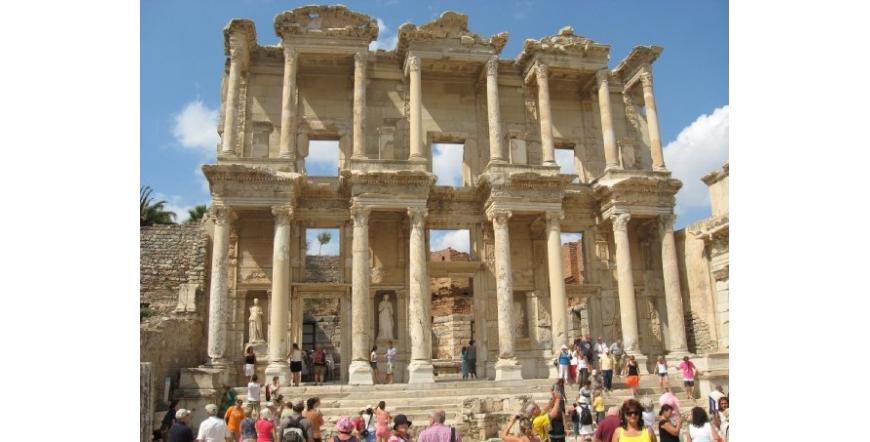
Ephesus is the best preserved and probably the most challenging ancient city. The Delphic oracle brought the Pontic Greeks here from central Greece in the 11th century BC. Ephesus, in the past by the sea, quickly became a powerful trading port and a sacred center of the cult of Artemis. Ephesus later became a Roman city. He is famous for his silver smiths. It is believed that St. Paul wrote some of his Epistles here.
St. John visited Ephesus between 37 and 48 AD. In 431, Ephesus was the scene of the Third Ecumenical Council, during which Mary was proclaimed the Mother of God. In 1000, when the Crusaders came from the west and the Turks from the east, Ephesus was known as Hagios Theologos and was moved 5 km from the sea. The new city is surrounded by fortifications and the citadel was built. The city was annexed to the Ottoman Empire in the early fifteenth century.
Ephesus is one of the largest reconstructed ancient sites in the world. The preserved ruins were rediscovered in the late 1800s and excavations continued for almost a century. At the stadium from the 1st century AD, chariot and horse races were held on a 217 m long track. Gladiators and wild beasts met in battle in front of 70,000 spectators. The theater had 25,000 seats. A huge semicircle, with rows of curved benches, it was started by Lysimachus and completed by the emperors Claudius and Trajan in the second century AD. Near the theater is the beautiful two-storey Library of Celsus, where you can still see the papyrus rolls.
Vote:
Rating 5 from 1 voted
More sights in Turkey


