

Palermo, Italy
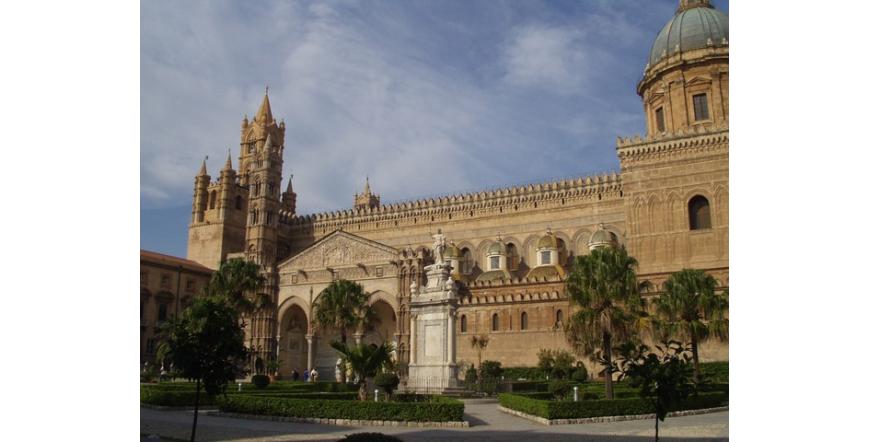
Palermo - the most sensual city in Italy.
Palermo is a city in southern Italy, the capital of the Autonomous Community of Sicily and the city of Palermo. Palermo is located in the northwestern part of the island of Sicily, right next to the Gulf of Palermo in the Tyrrhenian Sea. The city is famous for its culture, architecture, history and gastronomy, which play an important role for most of its existence, which is over 2700 years. Roman Catholicism is very important in the culture of Palermo. The patron saint of Palermo is Santa Rosalia, which is celebrated every year on July 15.
The city was founded in 734 BC by the Phoenicians and immediately passed under the rule of Carthage. Two Greek colonies, known together as Panormos, were established. The Carthaginians used this name on their coins after the 5th century BC. Today's Palermo passes into the possession of the Roman Republic and Empire and remains so for more than a thousand years. From 831 to 1072, Palermo was ruled by the Arabs, becoming the capital for the first time during the emirate of Sicily. The Arabs gave the city the name Balharm, which is the root of today's name Palermo. Under Norman rule, between 1130 and 1816, Palermo became the capital of the new kingdom of Sicily and the Holy Roman Empire, during the reigns of Emperor Frederick II and King Conrad IV.
Palermo is the cultural, tourist and economic capital of Sicily. This city is rich in history, culture, art, music, food. A huge number of tourists from many parts of the world are attracted by the city because of the good Mediterranean climate, because of its famous restaurants and gastronomy and restaurants, because of Gothic, Baroque and Romanesque churches, palaces and buildings, and dynamic nightlife and music. There are also strange sights in Palermo, such as the firefighting headquarters, which is a clear example of fascist art deco art, the Sanctuary of Santa Rosilia - a church and monastery carved into a cave on top of a hill. The area attracts a significant number of tourists every year and because of its colorful markets for fruits, vegetables and fish, located in the heart of Palermo, known as Vucciria, Ballarò and Capo.
Apart from being a tourist center, Palermo is the main industrial and commercial center of Sicily. The main industries that are developing are tourism, services, agriculture and trade. In fact, due to its leading position in the cultural, artistic and economic spheres, Palermo is one of the largest cities in the Mediterranean and is currently one of the most sought after and visited tourist destinations in Italy and Europe. Due to the Arab-Norman Palermo, the cathedrals of Cefalu and Monreale, the city is the main seat of UNESCO. Palermo is undergoing a major overhaul, preparing to become one of the largest cities in the Euro-Mediterranean region.
For the most cities in Italy is true that they have a rich history, but what makes Palermo unique is the way so many different nations and cultures have left their mark on the city. Its strategic military and trade position attracted invaders from all over the world, including the Carthaginians, the Greeks, the Romans, the Normans, the French and the Spanish Bourbons. Each group remains its influence on the architecture, language and art of the city, which means that the cultural attractions of the city are wonderfully diverse and it is fascinating to see the interaction of each of these different cultures. The Spanish invaders, for example, called one of the squares Piazza Pretoria (Square of Shame) because of the naked statues of mermaids and nymphs from the XVI century.
The mixture of Western, Islamic and Byzantine styles is also evident in the churches of Palermo. For this reason, many of the churches in the region receive their place on the UNESCO World Heritage List. Make the stunning Palace Chapel the first stop on your tour of Palermo, then head to the "Church that is not there" - a name given by locals to the ruined "Santa Maria della Spasimo", which is now used for concerts.
In fact, the list of churches in Palermo is quite long:
- The Church of San Cataldo;
- The Church of Saint Catherine;
- The Church of San Francesco d'Assisi;
- Cappella Palatina - the chapel from the XII century, located on the Palazzo dei Normanni, has exceptional mosaics in both Western and Eastern traditions and a roof by Saracen masters;
- San Giovanni degli Eremiti is located near the Palazzo dei Normanni and is a 12th-century church famous for its bright red domes, a remnant of Arab influence in Sicily;
- The Church of Santa Maria dell'Ammiraglio is attached to the neighboring church of San Cataldo and overlooks the Bellini Square in central Palermo;
- San Cataldo is a church in the central square of Bellini, and is a great example of Norman architecture;
- Santa Maria della Gancia;
- Santa Caterina is a church that can be found behind Piazza Pretoria. It was built in the period 1566 - 1596 in Baroque style;
- The Church of Saint Dominic is located near Via Roma and is known as the "Pantheon of Famous Sicilians";
- San Giuseppe dei Teatini is located near the Quattro Canti and is a great example of Sicilian Baroque;
- the Oratorio di San Lorenzo church, by Rococo sculptor Giacomo Serpotta, his brother Giuseppe and his son Procopio, impresses with an abundance of statues and its walls look alive;
- The Church of Santa Maria dello Spasimo was built in 1506 and later turned into a hospital. This church inspired Raphael to paint the famous Sicily Savior, now on display at the Museo del Prado. The church today is a charming open-air hall, which occasionally hosts exhibitions and musical performances;
- The Church of Jesus is located in the center of Palermo. It was built in 1564 in the late Renaissance style by the Jesuits, on an existing monastery. The changes in 1591 were completed in the Sicilian Baroque. The church was badly damaged after the 1943 bombings that destroyed most of the frescoes;
- San Francesco d'Assisi is a church built between 1255 and 1277 on the site of two existing churches and was overhauled in the 15th, 16th, 18th and 19th centuries. After the bombings in 1943, the church was restored to its medieval appearance, which now includes part of the original building, the apses and the Gothic portal in the facade. The interior is in a typical gothic style. Some of the chapels of the church are in Renaissance style, as well as the side portals from the end of the 16th century. The church includes precious sculptures by Antonio, Giacomo Gagini and Francesco Laurana. Also remarkable are the statues built by Giacomo Serpotta in 1723;
- The Basilica della Magione, officially known as the Basilica of the Most Holy Trinity, was built in the Norman style in 1191 by Matteo d'Ajello, who donated it to Cistercian monks.
The largest botanical gardens in Italy are located in Palermo. The 25 acres of Orto Botanico, the conservatories of the Winter Garden, Villa Giulia by the sea - a 19th century green park, Villa Bonanno with impressive palm trees, and Giardino Inglese in the city center - unique green areas that charge with positivism, ideal a place to relax, a favorite place to gather people during the long Italian lunch break, and not only then.
One delicious reason to visit the capital of Sicily is the food. Local specialties include sweet and savory dishes, from cannoli (crunchy cream cakes) to sfincioni (a variant of foccaccia) to arancini (breaded rice balls), so be sure to try several different bakeries as you tour the city.
The impressive cathedral in the center of Palermo is a key landmark of the city. It was built in the Catalan style and houses the relics of Frederick II, son of Frederick I Barbarossa, who died in 1250. The sarcophagus is purple and can be seen inside the temple itself.
The Capuchin Catacombs of Palermo, dating back to the 16th century, is an eerie place not far from the center of Palermo, where you can see over 8,000 mummified skeletons of Capuchin monks and residents of Palermo and surrounding cities. Some are purely simple skeletons dressed in clothes, others are of a different kind. Years ago, families visited the catacombs to pray for their dead loved ones.
Although a small suburb of Palermo, Monreale is worth a visit even for the unique view from above to Palermo. It is located 8 km from the capital of Sicily and is located on a hill.
Warm weather and beautiful coastline are the main reason most tourists flock to Sicily, and many of the most beautiful beaches on the island are just a short distance from Palermo. Mondello Beach is closest to the city center and the largest in the area, while the quiet Arenella Beach is in the heart of the city but is rarely busy.
As the capital of Sicily, Palermo is the main tourist center of the island and you can explore the area by boarding a train from Central Station to explore the strange towns and villages along the coast, or head to one of the cultural treasures of the island - Cefalu, Messina or Taormina. Alternatively, take a ferry to Naples, Sardinia or Genoa, or a long-distance train to mainland Italy to continue your journey.
Vote:
Rating 5 from 1 voted
More sights in Italy


_15233.jpg)


Weather in Palermo, Italy

36.37 °C
Wind: 1.97 m/s
Humidity: 22 %
Pressure: 1010 hpa
Clouds: 10 %
Wind: 1.97 m/s
Humidity: 22 %
Pressure: 1010 hpa
Clouds: 10 %