

The Hofburg Palace, Austria
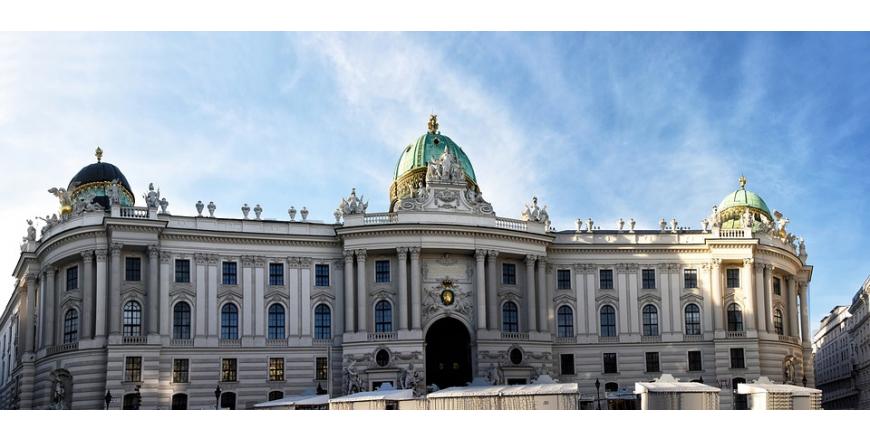
The Hofburg Palace in Austria is a magnificent and extensive palace that was the official residence of Austrian emperors from Ferdinand I to Franz Joseph. The Hofburg Palace complex includes 18 tracts and 19 courtyards and was built from 1275 under Ottokar II to the late 19th century under Franz Joseph I. The Imperial Palace houses the National Library, the Musical Instrument Museum, the Emperor's Armory Collection and the Spanish Riding School. The Imperial Treasury and the Habsburg apartments are also of great interest, as are the chambers of the famous and beautiful Empress Elisabeth.
The Hofburg Palace is one of the symbols of Vienna. The palace complex has existed in its present form since 1913. The oldest part of the complex is called Schweizerhof. The huge royal building contains about 2,600 halls and rooms.
At the beginning of its existence, the Hofburg acted as a defensive wall of a building with its defensive towers and moats with water. After Ferdinand I moved his residence to Vienna, construction work was instigated to enlarge and decorate the building. Each successive ruler who ascended the throne left his mark by adding to and embellishing the palace.
The Hofburg itself is a way for one to learn about the history of art and architecture through the centuries, from the medieval Gothic period, through the Renaissance and Baroque of the 17th and 18th centuries, to the modern art of the 20th and 21st centuries.
In 1918, Charles I abdicated and the country became a republic. It was from this time that the Hofburg Palace housed the world-famous Vienna Boys Choir, the Spanish Riding School, the National Library and the Austrian Presidency. Adolf Hitler laid his hand on the Hofburg Palace in 1938 and from it announced the annexation of Austria by Germany.
Vote:
Rating 5 from 1 voted
More sights in Austria


