

Graz, Austria
Graz is a city in southeastern Austria, the center of the province of Styria, one of the nine provinces in Austria. The Moore River divides it into two banks, on the left are the historical and commercial centers, on the right is the industrial center. Graz has a long tradition as a student city with four universities and two universities of applied sciences with over 50,000 students. Graz is a pretty green place - lots of parks and greenery. Graz is the only completely preserved medieval city in Europe that is bustling with activity.
For the first time, Graz is mentioned in a historical document from 1140 in connection with the construction of the "Abtai Sekau" monastery. The first sketches and notes for the construction of a defensive wall date back to 1233. With its completion, Graz acquired the right to call itself a city for the first time, and in 1245 it received its own coat of arms.
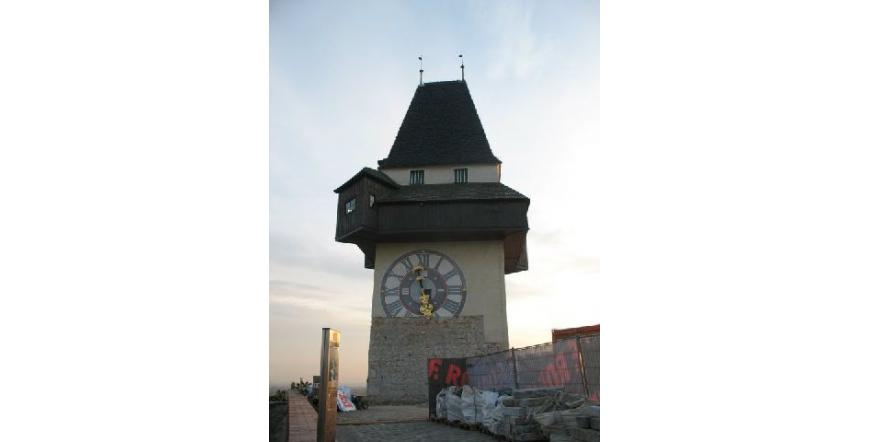
One of the most attractive places in Graz that attracts tourists is the Schlossberg Fortress. It is located on a picturesque hill that rises above the city and attracts the eyes not only with its lush greenery, but also with the famous Clock Tower, which is one of the symbols of the city.
Another architectural landmark of the city is the Landhaushof, which attracts with howling arcades and outdoor passages, and ranks among the masterpieces of Renaissance art. From 1494 until today, the Parliament of Styria holds its plenary sessions in its halls. Near the Landhaushof is the armory. Weapons from various eras have been collected in it for centuries, so that today, with a collection of 32,000 exhibits, it has the largest collection of weapons in the world.
Graz Cathedral is a true Gothic pearl in the heart of the old town. This religious temple was built in the period 1438-1464 by order of Emperor Frederick III. The construction was provoked by the idea of the ruler to build a court temple for palace ceremonies and holidays. In 1615, the Italian architect Pietro de Pomi added the famous mausoleum commissioned by Emperor Ferdinand II.
Another interesting landmark in this Austrian city is Stahlbastel, which dates back to the 16th century and was used as a prison.
Undoubtedly, Eggenberg boasts great grace, fame and beauty. Rising in the western part of the city, it is the largest and most magnificent castle in Styria. Eggenberg Palace was commissioned by Prince Ulrich von Eggenberg, and is famous for its four towers representing the seasons, twelve doors for the months, and 365 windows for the days of the year. The lord of the castle wanted to look at the world through a different window every day and always see something new.
Numerous museums and galleries make Graz a place where history and art buffs can discover curious collections. Schwarzenegger's museum, for example, keeps photos of Graz's famous son, as well as the first bodybuilding equipment that the Hollywood actor used at the beginning of his career as a fitness instructor.
Another interesting place is the criminology museum, which offers visitors access to the archives of actual criminal cases. In Graz, the curious tourist can visit an impressive botanical garden where they can enjoy rare exotic plants. In addition, Graz offers museums where the visitor can take a look at the history of aviation and the tramway, or take a peek into the world of audiovisual discoveries.
A large-scale manifestation of non-standard architectural thinking in Graz is the Moore Island. Installed in 2003, the island is the work of New York architect Vito Acconci and is an artificial island in the middle of the Moore River.
The old medieval look of Graz is cleverly stirred by newly built buildings that shape the modern look of the city. The dynamic design of the Stadtthalle, the Children's Museum, the glass elevator, the botanical garden, the architectural institute and the entertainment venues bring Graz closer to the image of a city designed for the future. This lively and modernly oriented place of culture - Graz, in 2003 became the first Austrian city to become the cultural capital of Europe.
The historic center of Graz is one of the best-preserved in all of Europe, having been included in the UNESCO World Heritage List in 1999. Schlossberg Castle is Graz's most intriguing historical landmark, which is included in the Guinness Book of Records as the strongest fortress in the world. In 2010, Schlossberg Castle became part of the UNESCO cultural sites.
Vote:
Rating 5 from 2 voted
More sights in Austria


Weather in Graz, Austria

24.22 °C
Wind: 1.03 m/s
Humidity: 69 %
Pressure: 1010 hpa
Clouds: 5 %
Wind: 1.03 m/s
Humidity: 69 %
Pressure: 1010 hpa
Clouds: 5 %