

Pleven, Bulgaria
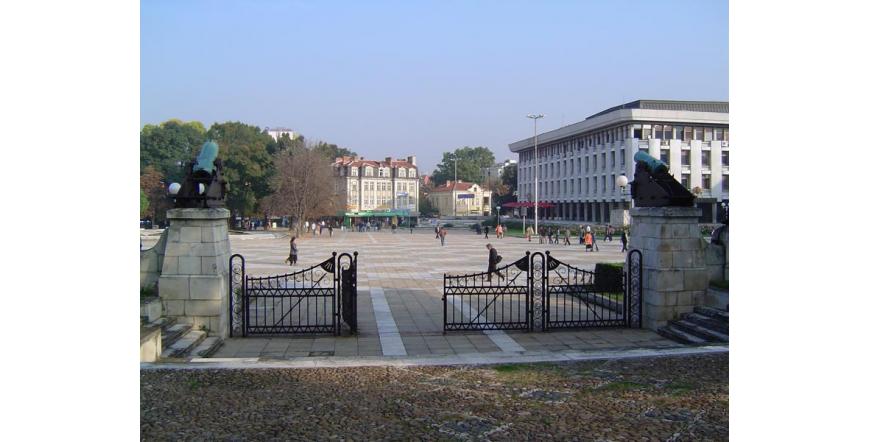
Pleven is a Bulgarian city - history, known for the decisive battles during the Russo-Turkish war in 1877-1878 and for the oldest Thracian treasure found near the city. Located in the central part of the Danube plain, with a population of about 97,000 people, Pleven was established as a settlement in the Kailaka area since the Thracians. In the 3rd-4th century, the Romans built their fortress Storgosia here. When the Bulgarians captured it, they gave it the name Kamenets, and later, together with the nearby settlement, it got the current name of Pleven.
Most of the sights of the city are connected with the memorable battles during the Russo-Turkish war.
The house-museum "Tsar Osvoboditel" was the home of the merchant Ivan Vatsov, built on the eve of the Liberation. It is located on "Vasil Levski" street, also known as "Old Main" and significant events have taken place under the roof of this magnificent house. Alexander II was solemnly welcomed here and the captured commander-in-chief of the Turkish troops, the Minister of War Marshal Osman Nuri, handed over his saber to the Russian emperor.
This building is the center of the first military governor of Pleven, General Skobelev. His monument stands at the beginning of the park bearing his name. In this place, the decisive battle took place in which 6500 soldiers died, which is why the valley is called "Dead". In the Skobelev Park, there are many battle relics on display, but the most impressive of all is the "Pleven Epic 1877" Panorama. It is located on a hill and was opened on the occasion of the 100th anniversary of the liberation of Pleven. In one of the halls, the visitor finds himself in the center of the fighting between the "Kovanluka" and "Isa aga" redoubts. This amazing painting, measuring 115 m by 15 m and covering a total area of 2.37 decares, was created by 13 Bulgarian and Russian artists under the direction of Nikolai Ovechkin.
Standing in front of her, one feels like a participant in the bloody battle and at the same time admires the unparalleled heroism of ordinary soldiers. The two elevators take visitors to two viewing platforms, from where the view of the city and the sights of Skobelevy Park are incredible.
The building that houses the Pleven History Museum was built in 1884 according to an Italian design and served as a barracks. Moved here in 1948, the museum has 24 halls that store over 180,000 exhibits related to local archeology and history.
The mausoleum-ossuary "St. George the Victorious", which has become a symbol of the city of Pleven, was built in its center on the idea of Stoyan Zaimov, a Bulgarian revolutionary and apostle of the April Uprising. The bones of Russian and Romanian soldiers who died in the Russian-Turkish war of liberation are collected here.
The community center "Saglasie" since 1869 has great merit in laying the foundations of all professional and cultural events in Pleven and the region. The largest hall of the community center is named after the famous Bulgarian pop singer Emil Dimitrov, who was born in Pleven.
The other landmark of Pleven is the Art Gallery-Collection of Svetlin Rusev, which is housed in the interesting building of a former bathhouse. The collection donated by the artist represents over 400 superb Bulgarian and foreign works of art. Here you can see paintings by Zlatyu Boyadzhiev, Sirak Skitnik, Iliya Beshkov, Georgi Bozhilov-Slona, and also by Pablo Picasso, Francisco Goya, Renoir and many others. etc.
The "Ilia Beshkov" art gallery presents about 900 of his works, as well as a peculiar collection of African stone sculpture "Shona", which is said to be the richest in Europe.
The church "St. Nicholas" was built in 1834 on the site of a small chapel from the time of the Second Bulgarian State. It is the oldest preserved church in Pleven. The church "St. Nikolay" was dug into the ground according to the then requirements of the Ottoman authorities, and its wealth is the collection of the 68 superb icons of Dimitar Zograf. Its wonderful acoustics are due to 462 special clay pots built into the walls, vaults and arches. In the fall of 1839 in the church "St. Nikolay" was founded the first Bulgarian secular girls' school by a bright woman from Pleven - Anastasia Dimitrova (1815-1894). It redraws the path of modern society, giving equal opportunities for development to women as well. A reconstruction of the first classroom of this first school can be found in "Anastasia Dimitrova" secondary school in Pleven.
The church "St. Trinity" is one of the great temples of Pleven. It was built in 1893, and the supporting columns date back to Roman times.
Pleven is a pleasant city for both residents and guests of the city. The pedestrian mall is a favorite place to stroll. At one end of it rises the magnificent old building of the municipality with the clock tower. And in the very center of the square is the water cascade, whose waterfalls and fountains spread life-giving freshness. It is especially beautiful here in the evening, when the waters are colored with different colors.
In the surroundings of Pleven there are magical places that deserve a walk to them. One of them is the "Kailaka" park, located only 10 km from the city. Located in the valley of the Tuchenitsa River on both its banks, it amazes with its 20-30 meter high sheer cliffs, at a distance of 150-200 m from each other. At the entrance to the park, the ruins of the Strogozia fortress, which is the second largest in Bulgaria after the royal basilica in Pliska.
On the initiative of General Ivan Vinarov, in 1946, the foundation of this exceptional park began. The citizens of Pleven also participate with their voluntary work in the beautification of this charming place. Today, in the central part of "Kailka" grow Himalayan pines, rarely seen in Bulgaria. The evergreen cedar of Lebanon impresses in the small grove, and the huge chestnut trees provide shade along the central avenue. And thanks to the forester Boris Parijkov, the "Kailaka" park has become a wonderful place to relax and practice various sports, such as climbing, water sports in the "Totleben Val" dam, cycling, etc.
The park is home to many rare plants and animals, some of which are included in the red book of Bulgaria. Here is also the country's first rock restaurant "Peshterata", which continues to delight its visitors with its delicious specialties and excellent service.
An interesting fact is that the restaurant was opened by the first cosmonaut in the world, Yuri Gagarin, during his visit to Pleven. The wine museum, opened in 2008, is located in the Center of the "Kailaka" park in a cave formation consisting of five galleries with an area of 650 sq.m. Pleven is considered the center of the wine industry in Bulgaria, since in 1890 the first and only school of viticulture and winemaking was opened in the city. The museum has two tasting rooms where you can try wine and buy a bottle of over 6,000 wines from all regions of Bulgaria. In addition to the proposed exposition of 30 to 90 year old wines, in its historical hall the museum presents objects and attributes related to viticulture and winemaking from the time of the ancient Thracians, Greeks and Romans to the present day.
About 15 km from Pleven along eco-paths, you can take a pleasant walk to the villages of Gortalovo and Kirtozha; Gortalovska cave; Split stone; the village of Telish with the remarkable natural creation of the "Sedlarkata" - an impressive bridge measuring 22 m wide, 7 m long and about 4 m thick of the arch.
Speaking of Pleven, we cannot pass by the Valchitran Thracian treasure from the end of the Bronze Age, 16th century BC. Discovered quite by accident in 1924, 24 km from the city, today it is the pride of the National Archaeological Museum. A copy of the treasure, consisting of 13 items weighing 12.5 kg, is located in the Pleven Historical Museum.
Vote:
Rating 5 from 1 voted
More sights in


