

Shabla, Bulgaria
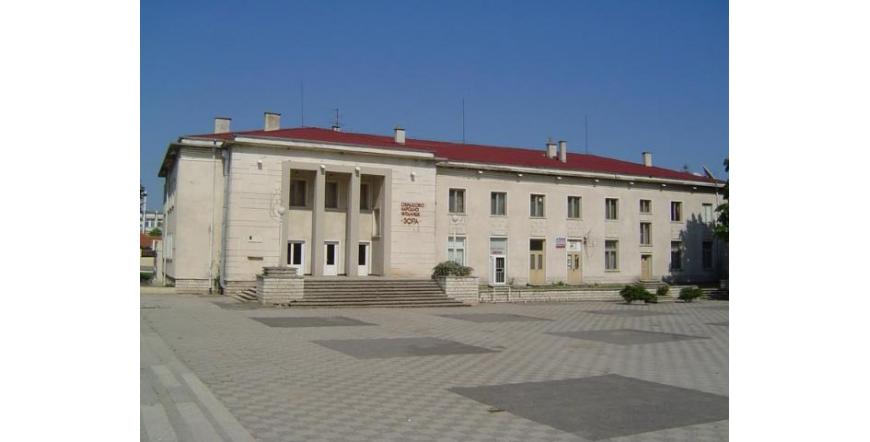
Shabla is a small town with a long, rich and long-lasting history, located in North-Eastern Bulgaria, 6 km from the Black Sea coast. The history of the settlement dates back to the Neolithic Age of the fifth millennium BC. Excavations of the Great Island in Lake Durankulah define it as the earliest stone architecture in Europe from 4500 AD. BC There are five vertical layers, and the uncovered remains of buildings are 212. The settlement is also unique because of the only two-story stone temple discovered in the Balkans from the 5th century BC and the world's largest prehistoric necropolis, located on the opposite bank. Then the Thracians took turns on these lands, then the Romans...
The Romans came here in the 2nd century BC and they discovered a settlement with a harbor called Karon limen, after the founders, the Carians, who lived on the western shores of Asia Minor. There is also a fortress wall, parts of which are still visible today. The next settlers were the proto-Bulgarians of Asparukh. From the Column found during excavations with a medieval inscription, it is understood what their armament was: breastplates, helmets, swords, bows and long spears.
Until the 14th century, in the four settlements of this region, which were occupied by the proto-Bulgarians and the Slavs, agriculture and trade developed, and their defense was well organized. But because of the invasions of Tatars and Pechenegs, this region is depopulated. Bulgaria fell under Turkish rule and in the 16th century the Turkish Empire decided to settle this area, promising the new settlers land and lower taxes. At first only Turkish population came here, but later Bulgarians from Kotel, Sliven, Starozagorsko, Yambolsko, Elensko, Chubra village, Karnobatsko started coming here.
This is how the new settlements were formed around the main Shabla, which arose also at that time, already further inland from the sea coast. There are many legends about its name...One of them is related to the legend that near the lighthouse lived in a large mansion Ayshe, a beautiful Turkish woman, who robbed the merchants staying here. Later, its inhabitants moved to live further from the sea, and the name of the settlement remained as the name of Ayshe Abla without the first syllable. Another legend tells that the name of Shabla has a proto-Bulgarian origin, as "shabla" means "ladder".
Budni were the inhabitants of the Shabla settlement, which became a city in 1969. The cell school, which was the first in the vicinity, was founded in 1853 and operated under the local church called "St. Holy Martyr Charalampius".
One of the great landmarks and symbols of Shabla is the lighthouse, which is a miniature copy of the famous Alexandria Lighthouse, one of the Seven Wonders of the Old World. The Shablen lighthouse is the oldest and highest on our Black Sea coast. On the rocky promontory next to it is the easternmost point of Bulgaria - here the New Year comes the earliest. The lighthouse was built in 1786. designed by a French architect. It has the form of an eight-sided truncated pyramid, which rises on a four-sided foundation. Its height is 32m, and 130 winding steps lead to the top of the tower and every 25 seconds. a white light flashes three times. The lighthouse marks the midway point between the mouth of the Danube and the Bosphorus and protects ships from running aground on reefs. Its signal is visible from 17 nautical miles. Every year in the summer for one month there are so-called "open doors", when the lighthouse can be visited for free and seen up close, but only up to the second landing.
Other attractions in the Shabla region are Tuzlata and the three lakes - Shable Lake, Durankulash Lake and the one near the village of Ezerets. Tuzlata is a lake-lagoon and occupies an area of 250 decares. Its mud is medicinal due to its hydrogen sulphide composition. Rare birds can be found in Tuzlata and the other three lakes, about 41 species - white-eyed plover, white egret, stiltfoot, etc. Durankulash Lake is included in the list of the Ramsar Convention as a waterfowl habitat of international importance.
In the area around Tuzlata there is a wide beach, the sea water is clean and for people who like challenges, it is wonderful and nice here. Towards the villages of Tyulenovo and Kamen bryag, the coast becomes frighteningly beautiful. The water has sculpted rocks with wonderful shapes, which look impressive against the background of the sea waves. On Kamen Bryag every year on July 1, the July Morning celebration takes place, when hundreds of people welcome the sunrise to the sounds of John Lawton's music, with which he calls everyone to hug someone on this magical morning.
Vote:
Rating 5 from 1 voted
More sights in


Weather in Shabla, Bulgaria

24.92 °C
Wind: 6.05 m/s
Humidity: 53 %
Pressure: 1019 hpa
Clouds: 0 %
Wind: 6.05 m/s
Humidity: 53 %
Pressure: 1019 hpa
Clouds: 0 %