

Roskilde Cathedral, Denmark
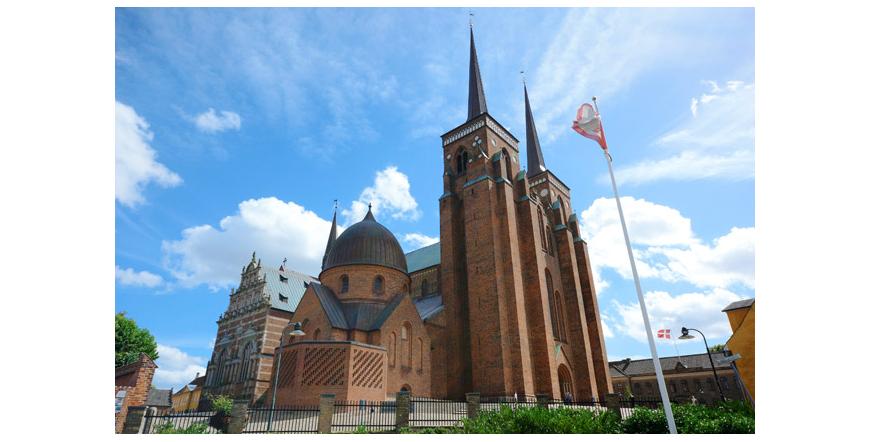
In the late Middle Ages, the Danish town of Roskilde became the capital of the Danish kingdom and an episcopal center. Today, Roskilde is an attractive tourist center whose main attractions include the Red Cathedral, which served as the tomb of the Danish monarchs. It houses one of the oldest working organs in the world, which regularly hosts concerts.
Roskilde Cathedral is famous for the mausoleum of the Danish royal family. In ornate tombs are laid the bodies of 39 rulers and their wives. No aristocratic funeral ceremonies were ever actually performed in the cathedral, only the laying of the bodies in the tombs. This purpose of the Cathedral at Roskilde ensured its conscientious and rich upkeep.
Today it is even more impressive with its additional additions, monuments, and decorations that make it an impressive display of the changing fashions in religious art and architecture.
The erection of the cathedral at Roskilde was Bishop Absalon's idea, replacing a small church that had existed in this area since the ninth century. It is his wish that this religious house should become a symbol of the growing influence of the region.
Construction of the cathedral began in the 1270s, using new and expensive bricks, and it is believed to be the first Gothic cathedral in northern Europe to be built with such materials - some 3 million baked bricks. Construction was completed in 1280, but then further expansion and decoration was carried out - a chapel was added and the walls were covered with frescoes and relief images.
Vote:
Rating 5 from 1 voted


