

Drač, Albania
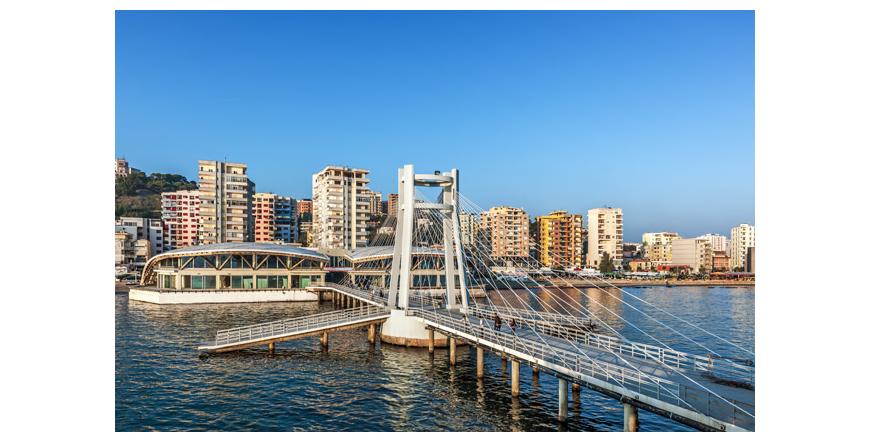
Drač, or Duras in Albanian, is the oldest city in Albania. The city knows how to attract and predispose its visitors - 10 kilometers of beaches, museums, galleries, remains of ancient landmarks. Drač is extremely popular in all seasons because of the variety of attractions, which is why Durres is one of the most visited resorts of Albania. This Albanian magic is captivating.
Picturesquely perched on the shores of the Adriatic Riviera, Durres is a favourite holiday destination for locals and foreigners alike. Drac's proximity to Tirana makes it even more attractive and desirable given the interesting historical sights it has to offer tourists. Ruins of fortress walls, an amphitheater from the Roman era, the Fatouh Mosque, as well as the old military bunkers near the beach are just some of the places in Durres that have undeniably attracted interest and attention over the years. Along with all this, and especially thanks to its ferry connections with the Italian ports of Bari (300 kilometres away) and Brindisi (200 kilometres away), Durres serves as a good starting point to Italy and the Adriatic in general.
The Albanian town of Drac is an ancient city situated on the Adriatic coast, in a lovely flat and fertile area along the coast. Drač is about 33 km west of the capital Tirana. The port of Drač is the largest in Albania and serves much of the country, including Tirana.
In Albanian, the name of the city is Duras, but in the Bulgarian language with the spelling as Drač it was first referred to in the Encyclopedia of the Danchov Brothers in 1936. Thus, Drač belongs to the geographical objects for which there are historically created Bulgarian correspondences, whose forms are established in the Bulgarian language with another spelling. In fact, the correct Bulgarian name of the town, as such related to Bulgarian history, is Duratso.
Drač was founded in 627 B.C. The name of the town is mentioned by many historians and writers. A great architectural landmark has been preserved to this day - in the second century BC a huge amphitheatre was built here, which is among the greatest monuments of antiquity that have reached the present day. The amphitheatre is the only monument of its kind on Albanian territory.
During the Middle Ages, for large periods of time, Duras often fell within the borders of the Bulgarian kingdom, which is why it was referred to by the Slavic name Drač. Although a strong and stable fortress, Drač was conquered by King Samuel in 983. During World War I, more precisely in November 1915, the onslaught of Bulgarian and Austro-German troops caused the retreat of Serbian troops.
If we unfold the catalogue of attractions of Drač, we must emphasize some colorful representatives of architectural, natural and historical heritage.
If we start with the beaches, we would say that Duras is proud of its 10-km long beach.
One of the pearls of Drac is undoubtedly the villa of King Zog, an exquisite example of luxury and refinement. Furnished with expensive furniture and much taste. The villa is visited either with specially organized tours or on your own. The Villa of King Zog is one of the symbols of Drač.
Every church and mosque in Drač deserve the attention of visitors to the city. Most temples have been renovated, preserving the original architectural style. The amphitheatre in Drač is a very bright and valuable architectural monument, besides being the largest on the Balkan Peninsula. It was built in the 2nd century and during its functioning it gathered up to 20 000 spectators. However, today the amphitheatre has retained little of its former beauty. It was discovered quite by accident in the 1960s and has not yet been fully developed.
Among the working museums in Drač, the Archaeological Museum stands out. It holds an impressive collection of artifacts. In it can be seen various exhibitions from different periods through which the country has passed. Among the most notable exhibits are huge tombstones and impressive stone sarcophagi.
In the centre of Drač stands the Venetian Tower, also called the Rotunda. It was built in the 16th century. Apart from being a delight to the eye, the tower also offers a culinary experience - eating in the restaurant on top of it while enjoying the view of Drač.
Attention should also be paid to the Koloseo Gallery, which is an irresistible challenge for art lovers - the works of various local artists can be viewed there.
Vote:
Rating 5 from 1 voted


