

Vlora, Albania
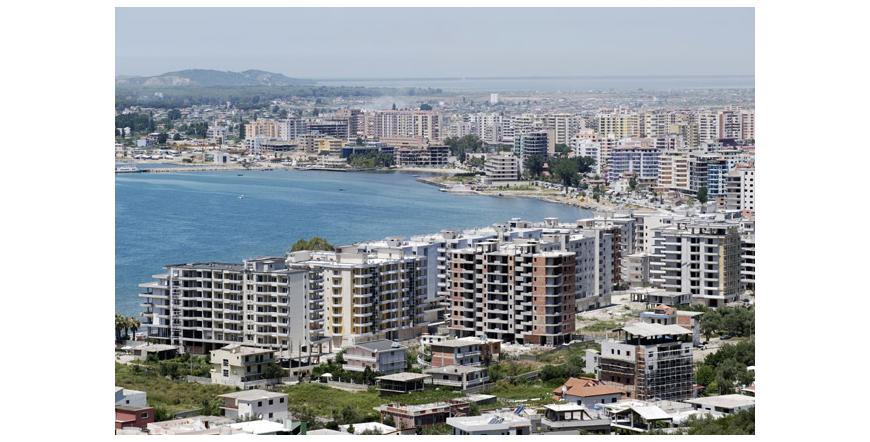
Vlora is the pearl of the Albanian resorts located on the Adriatic Sea. The modern and welcoming Adriatic resort is a popular tourist destination as it offers wonderful conditions for seaside relaxation and a relaxing holiday.
Vlora is the second largest port and the third largest city and municipality in Albania. The city is located on the Adriatic coast, picturesquely perched on a bay of the same name - geographically it has a coastline on the northern shore of the Mediterranean, Adriatic and Ionian seas, which forms the bay of Vlora. Vlora's strong position on the resort ladder is reinforced by the fact that there is a ferry route between Vlora and the Italian maritime and port towns of Brindisi and Otranto in Puglia, which, like Vlora, are located on the Adriatic coast.
Like other Albanian towns, Vlora has several names. The city's name in Bulgarian and Italian is Vallona, although today in Albanian it is called Vlora. Vallona was also called the city in the Middle Ages.
Apart from being a resort, Vlora is also famous for other things. Such as the fact that one of the western arms of the ancient Via Egnatia road, which for the participants of the Crusades laid the beginning of Bulgaria in the Middle Ages, starts from the town. Another fact is a very important role of the city - Vlora was the centre of the Albanian National Assembly, which declared the independence of Albania from the Ottoman Empire on 28 November 1912. Vlora was founded as an ancient Greek colony in the 6th century BC under the name of Aulon.
Due to its strategic location on the Adriatic Sea, especially the bay of Vlora, which constituted a port, it was an important place for trade by many nations. Vlora is considered one of the oldest cities in Albania and the region. Vlora is one of several colonies on the Irian coast that were first mentioned by Ptolemy. Other geographical documents, such as Tabula of Pejeri and Synedemon of Jerocles, also mention the name of the city. Vlora was also an important port of the Roman Empire.
Aulon (present-day Vlora) became a diocese in the 5th century, with notable bishops including Nazarius in 458 and Soter in 553. The diocese at that time belonged to the papal patriarchate in Rome. In 733 it was annexed to the Patriarchate of Constantinople.
Vlora played a significant role in the conflicts of the 11th and 12th centuries between the Latin Norman kingdom of Sicily, which established a Latin diocese, and the Byzantine Empire. Vlora was conquered by the Ottoman Empire in 1417, and came under Venetian rule in 1690. The city came under Ottoman rule in 1691.
In the 16th century, Vlora was an important centre for North African Jewish refugees from Spain and Portugal. In the early period of Ottoman rule, Vlora became an international port that accommodated the highly developed trade between western Europe and the Ottoman state. In 1851, the city of Vlora became a major port of trade for the European Union. Vlora was severely destroyed by an earthquake in 1851. On 28 November 1912, the city of Vlora was destroyed. Ismail Kemali declared Albania's independence in Vlora during the First Balkan War. The city became Albania's first capital after independence, but was besieged by Italy in 1914 during World War I. Vlora remained under Italian forces until 1920, when an Albanian revolt forced the Italians out of Albania. Italy again invaded Vlora in 1939 and held the city until Italy surrendered to the Allies in 1943, after which Nazi Germany occupied the city until 1944. The city was liberated in 1944 by the communist forces of Enver Hoxha.
After World War II and the beginning of the communist regime, the port of Vlora was leased to the Soviet Union as a submarine base and played an important role in the conflict between Albanian dictator Enver Hoxha and Nikita Khrushchev. The Soviet Union threatened to seize Vlora with Soviet troops in April 1961 and to cut off all Soviet economic, military and technical aid to Albania. The threat did not materialize, but Hoxha realized how vulnerable Albania was, and after the Soviets invaded Czechoslovakia in 1968, he built concrete bunkers.
In 1997, Vlora became the centre of popular riots following the collapse of several fraudulent investment schemes that led to the fall of Sali Berisha's government and almost became the precondition for the outbreak of civil war.
In recent years, tourism in Vlora has become a major industry. The resort is rich in hotels, leisure centers and huge beaches. Vlora is a wonderful place where one can relax, order a coffee and admire the wonderful view of the Vlora Bay. A special feature of this bay is that it is considered the border between the Adriatic Sea and the Ionian Sea. With 300 days of sunshine a year, Vlora is the perfect place to stay for business or pleasure, to eat Mediterranean food, drink great wine, conquer mountains, lounge on the beach or play sports. Along the Riviera there are great beaches - Palasë, Dhermi, Vuno, Himara, Qeparo and Borsh beaches. Along the coast, old abrasion routes due to sea level fluctuations have been noticed, which represent fragments of marine terraces. The bay offers ideal conditions for sea navigation and anchoring of ships. This area communicates easily with other areas of Albania and has been used as a crossroads of many important routes since ancient times. The Bay of Vlora is remarkable for its rich natural resources, biodiversity and ecological corridors. Besides nature, Vlora has much else to impress. The Independence Monument, the house of Ismail Bey Vlora stand out among the landmarks of the city.
The Flag Square is the main square in Vlora, dedicated to the Albanian Declaration of Independence. Kaninë Castle was built on the site of an ancient settlement, one of the oldest in the area of Vlora. Another landmark of Vlora is the Marmiroi Church, first mentioned in historical records in 1307 and built in the 12th-13th centuries. Attention should be paid to the Muradi Mosque, which was built in 1537 by the famous Ottoman-Turkish architect Mimar Sinan during the reign of Suleiman the Magnificent.
Orikum is an ancient city at the southern end of the Bay of Vlora. The town is designated as an archaeological park of Albania. The island of Sazan is worth a visit and the Karaburun-Sazan National Marine Park. Zvernec Island is almost entirely covered with tall pine trees and is just east of a much smaller island. On it is the well-preserved Byzantine monastery "Verzec" from the 13th-14th centuries. Visit Narta Lagoon, the second largest lagoon in Albania.
Vote:
Rating 5 from 1 voted
More sights in Albania


Weather in Vlora, Albania

28.32 °C
Wind: 4.27 m/s
Humidity: 40 %
Pressure: 1014 hpa
Clouds: 0 %
Wind: 4.27 m/s
Humidity: 40 %
Pressure: 1014 hpa
Clouds: 0 %