

Turku, Finland
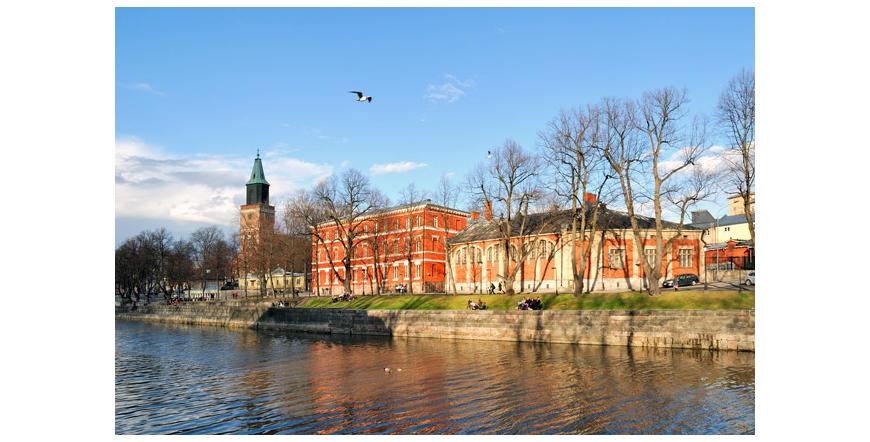
Turku is a city in southwestern Finland, the center of the province of Western Finland. It is located at the confluence of the Aura River in the Baltic Sea and is protected by the largest archipelago in Europe. It is currently the fifth largest city in Finland, as well as the official seat of the Finnish Lutheran Church.
Turku is the Finnish city with the longest history, as it was established in the 13th century. The construction of the most remarkable historical monuments in Turku - the Cathedral and the Castle - began as early as the XIII century, but their construction lasted for centuries. For a long time after its establishment, the city was the largest in terms of population in the country, and between 1809-1812 Turku was the capital of Finland. The time came when the Russians conquered Finland, and by their decision moved the administrative functions of the capital city to Helsinki. The first Royal University in the country was also established in Turku. In 1827, a huge fire broke out in Turku, which destroyed most of the city.
Turku has restored a large number of its medieval churches, not because Finns are very religious, but because they are brought up with respect for tradition. The old wooden houses that survived the fire are united in one museum village - Luostarinmäki. There you can trace the history of the ancient crafts of the people who created the city - weaving, lace making, making and drying rye bread with a traditional shape that cannot be seen anywhere else in the world. Because of its great historical importance, Luostarinmäki was declared a cultural site under the auspices of UNESCO, and in 1985 it received the FIJET "Golden Apple" award.
Another landmark of Turku is the Sibelius Museum, opened in 1968. It exhibits a large collection of musical instruments, literature and photocopies of original works by Jan Sibelius.
The impressive vintage frigate Suomen Joutsen, or the Finnish Swan, was rebuilt in 1930 for the training of the Finnish Navy. It is anchored on the banks of the Aura River in the central part of the city to remind with its grandeur and beauty that Turku is a maritime city with a rich history in shipbuilding and a port that has been the city's link with the world for many years. Even today, the port is one of the most important in the country, because Finland's largest foreign trade exchange takes place through it.
Another interesting museum in Turku is the "Altonen" museum, where a large part of Väjno Altonen's works with their inherent monumentality are exhibited. His are also the five bronze figures that have been given the unifying name "Our Works for the Future" in the plenary hall of the Finnish Parliament - "The Pioneer", "Satisfied Worker", "The Future", "Faith" and "The Reaper".
As examples of Finnish modern architecture, the concert hall, the theater, some university buildings and the Church of the Resurrection, built in 1941, the work of one of the great architects of Finland - Erik Brigman, were chosen.
Vote:
Rating 5 from 1 voted


