

Finland
Finland is a maritime country. It was an integrated part of Sweden from 1323 to 1809, and from 1809 to 1917 it was part of the Russian Empire. Finland became an independent state only as late as 6 December 1917.
The climate is transitional temperate, with increasing continental characteristics in the eastern part. Cold and sub-polar is the climate in Lapland, which accounts for ¼ of the country’s area. There during the polar summer, for 73 days, the sun does not set for 24 hours a day. Hence the name of the region – Land of the Polar nights. During the dark Polar winter the sun never rises for a period of 51 days.
Finland is the richest country in lakes in the world. Their total number is 87,000. The largest of them is Lake Saimaa (4,400 sq.km). Saimaa is a sophisticated network of natural waterways whose waters flow into Lake Ladoga in Russia.
Finland is extremely rich in forests. The country has a dense network of national parks and natural reserves. The hills in the Koi National Park represent remains of mountain ranges formed 2 billion years ago. Nature here is an incredible ratio of scattered forest islands and peninsulas among the clear lake water.
The leading industries in the country are timber production, woodworking and cellulose and paper production industry.
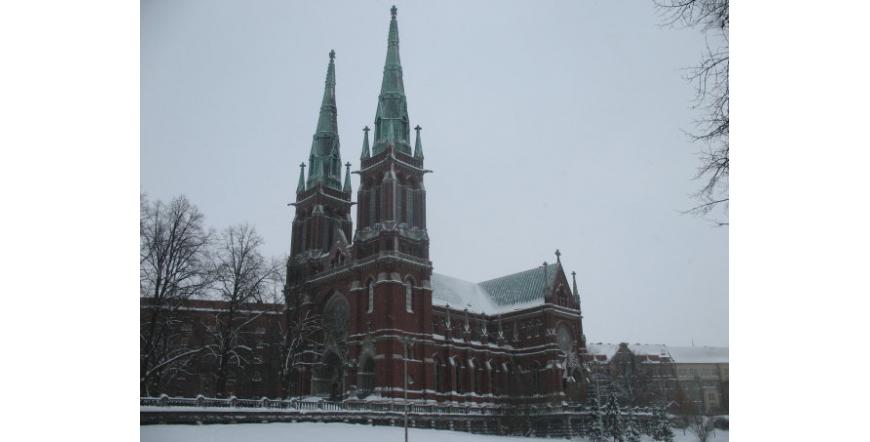
The capital city Helsinki was built in 1640 on the small rocky Estnes peninsula jutting into the Gulf of Finland, shielded from the sea storms by a group of small rocky islands.


- Finland
- Helsinki
- 338 145 km²
- 5 214 000
- Euro
- Finnish, Swedish
- Christianity