

Brazil
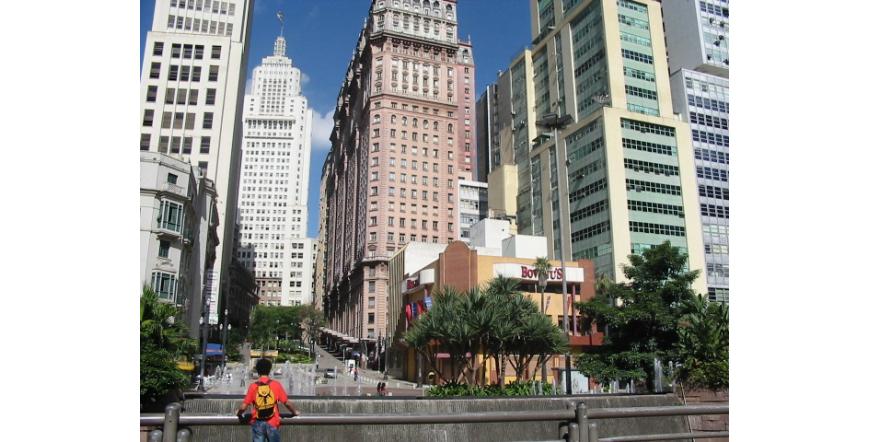
Brazil is the largest country by area and population in South America. To the East it borders the Atlantic Ocean, and its land borders, apart from Ecuador and Chile, are with all the other 10 South American countries. Along the northeastern coastline the low lagoonal coast is surrounded by numerous coral reefs, and in the wide estuary of the Amazon is located the largest marine-fluvial island on Earth – Marajo.
One third of Brazil’s area is occupied by the Amazon plain – the largest plain on Earth. In Amazonia are located the largest equatorial forests in the world, called selvas. The plant and animal species in Amazonia exceed 5 mln. There are different types of palms, lianas, orchids, and water lilies. Amazonia is the home of a number of forests of great economic importance – cocoa, quinine, cotton, rubber tree, etc. Widely spread in Brazil is the jaguar – the largest wild cat, which is an excellent hunter and swimmer, and has beautiful golden fur and outlined black round spots. In Amazonia lives the biggest snake on Earth – the anaconda. The preservation of the equatorial forests in Amazonia is becoming a world problem as they are “Earth’s lungs”. The climate is diverse as the Equator crosses the northern parts of Brazil, and the Tropic of the Capricorn – the southern ones.
Brazil holds the top places by deposits of high quality iron ores, manganese, bauxite, zinc, beryllium, nickel, uranium, gold and precious stones. The oil fields are also big. Locomotives, ships and cars are produced.
No other country in the world produces more coffee. It ranks first by production of bananas in the world, second by production of acrylic fibre and oranges, and third by cocoa production.
Brazil is the largest Portuguese-speaking country in the world. The first settlers here were the Portuguese.
In 1960 the city of Brazil was declared the capital of Brazil. It was built to an initial plan in the shape of a landed 13-metre long aeroplane. In the centre is the building of the National Congress, in the “cockpit” is the President’s residence, and in the “aeroplane wings” are the residential districts.
Sao Paulo is one of the oldest colonial cities in the New World. Today it is a powerful industrial and financial hub and ranks 4th among the largest cities in the world.
Rio de Janeiro is one of the most beautiful cities in the world. Here is located the biggest stadium in the world - Maracana. The magnificent beaches Copacabana and the numerous natural and historical landmarks attract to the city millions of tourists. Atop Corcovado Mountain, above Rio de Janeiro and located in the Guanabara Bay, rises the magnificent statue of Jesus Christ the Redeemer.
In February, in the heat of the Brazilian summer, Rio de Janeiro turns into the capital of the most grandiose carnival in the world.


- Brazil
- Brazil
- 8 547 404 km²
- 170 000 000
- real
- Portuguese
- Christianity