

Paracas National Reserve, Peru
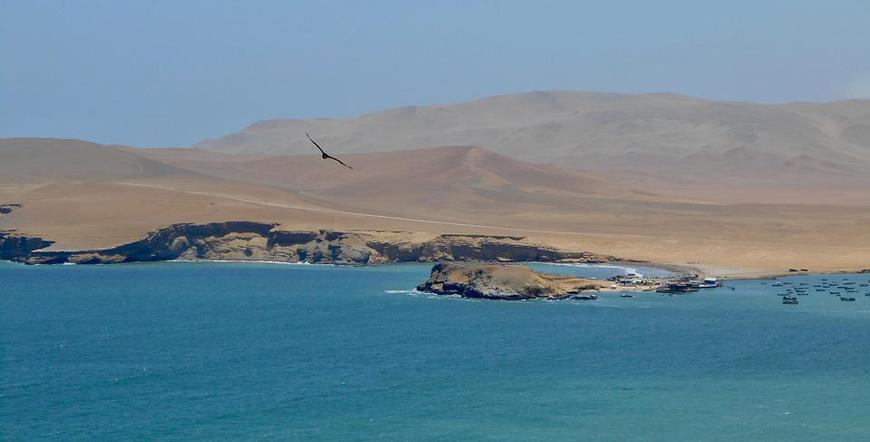
The Paracas National Reserve is located on a desert peninsula, connected to the ancient history of Peru and the legends of the life of the indigenous people of this interesting country - the Incas. Covering an area of 3350 sq km on the coast of the Pacific Ocean, Paracas National Reserve was established in 1975 and is a haven for huge numbers of sea lions and colonies of seabirds.
The winds here are strong, hot and dry and bear the name "paracas", hence the peninsula's name. Located in the foothills of the Cordillera, near the city of Pisco and about 250 km from the capital Lima, this barren area of Peru contrasts with the great diversity of life in the ocean. Algae and micro-organisms are abundant food for the vast passages of fish along the Peruvian coast with anchovies and anchovies being the most common.
Colonies of millions of birds, the most numerous being cormorants, live on the surrounding rocks of bizarre shapes and on the nearby small islands, and their faeces are turned into a synthetic fertilizer known as guano and used in the past all over the world. Every year dozens of species of migratory birds stop for rest on the Paracas Peninsula and the beautiful surrounding islets during their long exhausting journey. Among them can be seen pelicans, blue-footed boobies, red-legged and neotropical cormorants. And for the Humboldt penguin, the flamingo and the South American condor, Paracas National Reserve is their last refuge.
In addition, the coast of the Paracas Peninsula is a unique habitat for different types of grasses, which were of great importance to the Nazca tribe, whose inhabitants made clothing and household items from them. In 1927, the archaeologist Giulio H. Tello and his team discovered here tombs with burial cloths of lasting color and durability, which are still a mystery, but made of these same grasses.
The sandy beaches of Paracas include La Mina and Mendieta. And the Candelabra geoglyph is a huge engraving on a sand hill of mysterious origin and is an outstanding landmark of the Paracas Peninsula. The giant stem measuring 181m and branching looks like a candlestick-candelabra. Painted on the changing surface of the sand without being erased and so precisely crafted considering the windy region, the geoglyph amazes and attracts people from all over the world. The Candelabra is believed to date back to 200 BC and can be seen from 12 miles out in the ocean.
In the 50s of the 20th century, the German archaeologist Maria Reiche studied the candelabra of Paracas for 6 months. According to her research, the geoglyph is associated with the constellation of the Southern Cross, also known as the Cross of the Navigators to guide sailors from the Southern Hemisphere. According to some legends, this strange geoglyph is the work of the indigenous people of these lands, but this still remains a mystery. But the Candelabra is always standing there, as if waiting for its secret to be revealed.
The town of Paracas is closest to the Paracas National Reserve, where the hotels are beautifully appointed, the food on offer is very good and there is organized transport to the National Park and the islands. Sand dunes abound in the park, where you can practice extreme sports such as buggies and snowboarding on the sand.
Vote:
Rating 5 from 1 voted


