

Lima, Peru
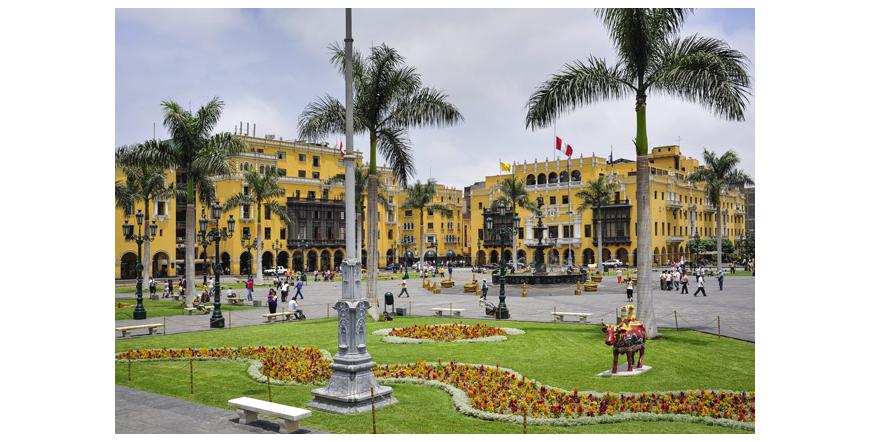
Lima is located on the coast of the Pacific Ocean. The city was founded by the Spaniard Francisco Pizarro in 1535. Lima became the capital of the created Spanish Viceroyalty of Peru and was called the "City of Kings". After winning the independence of Peru, the city of Lima became its capital. Today, the population of Lima numbers about 7.8 million people.
In 1988, the ancient center of Lima was declared a World Heritage Site by UNESCO. The beautiful buildings here are built in the Spanish colonial style. The 16th century cathedral and the Presidential Palace in the Plaza Mayor are some of Lima's most important sights.
Today, the headquarters of the Museum of Religious Art are the church and monastery "San Francisco". They were rebuilt from 1657 to 1674 in the Spanish Baroque style after a devastating earthquake. There are two more small chapels in the complex - "Solitude" and "Miracle". A large underground network of catacombs, connecting the various buildings and the cathedral, attracts the attention of tourists. The church is a treasury of sculptures, furniture, gold and silver objects, as well as a collection of paintings by famous artists and a library with 25,000 books. In 1551, the University of San Marcos was founded in Lima. In the Rafael Larco Herrera Museum, located in the former viceroyal palace, you can see a collection of pre-Columbian art, as well as many finds from the Inca period. The remains of the Pachacamac Inca settlement, which is located in the valley of the Lurin River not far from Lima, are worth seeing.
The most visited beaches here are "Santa Maria del Mar" and "Punta Hermosa". But the most interesting attraction of the city is the carnival, which takes place in the last days of Great Lent.
Vote:
Rating 5 from 1 voted


