

Katowice, Poland
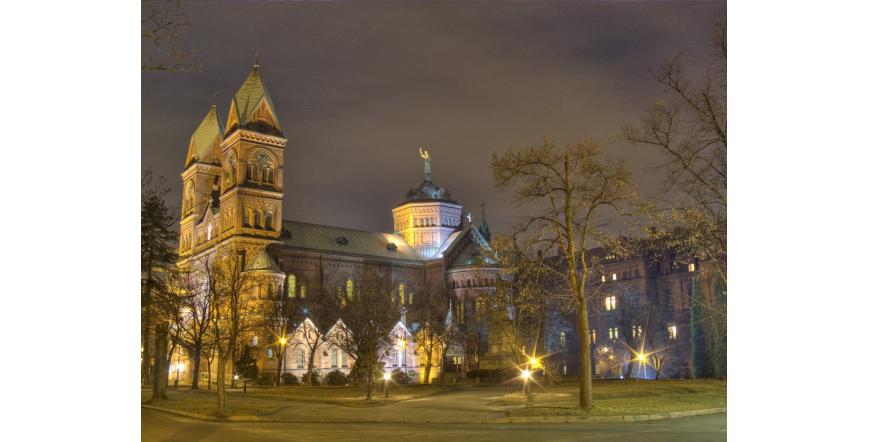
Katowice is a city in southern Poland and the capital of the Silesian Voivodeship. Geographically, Katowice is located in the eastern part of Upper Silesia, on the Katowice Uplands, which are part of the Silesian Uplands. The rivers Rava and Klodnitsa flow through the territory of the city. Administratively, Katowice is separated into a separate poviat and is the center of the Upper Silesian Metropolis. From an economic point of view, Katowice is one of the most important cities in Poland, as it is the center of the mining industry. Here is the headquarters of one of the largest banks in Poland - "ING Bank".
In the past, Katowice was quite a controversial town. The place where the city stands today was conquered by Poland in the 20th century. In the 14th century, Katowice came under the control of the Kingdom of Bohemia, later the power over the city passed to Austria, and even later it was already an independent city. In 1865, Katowice was granted city status in 1865, while under Prussian rule. From 1953 to 1956, the city was called Stalinogrod.
The fact that in the past Katowice was quite a controversial territory, today one thing cannot be disputed - Katowice manages to arouse interest in its visitors. Known for its industrial past, which has undoubtedly left its mark, Katowice has much to surprise and make you spend more time exploring. Katowice is not among the most developed touristic cities in Poland, but it still has its impressive sights.
The Silesian Theater "Stanislav Wispianski" is among the pearls of Katowice. The theater is located on the shopping square and is named after the Polish writer and artist Stanislaw Wispianski, whose work was strongly influenced by local folklore. The Silesian Theater "Stanislav Wispianski" is the largest building in the region, which is dedicated to dramatic art. It was designed by the German architect Karol Moritz at the beginning of the 20th century.
Goldstein Palace is another spectacular sight in Katowice. Goldstein Palace is one of the most representative palaces of Katowice. It was built in the 19th century in the Neo-Renaissance style. Today, Goldstein Palace houses the city registry of Katowice. Kosciuszko Park is a wonderful place to relax and take a walk. It is located in the very heart of Katowice and wins its visitors with its wide variety of trees. Its English parts attract with beautiful lines of roses, English flower beds and sculptors of famous local artists.
The famous and impressive wooden church "St. Archangel Michael" - the oldest church in Katowice - is located in Kosciuszko Park. The Neo-Gothic Church of the Blessed Virgin Mary, which was built in 1870, is also of interest.
The Spodek sports hall is also extremely interesting. According to a legend, a UFO landed in Katowice in 1972 and, due to lack of fuel, remains in the same place to this day. In fact, the Spodek Sports Hall is the biggest sports and concert venue in Katowice. Its building is definitely the most recognizable in the city, because of its architecture and design.
The Museum of Computers and Computer Science is a great jewel for Katowice. This unique and fascinating museum tells the 40-year history of computers and information technology.
The Silesian Museum is a beautiful museum in Katowice that survived a Nazi attack but was fully restored in 1984. The museum offers its visitors the opportunity to learn a lot about the history and art of Silesia.
In no case should you miss the unique architectural masterpiece - the Christian Cathedral "Christ the King". It was designed and built between 1927 and 1955 and is distinguished by its classical architecture.
There is more to see in Katowice, such as Poland's largest zoo and the monument to the Silesian insurgents. The largest zoo in the country has a variety of representatives of different animal species. In the astronomical observatory and the planetarium, interesting performances are organized, which in an attractive way explain to the visitors details of the history and future of the Cosmos.
Vote:
Rating 5 from 1 voted
More sights in Poland

Weather in Katowice, Poland

28.5 °C
Wind: 4.25 m/s
Humidity: 50 %
Pressure: 1010 hpa
Clouds: 59 %
Wind: 4.25 m/s
Humidity: 50 %
Pressure: 1010 hpa
Clouds: 59 %