

Odessa, Ukraine
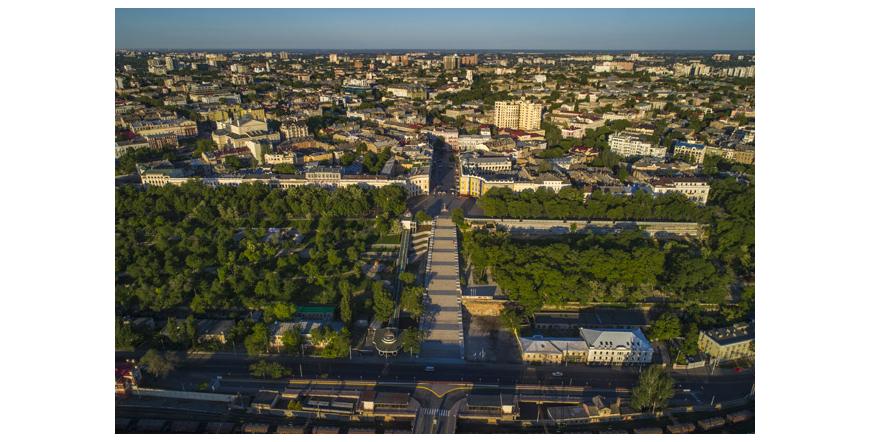
Odessa is a Black Sea city in Ukraine, which is a major port and cultural center, as well as a regional city of Odessa Oblast. Turkey's control of the Dardanelles and Bosphorus allow NATO to control water transport between Odessa and the Mediterranean.
In fact, the city has two major ports, Odessa itself and South, located on the outskirts of the city. Ilichovsk, another important port, is located in the same area, southwest of Odessa. Together they make a major transport hub, connected by rail.
Odessa is the fifth largest city in Ukraine, and the most important commercial centre for the country. Its old architecture resembles Mediterranean architecture more than Russian, as it has been influenced by French and Italian architecture. Odessa was declared a hero city in 1945.
Odessa was officially founded as a city in 1794, originating as a Russian naval fortress in lands annexed by the Ottoman Empire. The city was named after the ancient Greco-Roman colony of Odessos (now Varna, Bulgaria).
The Frenchman Duc de Richelieu was governor of Odessa in the period 1803-1814. He is considered one of the fathers of Odessa. Richelieu fled the French Revolution and joined Catherine's troops in her fight against the Turks. It is to him that the city owes its construction and organization of amenities and infrastructure. From the 18th to the 19th centuries, a large Jewish community from the western parts of the country settled in Odessa and thus the city became the first in the number of Jews among the large cities of the Russian Empire.
After the Bolshevik Revolution of 1917, Odessa was occupied by several military forces, including the Ukrainian Central Rada, French, Red and White troops. Finally, in 1920, the Red Army conquered Odessa and united it with the Ukrainian SSR, which later became part of the USSR. After the collapse of communism in 1991, the city became part of the independent Ukraine.
One of the jewels of Odessa is its cathedral, which is also known as the Transfiguration Church of Odessa. Its foundation stone was laid in 1795 and the cathedral was officially consecrated in 1808. The project for the construction of the cathedral was entrusted to the Italian architect Francesco Frapoli. The cathedral is recognized as the main temple of the Ukrainian Orthodox Church, which belongs to the Moscow Patriarchate, as well as the largest Orthodox temple in the city.
In the three centuries that this religious temple has existed, it has managed to rise to become a cultural and religious symbol of Ukrainians. The main altar of the cathedral is consecrated in the name of the Transfiguration, the right altar in the name of St. Nicholas of Myra, and the left altar in the name of St. Spyridon.
The bell tower of the Odessa Cathedral was built between 1825 and 1837 and took 12 years to complete. Odessa Cathedral is a model for several other churches erected in the region - for example, the Nativity Cathedral in Chisinau.
The charming and aristocratic city of Odessa also impresses with Suvorov Street, the Potemkin Staircase, the Teshchin Bridge, the Shah Palace, the Opera House and the Archaeological Museum. Of course, the city has quite a few museums, among which stand out the Museum of Maritime History, the Museum of Patriotic Glory, and the Catacombs - used by criminals, revolutionaries and partisans of World War II.
Vote:
Rating 5 from 1 voted


Weather in Odessa, Ukraine

24.7 °C
Wind: 3.85 m/s
Humidity: 48 %
Pressure: 1021 hpa
Clouds: 0 %
Wind: 3.85 m/s
Humidity: 48 %
Pressure: 1021 hpa
Clouds: 0 %