

Alba Iulia, Romania
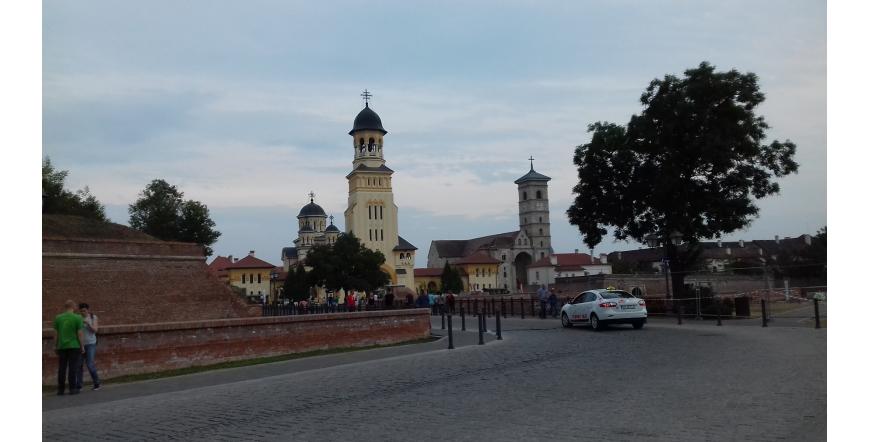
Alba Iulia is a beautiful town in Romania. The town of Alba Iulia is definitely not among the places that have a place in the popular tourist guides, but this is not a trend that will last long, as Alba Iulia is described by critics as "the rising star of Romanian tourism".
The town of Alba Iulia, whose name translates to "white fortress", is the administrative centre of Alba County in Transylvania, Romania. Geographically, Alba Iulia is located on the banks of the Mures River, at the Cluj-Napoca-Sibiu crossroads, near some of the wildest mountains in Romania, the Apuseni. Although Alba Iulia was for many years the religious and political capital of the region, it is today a city of secondary importance in Transylvania.
Alba Iulia is one of the oldest towns in Romania, and historical annals record that it was founded sometime in the early 2nd century, just before the Romans entered these lands. The influence and importance of Alba Iulia is gaining strength, and the 16th century may be considered the apogee of its development, because then the city became the seat of the first archbishops, as well as the capital of Transylvania while it was under Austrian influence. The Palace of the Princes remains as a symbol of these memorable times /the period between 1542 and 1690/. In summary, Alba Iulia is historically important for Romanians, Hungarians and Transylvanian Saxons.
The name of the town Alba Iulia has an interesting history. It all started in 953 when the power over the city was in the hands of the Hungarian ruler Zombor. To distinguish it from other towns with identical names - Nándorfehérvár - "Belgrade or Székesfehérvár - "Royal White" for example, the Hungarians decided to give the fortress on the banks of the Mures River the name Gyulafehérvár - "White Fortress of Gyula".
Although the influence of Alba Iulia has declined over the years, the town has been actively involved in various events in the political life of Romania. It was in Alba Iulia that the unification of the Romanian state was proclaimed on 1 December 1918, after the annexation of Banat, Transylvania. Another memorable year was 1922 - the coronation and proclamation of King Ferdinand I and Queen Mary in the town's church. The town of Alba Iulia is unlike any other town in Romania and the reason for this is that Alba Iulia is something of a city within a city. Its old town has existed since Roman times. It should be mentioned that Alba Iulia has 6 gates, a cathedral and an orthodox church, both bearing the name of St. Michael. Janos Hunyadi is buried in the Roman Catholic cathedral in Alba Iulia.
The Church of St. Michael's Church is of utmost importance to the city, because it was here that Ferdinand and his wife Maria were officially proclaimed King and Queen of Romania on 15 October 1922. From an architectural point of view, the cathedral is part of a group of buildings whose construction began towards the end of the 19th century. It is based on the national style developed thanks to Ion Mincu and Petre Antonescu, incorporating traditional forms of Romanian architecture. The church became the residence of the Romanian Orthodox Archdiocese of Alba Iulia.
In Alba Iulia, a special Unification Museum operates, located in the "Babylon" building, which was built between 1851 and 1853 for military purposes. The building, which functioned in the past as a casino, became a museum in 1887 and today houses more than 130,000 works of art, organized chronologically.
Undoubtedly one of the symbols of Alba Iulia is the Junedoara Castle, an example of a very successful remake of the Gothic, Renaissance and Rococo architectural styles. The history of the castle dates back to the 14th century, when King Sigismund of Hungary gave an old fortification next to the town of Hunedoara to János Hunyadi Serb.
Known as the Hunyadi Castle, this architectural jewel was erected in a strategic position next to the outlet of the Zlasti River, on a rocky formation, part of the Poiana Rusca Mountains. Hunedoara Castle is distinguished by its imposing size and architectural beauties, thanks to which it ranks among the most valuable monuments of medieval art.
The main historical area of Alba Iulia is the part developed by Charles VI, who was emperor of the Holy Roman Empire and in whose honour the Habsburgs renamed the town Carlsburg. The fortress with seven star-shaped bastions was built between 1716 and 1735 by two Swiss architects, Giovanni Morandi Visconti, who built two bastions in the Italianate style, and Nicholas Doxat de Demore. After 1720, the two architects radically transformed the medieval fortress and turned it into a Baroque fortress with seven bastions, developing the new Dutch system of Menko van Koechron.
Another standout landmark of Alba Iulia is the Batthyaneum Library, which is housed in a Baroque building that once functioned as a church. In 1780, Ignac Batthyani, Bishop of Transylvania, undertook to transform the interior of the building into premises suitable for a library. This library in Alba Iulia is famous for its series of manuscripts and rare books.
Vote:
Rating 5 from 1 voted
More sights in Romania


