

Szeged, Hungary
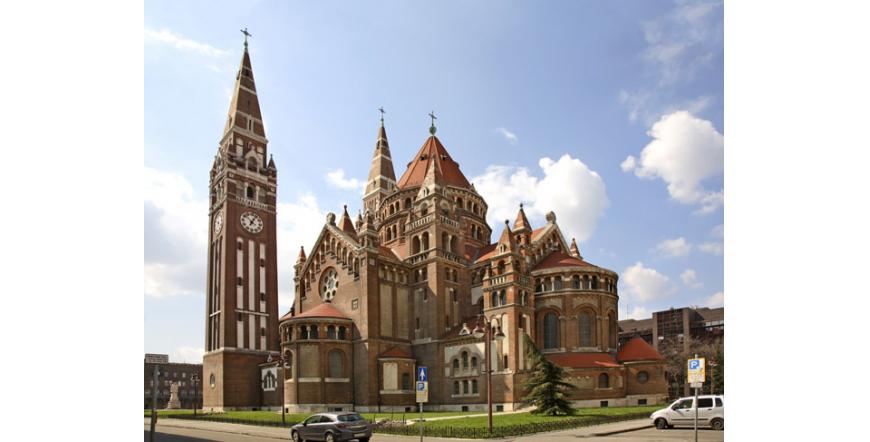
Szeged is a city in southern Hungary, the administrative centre of Chóngrad County.
It is situated on the Tisza River, south of the confluence of the Mureš River. The city is equally close to the Serbian and Romanian borders. The strategic position of the town is complemented by the fact that the main highway E 75 passes close to Szeged, which is a road connecting Western and Central Europe with the Balkan Peninsula and the Middle East.
Because of its proximity to Hungary's southern border, south of the mouth of the Maros River and on both banks of the Tisza, it is often called the City of the Sun and offers many opportunities for enjoyable recreation - beaches and parks, river regattas and powerboat races. History has it that today's Szeged and the surrounding area have been inhabited since quite ancient times. The official name Szeged first appeared on the political map of the world in 1183, in a document from King Béla III. In the 14th century, under the reign of King Lajos I the Great, Szeged became the most important town in southern Hungary. The present-day appearance of the old part of Szeged with its beautiful buildings and wide streets is mainly due to the extensive renovation of the town after the great flood of 1879. Szeged was granted the status of a completely free and independent town in 1948. One of the things Szeged is famous for is its status as the home of the red pepper. Paprika appeared in the country in the second half of the 16th century, and began to be cultivated as a spice about 100 years later. Sights in Szeged that should not be overlooked pro a visit to the city are, for example, the medieval fortress of St. Dimitri, and the Turkish baths.
Another stop on the tour of Szeged is the Obroć Church from 1910. This impressive religious temple was erected as a thanksgiving gift after a major flood in the town. The impressive massive and ornate Great Synagogue, completed in 1903, brings fame to Szeged and is one of the largest in Europe.
The Feren Bridge is part of the city's historical heritage and was built in the manner of the Bridge of Sighs in Venice. A stroll through the old part of Szeged would be relaxing and enjoyable, where one can unwind amidst the pleasant southern atmosphere and the gypsy music that echoes through the air around the neat cafes and along the quaint streets.
Vote:
Rating 5 from 1 voted
More sights in Hungary


Weather in Szeged, Hungary

27.03 °C
Wind: 8.43 m/s
Humidity: 26 %
Pressure: 1014 hpa
Clouds: 52 %
Wind: 8.43 m/s
Humidity: 26 %
Pressure: 1014 hpa
Clouds: 52 %