

Košice, Slovakia
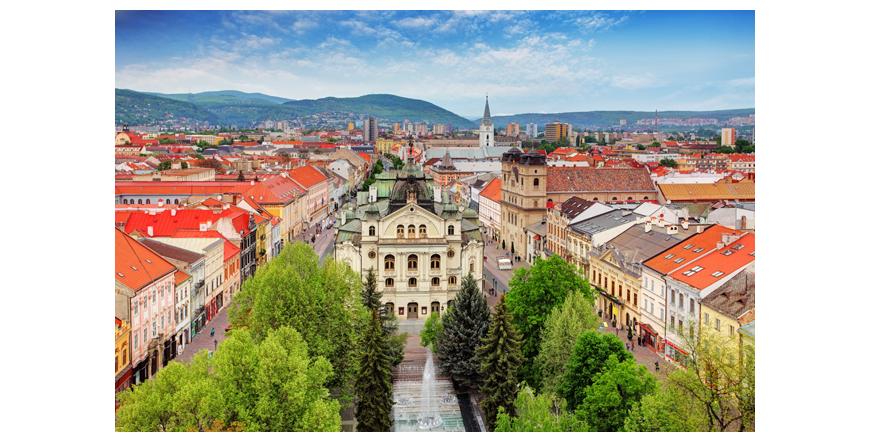
Košice is a city in Eastern Slovakia, the center of the Košice Region. It is located on the Hornad River, near the border with Poland, Hungary and Ukraine. Kosice is an important commercial and industrial center of the country, home to the second largest Slovak university, as well as the East Slovak Museum.
The first mention of Košice in history was in 1230, which in the 14th century was already the second most important city in Slovakia, which was then part of the Kingdom of Hungary. In the XVII-XVIII centuries, Košice became a kind of center of uprisings against the Habsburgs and a kind of capital of the rebel Ferenc II Rakosi. It was in this city that the Slovak Soviet Republic was proclaimed in 1919, and in the period 1938-1944 the city was part of Hungary.
Košice has always been an important regional center filled with beautiful public and private buildings centered in its historic center. Today, this city is a multi-ethnic society in which many and different customs and customs reign. This makes the city more different and more cosmopolitan. The entire city of Kosice is possessed by an incredible positive atmosphere, and its people are possessed by the belief in a common future, which makes them well-intentioned and happy.
Among the sights of Košice, which should not be missed, are the Urban Tower from the 16th century, the largest cathedral in all of Slovakia - the Gothic St. Elizabeth, as well as the 5-kilometer Children's Railway and the 14-kilometer Cermel Valley. The singing and dancing fountains on the pedestrianized Hlavna Street - the central square - are extremely attractive.
A monument has been erected in Košice to commemorate the plague that raged in 1710-1711 - this is the statue Immaculata, erected in 1723 and towering over a column in the square of the former place of executions.
Vote:
Rating 3 from 2 voted


