

Macedonia

The larger part of the area of Macedonia is occupied by the mountain ridges of the heavily branched Macedonian-Thracian massif, indented by deep river valleys with picturesque gorges and pretty basins. Macedonia is the only Balkan country with no sea outlet. Macedonia is rich in water – it has four big lakes and numerous wild and foamy creeks and rivers. The largest of them is Lake Ohrid, whose depth is 300 m. it is the deepest lake in Europe. Lake Ohrid is declared a World Heritage site by UNESCO. The Black Drin flows from the lake, but no river flows into it – it is fed by the Karst from Lake Prespa. This determines its exceptional water transparency – up to 7 m.
The Vardar is the largest river. It flows across the entire country and continues in Greece, where flows into the Aegean Sea under the name of Axios.
The main industry branch in the country is agriculture – wheat, maize, rice, tobacco, sunflower, sesame, vineyards, fruits and vegetables are grown. Stock breeding is also developed. An important traditional branch is sericulture.
Macedonia was part of the ancient Greek world, and later – a Roman province. In the Middle Ages it was an important centre within the boundaries of the Bulgarian state, and after that – possession of the Ottoman Empire. Since 1945 it was one of the 6 republics in the composition of the Socialist Federal Republic of Yugoslavia.
The declaration of Macedonia as an independent republic in 1991 leads to a dispute with Greece. However, the two countries reach to some concord by signing agreements in 1995.
The largest city and capital of Macedonia is Skopje, situated picturesquely on the Vardar. Restored after the big earthquake (1963), which almost razed the city to the ground, today Skopje is the most important industrial, commercial and cultural centre of the country, surrounded by fertile agricultural lands.
More sights in Macedonia
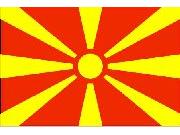
- Macedonia
- Skopje
- 25 713 km²
- 2 030 000
- denar
- Bulgarian, Albanian
- Christianity, Islam