
Prizren, Kosovo
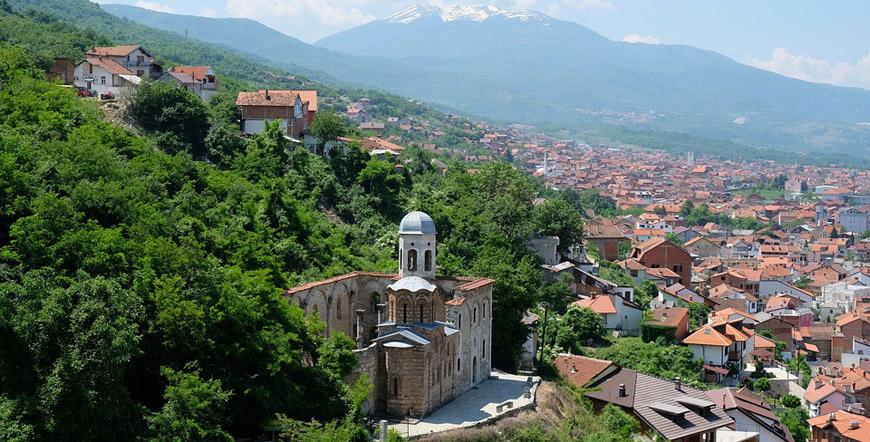
Prizren is an ancient town located in southwestern Kosovo at the foot of two mountain ranges flowing into each other in a V-shape. The appearance of this interesting town is characterized by the chaos of domes, minarets and stone bell towers that rise above the red roofs of the dozens of houses built in the style of the Ottoman Empire.
The existing settlement here has been mentioned since the 5th century BC as one of the largest in population of the Illyrians. After the settlement of the Slavs in the Balkans, the town fell within the borders of the First Bulgarian Kingdom. In the following centuries it was a Byzantine town, then again it fell into the territory of the Bulgarian lands, and when it was captured by the Ottomans in 1455, Prizren became one of the bastions of the Ottoman Empire. After the liberation from the Ottoman presence, Prizren was part of Serbia, then annexed to Yugoslavia, until after the conflicts in 1999, the city belonged to independent Kosovo.
Prizren has been a prosperous town since the 11th century, benefiting from its location between important trade routes. Today, Prizren is an exciting city, with a population of about 221 thousand people, where despite the conflicts between Serbs, Ottomans and Albanians, the tourist can have a pleasant time.
Walking along the cobbled streets of the city, one imperceptibly reaches the stone-lined Shadervan Square, which is a place to relax and visit one of the many cafes and bars here. The ancient fountain in the square is linked to the legend that whoever drinks water from it is sure to return here.
One of Prizren's main attractions is the stone Sinan Pasha Mosque, built in 1615 and overlooking the town's main street. It dominates the skyline of the town, as its minaret is 43.5 meters high and the walls and dome inside were painted in the 19th century with predominantly floral motifs and verses from the Koran.
Behind the mosque is Prizren's little 14th century architectural gem, the Church of Christ the Saviour. On a hill behind the Sinan Pasha Mosque, stands the 11th century Kalaya fortress with its upper and lower "city". Already in late antiquity the fortress in Prizren was part of the defensive fortification system in West Dardania. Later in time, the fortress was maintained because of its strategic location. The view of the city from the fortress is impressive - Prizren is visible as if in the palm of your hand.
The old stone bridge crossing the river Prizrenska Bistrica is one of the landmarks of the town. There are always a lot of people here, as everywhere you turn you see something unique from Prizren.
Crossing the old Ottoman bridge, one reaches the wonderful bath "Gazi Mehmed Pasha Hamam", built in the 15th century and which has two wards-for men and for women. Amazing are the numerous cubes with chimneys on them that cover this relic of Prizren.
Not far away is the Orthodox Church "St. Our Lady of Levice” from the 14th century, which is part of the medieval World Heritage Sites. Built during the reign of Serbia's King Stefan Milutin, the church was severely damaged by inter-ethnic hostilities during the 2004 riots. But all the frescoes and valuable murals have been restored to arouse the admiration of visitors.
One of Prizren's important landmarks is the Ethnographic Museum in the building of the Albanian Prizren League, established in 1878 to defend the rights of the Albanian nation.
Prizren's Wednesday market, where people from neighboring villages line the stalls with their wares and all sorts of curious handicrafts, is a colorful event. This is where you can buy a wonderful souvenir of the beautiful filigree products typical of the craftsmen of Prizren.