

Nicosia, Cyprus
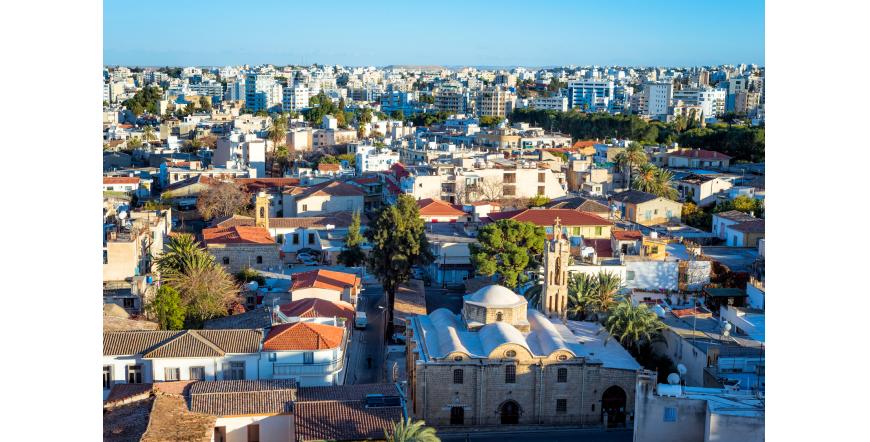
Nicosia (Turkish: Lefkoşa, Greek: Λευκωσία ) is the capital of Cyprus, centrally located and the largest city by population on the island. Its population is about 250 000 (one third of the total population of Cyprus). It is the administrative, financial, cultural, commercial and industrial center of the island, as well as home to several universities and colleges. Together with its foreign students and workers, the city conveys a truly cosmopolitan feel.
Nicosia is the last divided-in-two capital city in the world. The border, or so-called "Green Line", divides the city in two. The northern half is the capital of the self-proclaimed Northern Cyprus-the Turkish part, where they call the city Lefkosha-and the southern half is the capital of the Republic of Cyprus.
The Old Town
The small geographical area of Cyprus is very disproportionate to the wealth of treasures you will discover during your visit to the capital. Dating back to the Bronze Age, Nicosia may be the only area of Cyprus that was continuously inhabited during the Chalcolithic era (3000 BC to the present day), with its first inhabitants settling in the fertile Messaoria Valley. Nicosia's glorious history and geographical uniqueness made it a crossroads for some of history's most important civilizations. Footprints left by great men such as the Ptolemies, the Romans and Byzantines, the Franks, the Venetians, the Ottomans and finally the British can be encountered during a walk in the Old City of Nicosia.
Nicosia, however, was not always the impressive capital we encounter today. Historians believe it was built on the ancient city of Ledra, a small city that existed around the 7th - 8th century BC.
It was only when the monarchical form of government fell at the end of the 4th century that Nicosia was able to take advantage of its natural resources and geographical position in the center of the island. The last days of Cyprus as a monarchy ended with the Franks when Catherine Cornaro, the last queen of Cyprus, was forced to hand over the island to the Venetians. Old Nicosia is surrounded by Venetian walls, behind which one can discover the city's historical past unfolding in a magical maze of museums, old churches and medieval buildings. Nicosia's walls were built by the Franks in the 16th century, after the arrival of King Lusignan on the island. The Venetians realized that the walls did not offer adequate protection from the invaders and demolished them, replacing them with the walls that remain to this day. The Ottomans rebuilt these walls and covered them with stones during their occupation of Nicosia. To this day the walls are the best preserved structure in the city.
Modern city
Nicosia is a city that will reward visitors in search of "something different". As a result of a number of architectural influences seen throughout the city, one cannot help but be fascinated by the way the past and the present, the traditional and the contemporary, blend together. The modern city centre will capture your imagination from the start with the blend of influences that give the city a unique image. The city's landmarks, museums, theatres, music events and galleries inspire and fascinate visitors.
Makariou, Ledras, Onasagorou, Stassikratous and Mnasiadou streets offer shopping opportunities that are comparable to many European countries. Visitors can enjoy both Cypriot and international culinary delights in the many upscale restaurants lining the streets of Nicosia.
Walls of Nicosia The walls of Nicosia were built by the Venetians in the 16th century, replacing the old walls to protect the city from the Ottoman Turks. To this day the Venetian walls are the best preserved structure in the city, although their sequence has been interrupted by openings made by the British to facilitate movement on and off the walls. The original three gates of the walls still exist - Famagusta (East Gate), Paphos (West Gate) and Kyrenia (North Gate).
Artistic heritage and culture
The rich history and cultural significance of Nicosia is evidenced by the large number of museums, art galleries and cultural sites that can be found throughout the city.
Art shops continue to produce outstanding traditional instruments and works of art, while avant-garde galleries present contemporary cultural creations of a vibrant, culturally rich city.
Cyprus Museum (Archaeological) The Cyprus Museum (Archaeological) is the largest museum in Cyprus. Here one can observe the evolution of Cypriot civilization from the Neolithic period to the Early Byzantine period (7th century). Among its exhibits you can enjoy the statue of the Sophian Aphrodite and the supernatural statue of the Roman Emperor Septimius Severus.
Leventis Municipal Museum in Nicosia
The Leventis Municipal Museum in Nicosia was established in 1984 by the Municipality of Nicosia and the Anastasios G. Leventis. The museum was inaugurated in 1989 and two years later, in 1991, it was awarded the European Museum of the Year Award. Today, completely renovated, the museum strives to continue its mission of contributing to the preservation of Nicosia's history. The permanent exhibition spaces house exhibits that take the visitor on a journey through the history of Nicosia, from antiquity to the present day. The museum also offers organized educational programs, excursions and other events.
The boarding school museums
The Boarding School Museums, the oldest secondary school in Cyprus, are housed in the historic centre of Lefkosia (Nicosia), in a charming 12-room premises. Apart from the School History Museum, the Boarding School Museums consist of: the archaeological and nomist collection, the collection of old maps and old weapons, most of them of Cypriot character. There is also an art gallery with works by great Cypriot artists who were teachers and students of the school, a natural history museum and other exhibits.
The museums aim to preserve and display these diverse collections, providing an opportunity to research and study the history of education in Cyprus. The boarding school museums are open and accessible to visitors of all ages and interests.
Museum of the History of Cypriot Coins
The Museum of the History of Cypriot Coins displays an important part of the numismatic collection, with more than 500 coins, representing the history of Cyprus from the periods of the city-kingdoms from the mid-twentieth century. 6th century BC to the contemporary problems of the Republic of Cyprus.
Classic Motorcycle Museum
The Cyprus Motorcycle Museum in Nicosia was created by Andreas Nicolaou and is the result of 20 years of personal effort. Today this collection consists of over 150 pieces. The museum exhibits motorcycles from 1914 to 1983 such as AJS, MV Aqusta, Matchless, Norton, BSA, Triumph, Ariel, BMW, James, Moto Guzzi, Royal Enfield and many more.
Ethnographic Museum
The Ethnographic Museum / House of Hadjigeorgiou Korneios / is the most important example of urban architecture from the last century of Ottoman rule that survives in old Lefkosia. It is located near the Archbishopric in the Saint Antonio district, where the wealthy artisans of the Greek community traditionally lived. In this house Hadjigeorgakis Kornezios and his family lived between 1793 and 1808. The Dragoman acted as an interpreter between the Christian population and the Ottoman governor.
Natural History Museum of the World
Fossils, minerals and meteorites. Some of the specimens are unique and rare. The exhibit includes specimens of dinosaurs, birds, plants, insects and more.
The Local Archaeological Museum of Ancient Idalion
The Local Archaeological Museum of Ancient Idalion was established in 2007 to promote the rich finds of the Idalion area and later function as a visitor center for the archaeological site in which it is located.
The archaeological site of Idalion is one of the most important sites in Cyprus, with rich finds now adorning the most famous museums in the world. The ancient city was founded, according to tradition, by the Achaean hero of the Trojan War, Chalcanor, a descendant of Teucer, the founder of Salamis.
Churches
One of the most significant churches for Nicosia is the Cathedral Church of St. John", where all the Archbishops of Cyprus received the Blessed Sacrament in the 18th century. Panagia Chrysaliniotissa is the oldest Byzantine church in Nicosia and was built in 1450 by the Empress Eleni Paleologou. It is famous for its huge collection of rare and ancient icons. The church of Agios Ioannis Cathedral was renovated in 1662 by Archbishop Nikiforos. The recently restored 18th-century frescoes, painted during the era of Archbishop Silvestros, recreate scenes from the Holy Bible and the discovery of the tomb of the Apostle Barnabas in Salamina.Faneromeni was built in 1872 next to the ancient Orthodox women's monastery and is the largest church outside the walls of Nicosia. The Church of Tripiotis was built in 1695 by Archbishop Germanos and is dedicated to the Archangel Michael. It is considered an important architectural example of the Franco-Byzantine era.
We will discover the Catholic Church of the Holy Cross (1902) in old Nicosia and the Anglican Church of St. Paul" in the centre of the modern city. You can also visit the Archangel Michael Monastery, which dates back to the Byzantine era. The Monastery of St. Heraclidou, built near the saint's grave, which was baptized and finally the Mahari Monastery, dating from the First Iconoclastic Period (730-843) and founded in 1148.
Mosques
In the centre of old Nicosia is the Misirikos Church, a medieval Christian Orthodox church built in the 1500s with Byzantine Gothic and Italian Renaissance architectural elements. In 1572 it was converted into the Araplar Mosque. The Omeri Mosque was originally an Augustinian church run by monks and dedicated to St. Mary. It was built in the 14th century and converted into a mosque by Mustafa Pasha in 1571. Adjacent to it are the Omeri Baths, built in the 16th century as a gift to the city of Nicosia by Lala Mustafa Pasha.
Next to the Constanza Pool is the Bayraktari Mosque, which a Turkish soldier built to lay to rest the remains of the Ottomans who fell during the siege of the city in 1571.
Gastronomy
Cypriot cuisine is a combination of Mediterranean and Middle Eastern flavors that offer a gastronomic experience unlike anything you've ever tasted. From traditional tavernas, to trendy gourmet restaurants, visitors are sure to get a full range of delicious recipes and exquisite dishes in Nicosia.
Shopping
Like all modern European capitals, Nicosia is a city that has it all. Ledras and Onasagorou streets in the old town are filled with souvenir shops and shops selling traditional Cypriot goods. Makarios Street and Stasikratos Street in the new town offer shops with branded goods.
Events for business or pleasure, Nicosia is the ultimate destination in Cyprus for hosting events.
With modern infrastructure and state-of-the-art venues, the Cypriot capital hosts many public and private events year-round.
Vote:
Rating 5 from 1 voted
More sights in Cyprus