
Yerevan, Armenia
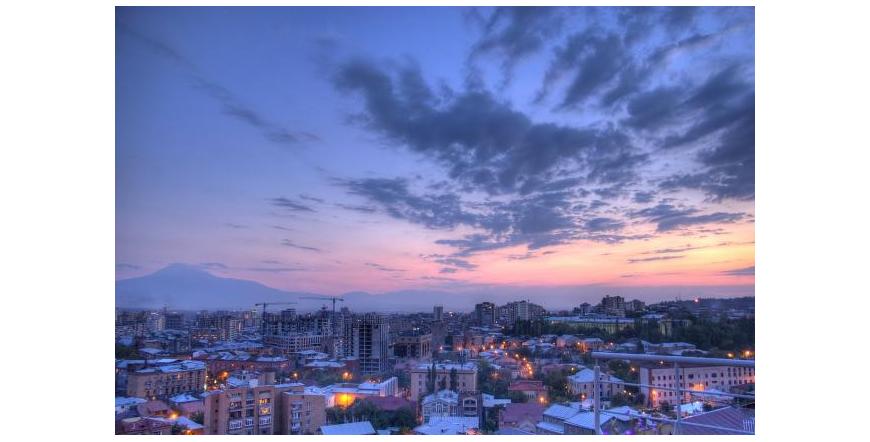
Yerevan is situated in a fertile valley below Mount Ararat. It is the capital of Armenia and has about 1 million inhabitants. It emerged in 780 BC during the heyday of Urartu as an important strategic location where the routes between Europe and India crossed. Yerevan has an ancient cultural heritage, some of which was destroyed after 1921 when the country and the city were part of the USSR. Then many churches, mosques, baths from the 16th century, bazaars and caravanserais, the Persian fortress, etc. were destroyed. After 1991, when Armenia declared itself independent, changes took place in Yerevan and now it is a very nice place to visit. One of the interesting things to see here is the St. Krikor Lusavorich Cathedral. Not to be missed is to see the art market and whiplash in the city center, which is held every weekend and is called the Vernissage. The Matendaran Institute is a world-class treasure trove with its old books and manuscripts with illustrations.
Visitors shudder at the Armenian Genocide Memorial-Tsitsernakaberd, built in memory of the 1.5 million Armenians killed by the Turks in 1915. Interesting are the ruins of the fortress "Erebuni", which was the first capital of the country. Impressive is the cave monastery "Geghard" of the 6-13 centuries, located 35 km from Yerevan. The cathedral and the two churches are built deep into the rock and rivaled only by the rock city of Petra in Jordan. Yerevan is a city that continues to renovate and restore its monuments.
Weather in Yerevan, Armenia

Wind: 4.12 m/s
Humidity: 34 %
Pressure: 1010 hpa
Clouds: 0 %